

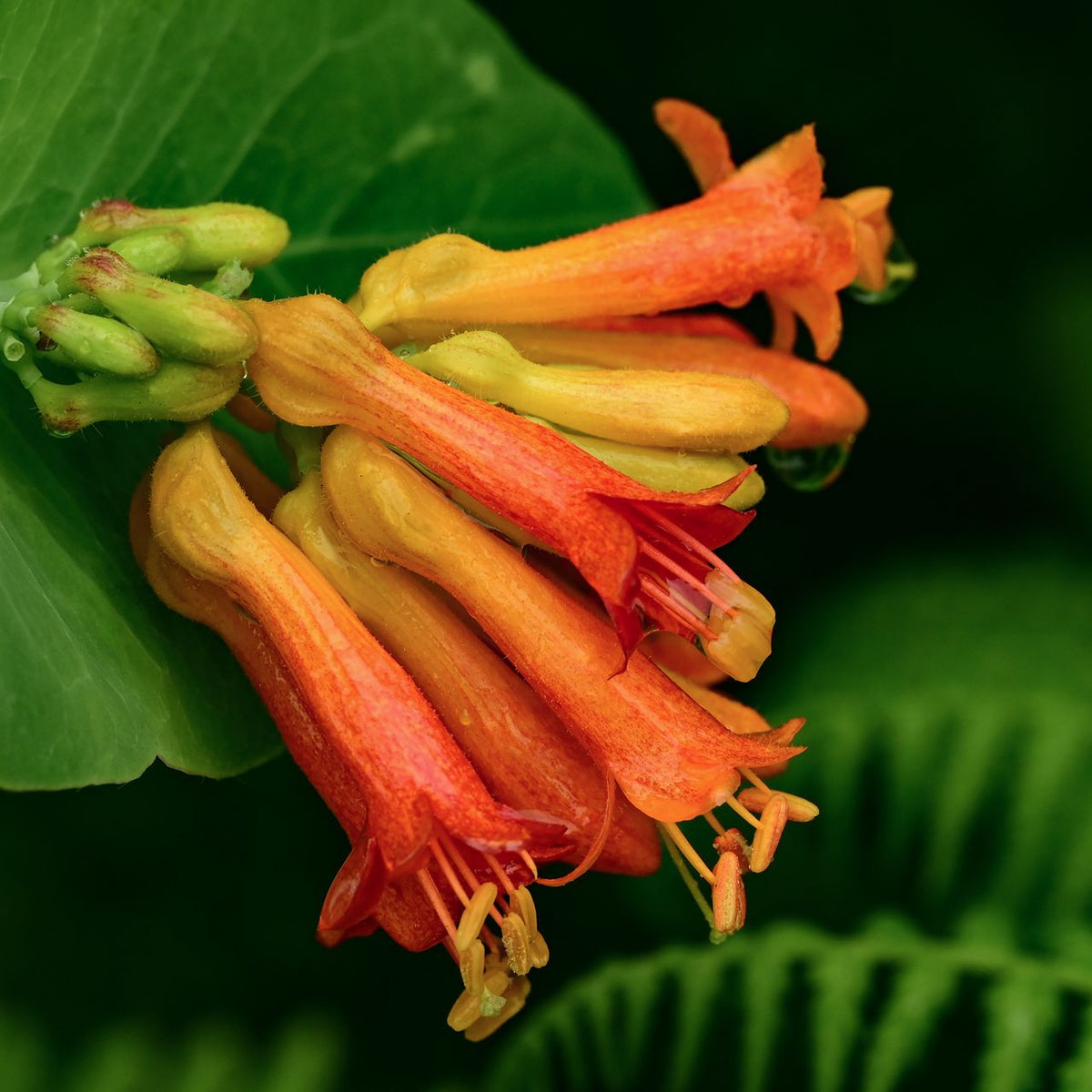
Coral Honeysuckle is a beautiful choice for gardeners who want to add color to fences, trellises, and other vertical spaces while attracting hummingbirds and pollinators. Known botanically as Lonicera sempervirens, this native North American vine produces clusters of tubular flowers in shades of red, orange, and coral. Its twining stems can climb a support structure or spread across the ground, giving gardeners several ways to use it in the landscape.
Also called Trumpet Honeysuckle, Coral Honeysuckle is a perennial vine that can grow 10 to 20 feet tall when given room and proper support. It is valued for its colorful blooms, wildlife benefits, and relatively low maintenance once established. With the right planting location and a little seasonal care, it can become a long-lasting feature in a pollinator-friendly garden.

Coral Honeysuckle at a Glance
Coral Honeysuckle
Lonicera sempervirens
Also called Trumpet Honeysuckle
- Plant typePerennial woody, twining vine
- Native rangeEastern United States
- Mature size10–20 ft tall, 3–6 ft wide
- LightFull sun to partial shade, best flowering in full sun
- SoilWell-drained; tolerates loam and clay
- WaterRegular while establishing; tolerates dry spells once established
- Bloom timeSpring and summer
- Flower colorRed, orange-red, coral, and pink tones
- FoliageEvergreen in warm climates; may drop in cold winters
- Growth rateFast
- AttractsHummingbirds, butterflies, bees, and songbirds
- MaintenanceLow once established
In this guide
Getting to Know Coral Honeysuckle
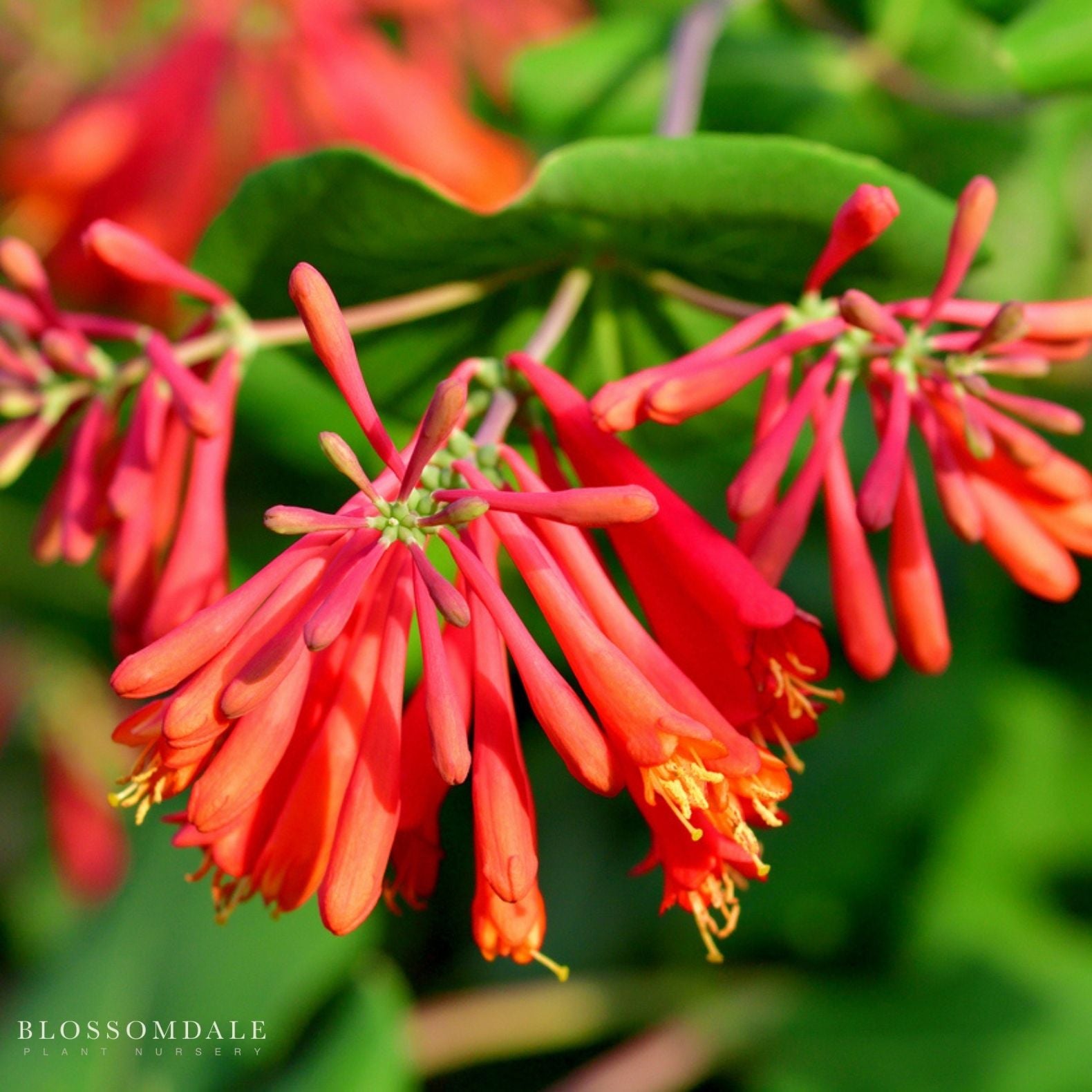
Coral Honeysuckle (Lonicera sempervirens) is a woody, twining vine native to the eastern United States. Its most recognizable feature is its trumpet-shaped flowers, which grow in clusters near the ends of the stems. Depending on the variety, blooms can range from scarlet and orange-red to softer coral or pink tones.
Flowers and Wildlife
The flowers are especially attractive to hummingbirds, which feed on their nectar. Butterflies and bees may visit the blooms as well, while the small red berries that develop later in the season provide food for songbirds. These nectar-rich flowers and wildlife-friendly features make Coral Honeysuckle a useful addition to pollinator gardens.
Growth Habit
Coral Honeysuckle is known for its adaptable growth habit. Its stems naturally twine around nearby structures, making it suitable for fences, arbors, pergolas, and garden trellises. Without a support, the vine can spread along the ground and work as a flowering ground cover.
Foliage
In warmer climates, the foliage may remain evergreen. In colder regions, the plant can lose some or all of its leaves during winter before producing new growth in spring.
Where to Plant Coral Honeysuckle
Choosing the right location helps Coral Honeysuckle establish well and produce plenty of flowers.
Sunlight
The vine grows in full sun to partial shade, although it generally blooms best when it receives several hours of direct sunlight each day.
Soil
Look for a planting area with well-drained soil. Coral Honeysuckle can tolerate different soil types, including loam and clay, as long as excess water can drain away. Consistently waterlogged soil can cause problems for the roots.
Support
Because this is a climbing vine, consider its support before planting. A sturdy trellis, fence, arbor, or pergola gives the stems a structure to grow around. Install the support close enough to the planting spot so young stems can reach it as they develop.
A trellis can help create a flowering focal point in a garden, while a fence planting can soften an otherwise plain boundary. For gardeners working with slopes or open spaces, Coral Honeysuckle can also be allowed to spread as ground cover.
Space and Mature Size
Keep its mature size in mind when selecting a location. The species can reach approximately 10 to 20 feet in height, with a spread of around 3 to 6 feet, depending on growing conditions and how it is trained.

How to Plant Coral Honeysuckle
When to Plant
Spring and fall are generally suitable planting seasons in many temperate regions, when moderate temperatures can help reduce stress as the plant settles in.
Step-by-Step Planting
- Pick the spotChoose a location with full sun to partial shade and well-drained soil.
- Dig the holePrepare a planting hole slightly wider than the plant's root ball.
- Loosen the rootsRemove the plant carefully from its nursery pot and loosen any tightly packed roots.
- Set the depthPlace the plant in the hole at the same depth it was growing in its container.
- Backfill and waterFill in around the roots with soil and water thoroughly to help them settle.
- Start trainingGuide the young stems toward a nearby trellis, fence, or other support.
Aftercare
Water regularly while the plant establishes. Once it has developed a stronger root system, Coral Honeysuckle can tolerate periods of dry weather, although watering during extended dry spells can help maintain healthy growth.
If planting more than one vine, allow enough space between plants for their mature spread and airflow. This also makes it easier to train and prune the stems as they grow.
Coral Honeysuckle Care Throughout the Year
Coral Honeysuckle is relatively easy to maintain once established. Most of its care involves watering during dry periods, guiding new growth, and pruning when needed.
Watering
Keep the soil evenly moist during the establishment period. Afterward, water when the surrounding soil begins to dry, especially during hot or prolonged dry spells. Avoid keeping the roots in saturated soil.
Fertilizing
Coral Honeysuckle generally does not need frequent feeding when planted in suitable soil. If growth is poor, consider a soil test before applying fertilizer. Avoid excessive high-nitrogen fertilizer, which can encourage leafy growth at the expense of flowers.
Pruning
The vine flowers on new growth, so pruning time matters. Remove dead, damaged, or tangled stems as needed, and shape the plant after its main flowering period. Avoid heavy pruning before flowering if you want to preserve developing blooms.
Training
Check the stems periodically and guide them toward their support. Young growth may need a little help reaching a trellis or fence, especially during the first growing season. Once established, the twining stems can continue climbing with less assistance.
Pests and Problems
Coral Honeysuckle is generally considered low maintenance, although aphids, powdery mildew, and leaf spots can occasionally appear. Good airflow, suitable spacing, and appropriate watering can help reduce common growing problems.
Seasonal Care Calendar
-
Spring
In bloom
Plant new vines while temperatures are moderate. Guide fresh stems toward their support as flowering begins.
-
Summer
In bloom
Water during hot or dry spells. Shape the plant and remove tangled stems after its main flowering period.
-
Fall
Plant new vines in many temperate regions. Leave the small red berries for songbirds.
-
Winter
Expect some leaf drop in colder regions. Hold off on heavy pruning until after the main flowering period.
Does Coral Honeysuckle Attract Hummingbirds?
Yes. Coral Honeysuckle is a popular choice for hummingbird gardens because its tubular flowers provide nectar. Its blooms can also attract butterflies and other pollinators, making the vine a useful addition to a wildlife-friendly landscape.
For a garden that supports hummingbirds throughout the season, consider planting Coral Honeysuckle alongside other nectar-producing flowers with different bloom periods. A mix of flowering plants can provide food sources as individual plants begin and finish blooming.
After flowering, the vine may develop small red berries. Songbirds feed on these fruits, adding another wildlife benefit to the plant.
Is Coral Honeysuckle Invasive?
Coral Honeysuckle (Lonicera sempervirens) is a native North American vine and is generally recommended as a garden-friendly alternative to invasive Japanese Honeysuckle (Lonicera japonica).
The two plants belong to the same genus, which can cause confusion when shopping for honeysuckle vines. Japanese Honeysuckle is an invasive species in many areas, while Coral Honeysuckle is valued for its native range and benefits to local wildlife.
Plant this
Coral Honeysuckle
Lonicera sempervirens
Native to North America and valued for its benefits to local wildlife.
Avoid
Japanese Honeysuckle
Lonicera japonica
An invasive species in many areas.
Frequently Asked Questions
How fast does Coral Honeysuckle grow?
Coral Honeysuckle is considered a fast-growing vine under suitable conditions. Its growth rate depends on sunlight, soil, moisture, and the length of its growing season. Providing a sturdy support and proper care helps the plant develop into a fuller climbing vine.
Does Coral Honeysuckle need a trellis?
A trellis is helpful because Coral Honeysuckle grows by twining its stems around nearby supports. You can also train it along a fence or arbor. Without a structure, it can spread along the ground as a flowering ground cover.
When does Coral Honeysuckle bloom?
Coral Honeysuckle typically flowers in spring and summer. Bloom timing and duration vary by climate and growing conditions. Some cultivars may produce repeated flowers over a longer period.
Is Coral Honeysuckle evergreen?
Coral Honeysuckle can be evergreen in warmer climates, while its foliage may drop during colder winters. Its seasonal appearance depends on local temperatures and growing conditions.
Can Coral Honeysuckle grow in partial shade?
Yes. Coral Honeysuckle tolerates partial shade, although it generally produces more flowers in full sun. Choose a spot that receives several hours of direct sunlight for better blooming.
Coral Honeysuckle For Sale
With its colorful trumpet-shaped flowers, climbing growth habit, and appeal to hummingbirds, Coral Honeysuckle is a lovely addition to fences, trellises, and pollinator gardens. It offers a practical way to bring more vertical interest and wildlife activity into an outdoor space.
Blossomdale offers Coral Honeysuckle ‘Honey Coral’, a Lonicera sempervirens selection with coral-pink blooms and a twining growth habit. It is suited to full sun to partial shade and can be trained along a trellis, arbor, or fence.