


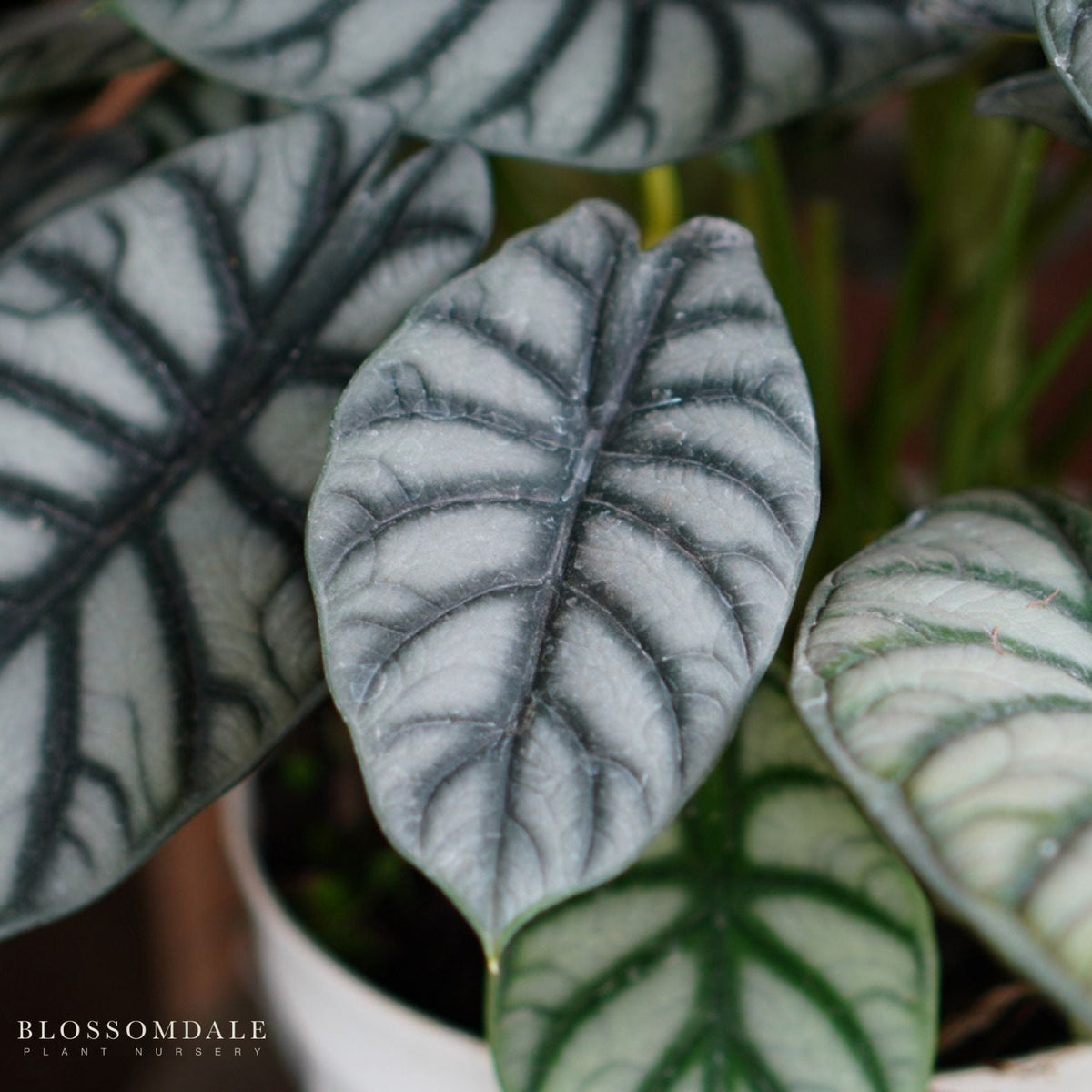
With its silvery leaves, deep green veins, and textured foliage, Alocasia baginda ‘Silver Dragon’ makes a striking addition to any houseplant collection. This tropical plant is prized for its heart-shaped leaves, which have a metallic appearance and a raised, scale-like pattern.
Native to Borneo, Silver Dragon is a compact jewel Alocasia that grows well indoors with the right care. Its distinctive foliage makes it a favorite among houseplant enthusiasts, while its manageable size suits shelves, desks, and plant displays.
Successful Alocasia baginda Silver Dragon care starts with bright, indirect light, warm temperatures, suitable humidity, and an airy potting mix. Here’s how to keep this distinctive plant healthy and encourage new growth.
What Is Alocasia Baginda ‘Silver Dragon’?
Alocasia baginda ‘Silver Dragon’ belongs to the Araceae family. It is known for its thick, heart-shaped leaves with silvery gray-green surfaces and prominent dark green veins. The undersides may have a lighter, cream-toned appearance with contrasting veins. These features give the foliage a raised, almost reptilian texture that distinguishes Silver Dragon from many other Alocasias.
The cultivar is closely related to Alocasia baginda ‘Dragon Scale’. Both share a similar growth habit, although their foliage differs in color and appearance. Silver Dragon also features leathery, silver-toned leaves and dark veins, which are among the plant’s defining characteristics.
Unlike larger elephant ear plants, Silver Dragon generally remains compact when grown indoors.


How Do You Care for Alocasia Baginda ‘Silver Dragon’?
The key to healthy Silver Dragon growth is maintaining consistent conditions. The plant prefers bright, indirect light, warm temperatures, higher humidity, and soil that retains moisture while allowing excess water to drain.
Light
Place Silver Dragon near a bright window with filtered sunlight. An east-facing window can work well, while a brighter south- or west-facing window may require some distance or a sheer curtain.
Avoid harsh direct sunlight, which can scorch the leaves. Insufficient light may also slow growth and result in smaller leaves.
Watering
Water when the upper layer of the potting mix begins to dry. The soil should remain lightly moist without becoming waterlogged.
Water thoroughly and allow excess moisture to drain through the pot. Empty the saucer afterward to prevent the roots from sitting in standing water.
Overwatering can lead to root or corm rot, while prolonged dryness can stress the plant. Check the soil regularly and adjust watering according to the temperature, light, and season.
Soil
Silver Dragon grows best in an airy, well-draining potting mix that holds some moisture. A combination of indoor potting mix or coco coir, perlite, and fine orchid bark can provide a suitable balance.
Use a pot with drainage holes and avoid oversized containers, since excess soil can stay wet around the roots for too long.
Temperature and Humidity
As a tropical plant, Silver Dragon prefers warm, stable conditions. Keep it away from cold drafts and direct airflow from air conditioners.
Higher humidity helps maintain healthy leaves and reduces crispy edges. A humidifier or well-ventilated plant cabinet can help create suitable conditions, particularly in dry indoor environments.
How Big Does Alocasia Silver Dragon Get?
Alocasia Silver Dragon is a compact plant that can reach approximately 1 to 1.5 feet tall indoors, although its size varies with maturity and growing conditions. Its broad, textured leaves provide most of its visual impact.
Adequate indirect light, suitable root space, and consistent care encourage healthy leaf development. Because it grows relatively compactly, Silver Dragon works well on shelves, desks, and other indoor plant displays.
Is Alocasia Silver Dragon Variegated?
The standard Silver Dragon cultivar is recognized for its naturally silvery foliage and dark green veins. This coloration creates a striking pattern, but it is different from true variegation, which involves distinct areas of differently colored leaf tissue.
Plants advertised as Alocasia Silver Dragon variegated may refer to unusual specimens with additional color variation. Check the plant’s appearance and labeling carefully when buying, since the standard cultivar already has naturally patterned leaves.
Does Alocasia Silver Dragon Flower?
Yes, although flowering is uncommon indoors. Like other Alocasias, Silver Dragon produces an inflorescence consisting of a spadix surrounded by a spathe, which may appear pale green or cream.
The flowers are generally less noticeable than the plant’s foliage, which is its main ornamental feature. Flowering depends on the plant’s maturity and growing conditions.
How Do You Propagate Alocasia Silver Dragon?
Alocasia Silver Dragon propagation is usually done through offsets or corms. A single leaf or ordinary leaf cutting will not reliably produce a new plant because it lacks the growing point needed to develop new shoots.
Propagating Through Offsets
Established plants may develop smaller shoots near the base. When an offset has its own roots and a viable growing point, it can be separated carefully during repotting.
Plant the offset in a small pot with an airy mix, then provide warmth, humidity, and bright indirect light while it establishes itself.
Propagating Through Corms
Corms are small, rounded structures that develop around the plant’s underground root system. During repotting, look for firm, healthy corms and remove them carefully.
Place the corms in a warm, humid environment with a lightly moist propagation medium. Once roots and a new shoot develop, transfer each young plant to a small container with well-draining soil.
The separation of offsets and collection of corms are established propagation methods for Alocasia baginda.
What Are Common Alocasia Silver Dragon Problems?
Changes in the leaves can help you identify growing problems early.
- Yellowing leaves: Check for overwatering, poor drainage, or natural aging of older leaves.
- Brown, crispy edges: Low humidity, underwatering, or excessive sunlight may be responsible.
- Drooping leaves: Check soil moisture and inspect the roots if the plant remains wilted.
- Slow growth: Insufficient light, cold temperatures, or root problems can affect new leaf production.
- Pests: Spider mites and mealybugs may affect Alocasias. Inspect the undersides of leaves and treat infestations with an appropriate product according to its label.
Make gradual adjustments to the growing conditions and give the plant time to respond.
Is Alocasia Silver Dragon Safe for Pets?
No. Alocasia Silver Dragon contains insoluble calcium oxalate crystals that can cause irritation if chewed or swallowed. Symptoms in pets may include oral discomfort, drooling, and difficulty swallowing.
Keep the plant away from children and pets. Wear gloves when handling damaged plant tissue if you have sensitive skin, and wash your hands after pruning or repotting.
Where Can You Buy Alocasia Baginda ‘Silver Dragon’?
Ready to bring home a plant with striking silver foliage? Shop Alocasia baginda ‘Silver Dragon’ at Blossomdale and add this eye-catching tropical beauty to your houseplant collection. With its textured leaves and compact growth habit, Silver Dragon makes a standout addition to your indoor greenery.
Give your new plant the best start with a well-draining potting mix, bright indirect light, and a warm, humid environment. With the right care, its distinctive silver leaves can remain the highlight of your plant display.