


If you want a native plant that looks good, feeds pollinators, and asks little in return, swamp milkweed is a strong pick. Here's what it is, how to care for it, how to start it, and where to buy swamp milkweed seeds and plants.
Swamp milkweed (Asclepias incarnata), also called rose or pink milkweed, is an herbaceous perennial native to much of North America. It's a safe alternative to tropical milkweed, which can harbor a parasite that harms monarchs. Like every milkweed, it's a host plant: monarch caterpillars can only feed on milkweed, which is why it anchors monarch gardens.
What Does Swamp Milkweed Look Like?
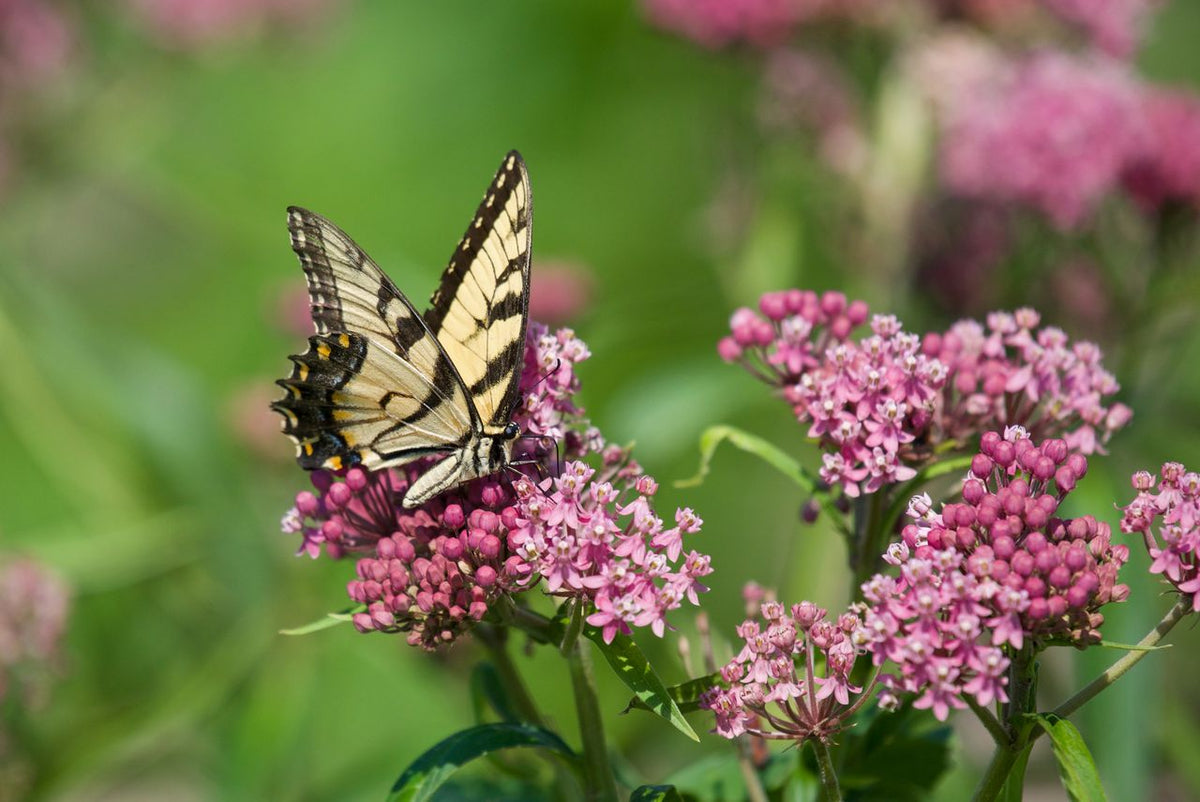
In summer, it produces flat-topped clusters of vanilla-scented pink flowers at the stem tips, not along the sides. Leaves are narrow, lance-shaped, and opposite, up to 6 inches long. The habit is upright and clumping, reaching 3 to 5 feet tall and 2 to 3 feet wide. Seed pods split open in fall, releasing seeds with silky parachutes.


Pink Swamp Milkweed 'Asclepias incarnata'
What Are the Benefits of Milkweed?
- Monarch support: it feeds caterpillars and fuels adults with nectar. It also hosts queen butterflies and milkweed tussock moths.
- Pollinator magnet: bees, butterflies, and hummingbirds visit the blooms.
- Low maintenance: it needs little to no fertilizer and is deer resistant. That means deer don't prefer it, not that they never touch it.
Want more pollinator plants? Browse our landscape plants.
Understanding the Species
Milkweed in general vs. swamp milkweed: "Milkweed" covers the entire Asclepias genus, dozens of species with different colors, leaves, and habitat needs. All share milky sap and monarch value. Swamp milkweed is the moisture-loving, well-behaved one.
vs. common milkweed: Common milkweed (Asclepias syriaca) runs rampant underground and pops up far from where you planted it. Swamp milkweed stays in its clump. Common milkweed also suits drier soil.
vs. purple milkweed:Purple milkweed (Asclepias purpurascens) has deeper rose-purple blooms, broader leaves, and prefers drier, better-drained sites. Swamp milkweed has lighter pink flowers, narrower leaves, and loves wet feet.
Growing Conditions, Size & Behavior
Is Swamp Milkweed Easy to Grow?
Yes. It's beginner-friendly, hardy in USDA zones 3 to 9, and rarely troubled by serious pests or disease.
Native Range & Ideal Location
Swamp milkweed (asclepias incarnata) grows naturally in wetlands, marshes, and moist meadows across eastern and central North America, lining pond, lake, and stream edges. At home, try rain gardens, pond edges, low spots, downspouts, and sunny borders with reliable moisture.
Pick the spot carefully. Swamp milkweed develops a deep taproot and is hard to move once established.
Sun & Soil Requirements
Swamp milkweed thrives in full sun. Six or more hours of direct sun produces the strongest stems and the most blooms, though partial shade is tolerated. Soil should be moist to wet. It handles heavy clay, poor drainage, and even seasonal flooding, and it will also tolerate moderately dry conditions in average garden soil if it never dries out completely. Dry, sandy soil is the exception. Water regularly during the first few months.
Size & Blooming Window
Expect 3 to 5 feet tall and 2 to 3 feet wide, with one to six upright stems per plant. Swamp milkweed blooms from about June through September, peaking in mid-summer.
Spread & Habit
Does milkweed spread? Not aggressively, unlike its common cousin. Swamp milkweed grows at a moderate-to-fast rate and forms a slowly expanding clump, with a little self-seeding if you leave pods to open. Space plants about 18 inches apart.
How to Propagate & Plant Swamp Milkweed
Can You Grow Swamp Milkweed From Seed?
Absolutely, and it's the most economical route. It's easy to grow from seed.
Preparing Seeds for Planting
Seeds need about 30 days of cold, moist stratification. Two easy options:
- Winter sowing: sow in a pot outdoors in fall, winter, or early spring. Natural cold and wet do the work, and seeds sprout in mid-spring.
- Fridge method: mix seeds with damp sand or paper towel in a sealed bag and chill about 30 days before sowing.
Do milkweed seeds need sunlight to germinate? Don't bury them deeply. Press them onto the surface or cover lightly (about ⅛ inch) and keep the soil moist.
Timing
Outdoors, sow from fall through early spring. Indoors, stratify first, then start seeds 6 to 8 weeks before your last frost. Plant seedlings or nursery plants out in spring or fall, when cooler weather helps them establish.
Alternative Propagation: Stem Cuttings
Swamp milkweed can be rooted from stem cuttings. Take a cutting in early summer, strip the lower leaves, and root it in water or a moist, well-draining mix. It's slower than seed, but the new plant matches its parent.
Seedling & Starter Plant Care
Keep seedlings evenly moist and in bright light, thin crowded starts, and watch for oleander aphids, which hurt seedlings more than mature plants. Harden off gradually before planting out.
Blossomdale’s swamp milkweed starter plants arrive in a 4-inch pot. Give it one to two weeks to recover from shipping before repotting or planting. Because of the taproot, transplant once. Protect tender young plants from rabbits with a cage until they size up.
Landscape Integration & Companion Planting
Best Companion Plants
Choose partners that like similar sun and moisture: goldenrod, New England aster, dense blazing star, blue mistflower, and purple coneflower, plus blue vervain, wild iris, and boneset for sunny to part-shade borders. Together they give a long season of nectar and pollen and work well in rain gardens. A shallow puddling dish of sand and water gives butterflies a place to drink and collect minerals.
What NOT to Plant Next to Milkweed
- Aggressive spreaders like mint or running groundcovers, which can crowd out a young clump
- Drought-loving plants that want dry, lean soil, since their watering needs conflict
- Heavily fertilized turf or beds, because swamp milkweed needs little fertilizer and neighbors will hog the nutrients
Garden Maintenance
Aphids: Bright yellow oleander aphids are common. In small numbers they're harmless to mature plants and feed ladybugs. For heavy infestations, squish them or blast them off with water. Skip soap and pesticides, which harm beneficial insects and caterpillars. Milkweed bugs feed on seed pods but are mostly a nuisance.
Deadheading vs. pods: Removing spent flowers can prolong blooming but prevents seed pods. Leave some for seed and self-sowing, or remove pods before they split in late fall if you don't want to spread.
Seasonal cleanup: In spring, cut dormant stems to about 18 inches, and consider pruning back again early in the season for bushier growth. In fall, collect seed.
Pets: The milky sap is toxic, so keep pets and livestock away.
Where to Buy Swamp Milkweed
Blossomdale carries Pink Swamp Milkweed plants as healthy young starts in 4-inch pots, sold singly or in multi-packs that lower the per-plant cost. Orders ship within about two business days. A multi-pack is an easy way to fill a rain garden or plant a drift.
Swamp milkweed offers pink summer blooms, easy care, and top-tier value for monarchs and other pollinators. Give it sun and steady moisture, plant it where it can stay, and pair it with the right neighbors.