


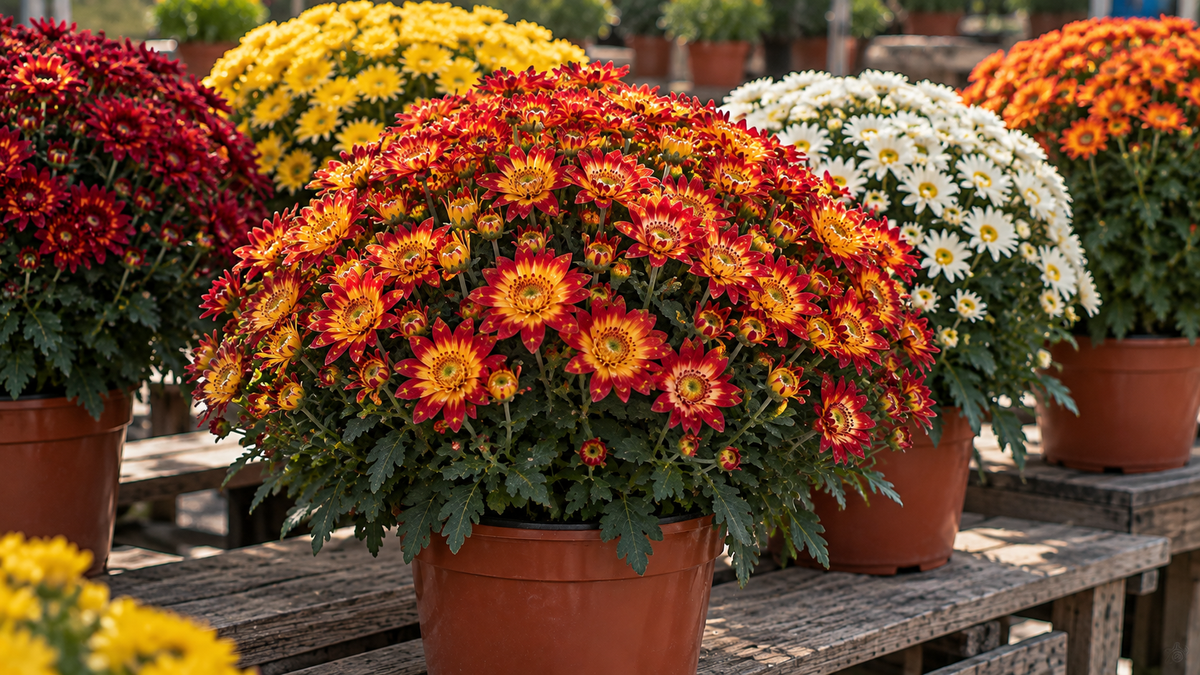
Yoder MumsChrysanthemum × morifolium
Yoder mums are popular garden mums known for their rounded growth, dense foliage, and abundant fall flowers. Available in a wide range of colors and varieties, they can brighten up garden beds, borders, and containers as summer comes to an end.
Unlike florist mums, Yoder garden mums are bred for outdoor growing and can be grown as perennials in suitable climates. With the right planting time and care, they can return year after year rather than being treated as a one-season flower.


If you're growing Yoder mums for the first time, here's what to know about planting, watering, pruning, overwintering, and keeping them blooming.
Garden mums vs. florist mums: what's the difference?
Garden mums and florist mums are both chrysanthemums, but they are grown for different purposes. Garden mums are selected for outdoor performance and are more suitable for growing in the landscape, while florist mums are primarily produced for indoor or short-term decorative use.
Yoder® mums are garden mums developed for outdoor displays. Syngenta's Yoder mum families include varieties with different flower forms, colors, plant habits, and bloom timing, giving growers plenty of options for fall combinations.
That distinction matters if you're hoping to keep your mum beyond the fall season. A garden mum gives you a better starting point for growing a perennial plant, although winter survival still depends on growing conditions and climate.
Perennial habit & hardiness zones
Are Yoder mums perennials? Will they come back next year?
Yes, Yoder mums are herbaceous perennials when grown in suitable conditions. Yoder mums are perennial in USDA Zones 5–9, although they are also commonly grown as seasonal annuals for their fall color.
If you want your Yoder mum to come back, planting it in the ground gives the roots more protection than leaving it in a small seasonal container. Good drainage is especially important because consistently wet soil can lead to root and crown problems.
Keep in mind that being labeled perennial does not guarantee that every plant will survive every winter. Temperature, moisture, planting conditions, and the plant's overall health all affect winter survival.
What zone do mums grow best in?
Yoder mums are listed as perennial in USDA Zones 5–9. Your local winter conditions still matter, particularly if you want the plant to survive and return each year.
In colder areas, protecting the plant's root crown through winter can improve its chances of returning in spring. In warmer regions, the bigger concern may be keeping the soil well drained rather than protecting the plant from extreme cold.
When should you plant mums: spring or fall?
Spring is generally the better time to plant Yoder mums if you want them to establish and return the following year. Planting earlier gives the roots more time to grow before winter arrives.
Fall planting can still work, especially when you're buying mums already in bloom, but the plant has less time to establish its root system before cold weather. If you're treating the mum as a seasonal fall display, however, planting in fall is an easy way to add immediate color.
Yoder mums can also be grown in containers for seasonal displays. Syngenta's growing information includes Yoder mum combinations specifically designed for containers and fall displays.

Sun & water needs
How much sunlight do Yoder mums need?
Yoder mums grow best in full sun, with about 6–8 hours of direct sunlight each day. Plenty of light encourages fuller growth and more abundant flowering.
A sunny garden bed is ideal, but Yoder mums can also work well in containers placed on a bright patio, porch, or other sunny location. Too much shade can result in weaker, leggier growth and fewer flowers, so choose the sunniest practical location you have.
How often should you water Yoder mums?
Water Yoder mums regularly enough to keep the soil evenly moist without leaving it waterlogged. They need consistent moisture during active growth and flower development, but overly wet soil can cause problems with the roots.
Check the soil before watering rather than following a rigid schedule. Container-grown mums may need water more frequently because their soil dries out faster than garden beds.
Are Yoder mums poisonous to pets?
Can you root mum cuttings or grow Yoder mums from seed?
Mums can be propagated from cuttings, but growing a specific Yoder mum from seed will not necessarily produce an identical plant. Named Yoder varieties are selected cultivars, so buying a live plant is the more reliable option when you want a particular variety.
Yoder mums are available in numerous named varieties and families, including selections such as Tracy Orange and other color forms. Syngenta's Yoder material also shows how different varieties can be combined based on their plant habit, timing, and flower characteristics.
Do mums need pruning? How do you pinch Yoder mums?
Yoder mums can be lightly pinched during active growth to encourage a fuller, more compact shape, but the exact approach depends on the variety and how you're growing the plant.
Some Yoder mums naturally develop a rounded, well-branched form, so heavy pruning isn't necessarily needed. We recommend light pinching in early summer to encourage a denser shape.
Once the plant has finished flowering, don't cut it all the way back immediately if you're trying to overwinter it. Leaving the above-ground growth in place through winter can help protect the crown. The old growth can then be cut back in early spring before new growth emerges.
How do you deadhead mums and get them to bloom again?
Deadheading removes faded flowers and keeps the plant looking tidy, but it does not guarantee that a mum will immediately rebloom. Yoder mums naturally flower as days become shorter, so their main display is typically concentrated in late summer and fall.
For container mums, remove spent flowers as they fade to keep the plant looking fresh. Continue providing adequate sunlight and moisture while the plant is actively growing.
If the goal is to have the plant flower again the following year, focus less on forcing another immediate flush of flowers and more on keeping the plant healthy through winter.

How do you keep Yoder mums alive all year?
The best way to keep a Yoder mum alive year-round is to grow it as a perennial in a suitable climate, provide well-drained soil, and protect the plant through winter.
After flowering, leave the old stems and foliage in place through winter rather than cutting the plant down immediately. In early spring, cut the old growth back to the ground before new shoots begin emerging.
If your mum is growing in a container, winter protection becomes more important because the roots are exposed to temperature changes more quickly than plants growing in the ground.
Why are my Yoder mums dying or turning brown?
Brown leaves, wilting, or declining growth can often be traced back to watering or soil conditions. Check these areas first:
If the soil is consistently wet, improve drainage before simply adding more water. Yoder mums prefer moist soil, but they do not do well in continuously waterlogged conditions.
Yoder mums are a practical choice if you want the classic abundance of fall chrysanthemums with the potential to grow them as perennials. Give them plenty of sun, consistent moisture, and well-drained soil, and choose an appropriate planting location if you want them to return next year.
For seasonal color, they also work beautifully in containers and mixed fall displays.
If you're ready to grow Yoder mums in your own garden, explore available Yoder Mum varieties at Blossomdale.
Shop Yoder Mums →