


Looking to add vibrant, long-lasting color to your garden while supporting local wildlife? Butterfly weed (Asclepias tuberosa) is a high-impact North American native perennial that produces vivid clusters of neon-orange flowers from late spring through summer.
As an essential host plant for Monarch butterfly and a rich nectar source for bees and native pollinators, this drought-tolerant species belongs in every eco-friendly landscape. Despite its striking appearance, butterfly weed is remarkably low-maintenance once established, thriving in dry, sunny spots where other perennials struggle.
Quick Care Overview


Butterfly Weed 'Asclepias tuberosa' Butterfly Milkweed
What Does Butterfly Weed Look Like?
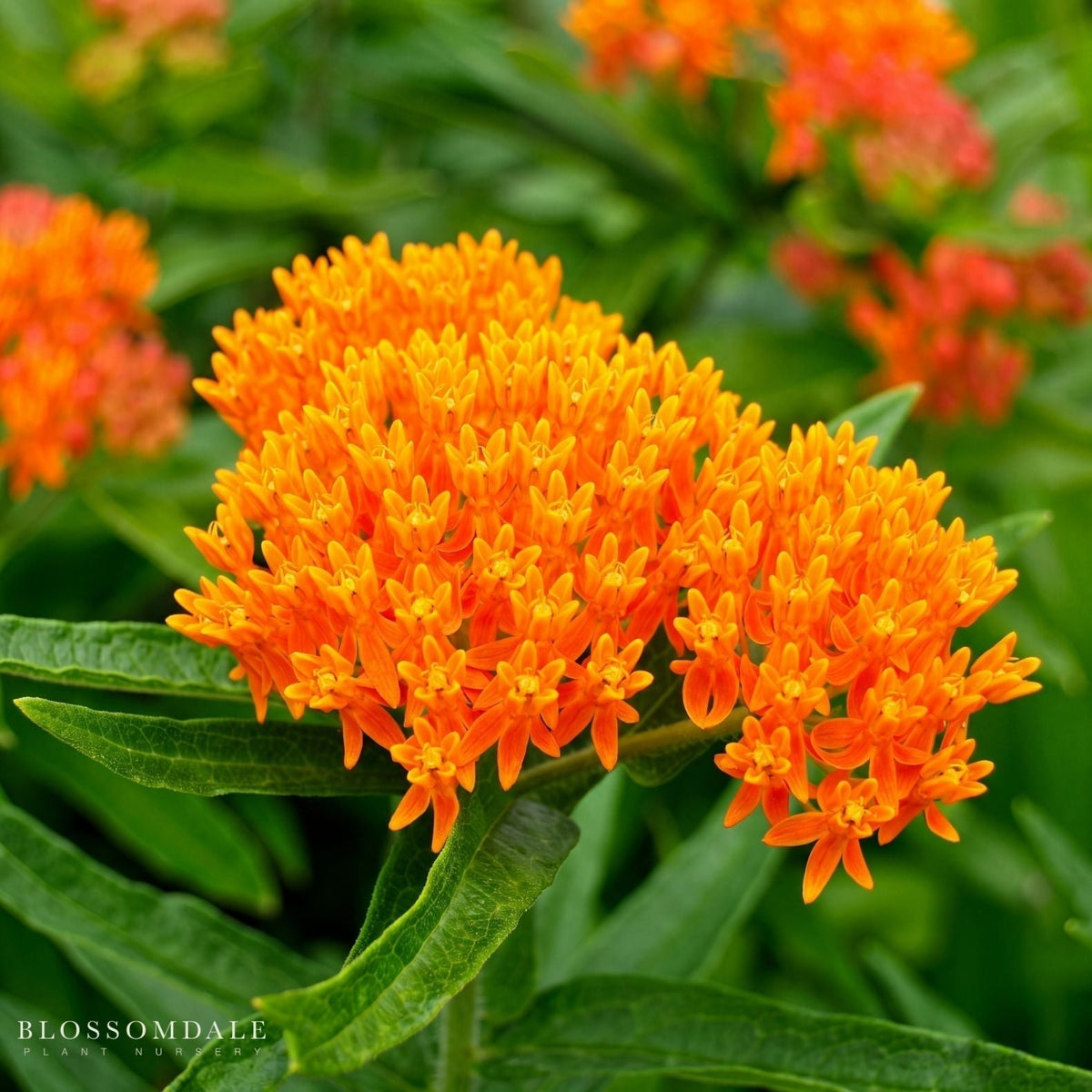
Butterfly weed is a compact, bushy perennial growing 1 to 2 feet tall with narrow, lance-shaped green leaves arranged alternately along sturdy stems. It grows from a deep, thick taproot and produces several upright stems from a central base.
Small, five-petaled flowers grow in dense, flat-topped clusters (umbels) at the ends of the stems. After flowering, the plant forms long, narrow seed pods. As these pods mature and split open in autumn, they release flat brown seeds attached to silky white hairs that drift on the wind.
Unlike most plants in the milkweed family (Asclepias), butterfly weed does not produce a thick milky sap when stems or leaves break. Its sap is clear.
What Are the Colors of Butterfly Weed?
While bright neon-orange is the standard color for Asclepias tuberosa, naturally occurring yellow cultivars (such as 'Hello Yellow') and deep reddish-orange forms exist. These bright blooms pair exceptionally well with blue and purple perennials like Salvia, Russian Sage, and Purple Coneflower.
What Does Butterfly Weed Symbolize?
In floral folklore, butterfly weed symbolizes transformation, hope, health, and freedom. This symbolism stems directly from its vital ecological relationship with the Monarch butterfly, representing spiritual rebirth and the journey of metamorphosis.
Benefits, Safety & Lifespan
What Are the Benefits of Butterfly Weed?
- Essential Monarch Host PlantProvides vital food for hungry Monarch butterfly larvae (caterpillars).
- Pollinator MagnetDelivers rich nectar to bees, native butterflies, and hummingbirds.
- Drought & Heat TolerantDeep taproots allow mature plants to thrive in extreme heat with minimal watering.
- Low MaintenanceRequires zero fertilizer and tolerates poor, sandy, or rocky soils.
- Non-Invasive NativeAdds reliable perennial color across USDA Zones 3–9 without aggressive garden overtaking.
Is Milkweed Poisonous to Touch?
Butterfly weed is safe to handle, but its leaves and stems should never be ingested. Like all milkweeds, it contains cardiac glycosides that make the plant toxic to livestock, dogs, cats, and humans if eaten in large quantities.
Is Butterfly Weed a Perennial?
Yes, butterfly weed is a long-lived herbaceous perennial. The foliage dies back completely to the ground after the first hard winter freeze, and new shoots emerge in late spring. Because it develops a long, sensitive taproot, established plants can live for over 10 years in the same location.
Is Butterfly Weed Invasive?
No. Butterfly weed is a non-invasive native plant. While it can reseed in nearby sunny spots, it does not spread invasively or push out native vegetation.
Planting, Growing & Care Guidelines
Should I Grow Butterfly Weed?
You should grow butterfly weed if you have a sunny spot with fast-draining soil and want an easy-care, native perennial that attracts wildlife. It is an ideal choice for rock gardens, native plant borders, and meadow landscapes. Avoid planting it in heavy, poorly-draining clay or fully shaded areas.
How Do You Plant Butterfly Weed?
- Choose the Location: Select a site with full sun (at least 6 hours of direct sunlight) and fast-draining soil.
- Dig the Hole: Dig a hole twice as wide as the nursery container and equal in depth.
- Handle Taproots Carefully: Gently remove the seedling from its pot without disturbing the sensitive central taproot.
- Position & Backfill: Place the plant so the top of the root ball sits flush with the surrounding soil. Fill in with native soil and press down gently.
- Water In: Water thoroughly to settle the soil. Continue watering weekly until established.
Light
Full sun is non-negotiable. Planting butterfly weed in partial shade leads to weak, floppy stems and reduced bloom counts.
Soil
Asclepias tuberosa thrives in lean, dry, sandy, gravelly, or loam soils. High fertility is unnecessary; rich soil causes leggy growth. Excellent drainage is vital—consistently wet soil causes taproot rot.
Water
Water young plants regularly during their first season. Once established (usually after year one), butterfly weed needs no supplemental watering except during extreme, multi-week droughts.
Fertilizer
Do not fertilize butterfly weed. Excess nitrogen inhibits flowering and promotes weak foliage growth.
Pruning & Fall Clean-Up for Butterfly Milkweed
Leave dried seed pods and stems intact through fall and winter to provide shelter for overwintering beneficial insects. Cut dead stems down to ground level in late winter or early spring before new growth appears.
Managing Pests (Oleander Aphids)
In mid-to-late summer, bright yellow Oleander Aphids frequently cluster on stems and seed pods.
Do not use chemical insecticides or systemic sprays, as these will kill Monarch caterpillars. Instead, knock aphids off with a sharp spray of water from a garden hose or squish small colonies by hand using gardening gloves. Natural predators like ladybugs and lacewings will soon arrive to balance the population.
Bloom Time, Size & Hardiness
What Is the Butterfly Weed Bloom Time?
Butterfly weed typically blooms from early June through late August. Deadheading early faded flowers can encourage a light second flush of blooms in early autumn, though leaving late blooms allows decorative seed pods to form.
What Is the Butterfly Weed Zone?
Butterfly weed is cold-hardy across USDA Zones 3 through 9, making it adaptable to almost every region in North America.
How Tall Does Butterfly Weed Get?
Mature plants reach 1.5 to 3 feet tall with a spread of 1.5 to 2 feet wide. Its compact growth habit prevents it from flopping over neighboring perennials.
Butterfly Milkweed Propagation
How Can I Propagate Butterfly Weed?
Butterfly weed is best propagated by seed. Division is generally unsuccessful because mature plants possess a single, deep central taproot that snaps easily when disturbed.
Can I Grow Butterfly Weed From Seed?
Yes, but seeds require cold, moist stratification to break dormancy.
- Outdoor Sowing (Easiest): Direct-sow seeds in autumn. Natural winter snow and rain cycles break seed dormancy for spring germination.
- Indoor Sowing: Mix seeds with moist sand or a damp paper towel and refrigerate for 30 days before planting indoors under grow lights.
Seed-grown butterfly weed takes 2 to 3 years to develop a mature root system and produce its first major flush of flowers.
How Do You Harvest Butterfly Weed Seeds?
- Monitor green seed pods in late summer or early autumn.
- Wait until the pods turn dry, brown, and split naturally along their side seam.
- Gently open the pod and strip the brown seeds away from their silky white parachutes.
- Store dry seeds in a paper envelope in a cool, dark location until planting.
Grow a Monarch Sanctuary
Butterfly weed (Asclepias tuberosa) delivers unmatched ecological value and bright summer color with minimal effort — a resilient native perennial that returns year after year while giving Monarch butterflies a crucial sanctuary in your backyard.
Transform your landscape with vibrant, low-maintenance native color! Order your high-quality Butterfly Weed (Asclepias tuberosa) live plants today, and start building your ultimate pollinator sanctuary this season.
Butterfly Weed for Sale