


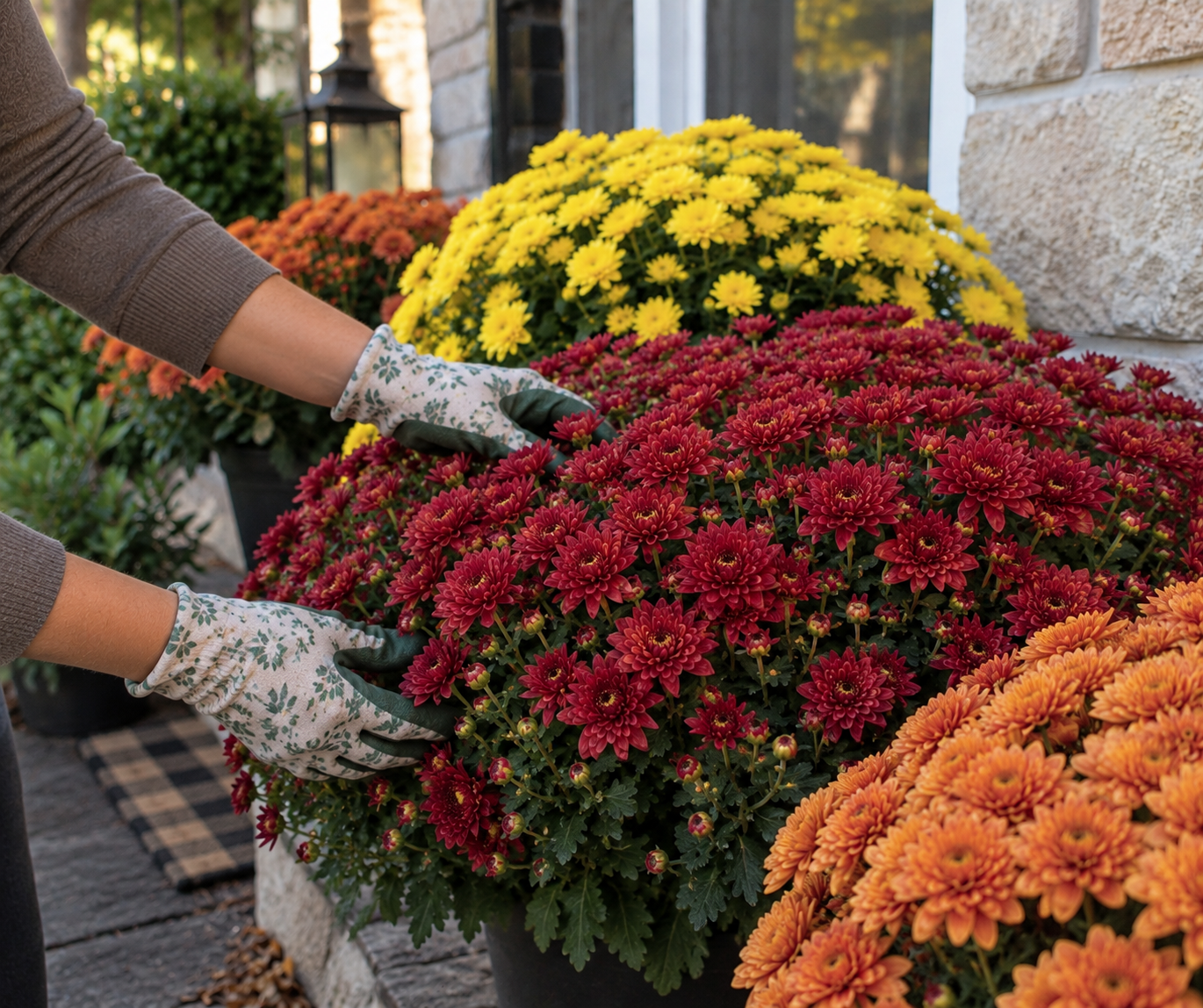
As summer flowers begin to fade and autumn takes hold, Belgian Mums deliver an unmatched wave of rich fall color. Bred specifically for high flower density and a compact, spherical shape, these garden chrysanthemums (Chrysanthemum × morifolium) come in shades of yellow, orange, red, pink, white, purple, and bronze.
Whether used for high-impact porch container displays or planted in garden beds as fall perennials, Belgian Mums provide weeks of vibrant beauty. Here is your complete guide to growing, blooming, and overwintering Belgian Mums.


Quick Care Overview
- Botanic Name: Chrysanthemum × morifolium (Belgian Breeding / Gediflora)
- Common Names: Belgian Mum, Garden Chrysanthemum, Fall Mum, Hardy Mum
- Plant Type: Tender Perennial (often grown as a seasonal annual)
- Mature Size: 1.5–3 ft. tall, 1.5–3 ft. wide
- Sun Exposure: Full Sun (6+ hours of direct light daily)
- Soil Type: Fertile, organic-rich, well-draining soil
- Soil pH: Slightly acidic to neutral (6.0–7.0)
- Bloom Window: Late Summer through Late Autumn
- Flower Colors: Yellow, Orange, Red, Pink, Purple, White, Bronze
- Hardiness Zones: USDA Zones 5a–9b (when established early)
- Special Traits: Naturally Dome-Shaped, Flexible Stems, No Pinching Required
What Are Belgian Mums?
Belgian Mums are specialized garden chrysanthemums bred for extreme branch density, flexible stems, and a naturally rounded growth habit. Developed originally by Gediflora in Belgium, a single plant produces up to 2,000 compact flower buds that bloom together to form a solid ball of color.
Unlike traditional chrysanthemums, Belgian Mums do not require hand-pinching during early summer to achieve a bushy shape. Their pliable stems resist snapping off during autumn rain and windstorms, making them superior choices for garden displays. Mature plants typically reach 1.5 to 3 feet tall and wide depending on the cultivar.
Do Belgian Mums Need Pinching?
No, Belgian Mums do not need pinching. They are genetically selected to branch out naturally without manual trimming. For gardeners, this means zero early-season pruning work while enjoying a perfectly symmetrical, round flower dome in fall.
Planting & Location Requirements
Are Belgian Mums Better in Pots or in the Ground?
Belgian Mums thrive in both containers and garden beds, but your long-term goal dictates the best location:
- Potted Mums: Best for instant, flexible fall decor on porches, patios, and entryways. Potted mums require more frequent watering and are generally treated as temporary seasonal annuals.
- In-Ground Mums: Ideal if you want your mums to act as returning perennials. Ground planting gives roots space to expand and offers better insulation against freezing winter temperatures.

Do Belgian Mums Need Sun or Shade?
Belgian Mums need full sun, receiving at least six hours of direct sunlight each day. Full sun encourages strong stems and triggers heavy flower production. Planting in shade leads to leggy stems, floppy growth, and fewer open blooms.
Night-Lighting Warning (Photoperiodism): Chrysanthemums set flower buds based on night length. Never plant or place mums directly beneath bright streetlights, floodlights, or porch lights. Artificial nighttime light tricks the plant into thinking it is daytime, delaying or completely preventing flowering.
What Kind of Soil Do Belgian Mums Need?
Belgian Mums need rich, fertile, well-draining soil rich in organic matter. While they require consistent moisture, their roots rot easily in waterlogged conditions. For potted mums, use a high-quality commercial potting mix and ensure the container has generous drainage holes.
Care, Watering & Health
How Do You Care for Belgian Mums?
Caring for Belgian Mums requires full sun, consistent moisture, well-drained soil, and proper watering techniques. Check container soil daily, as potted mums dry out rapidly in autumn winds.
Should You Water Potted Mums Every Day?
You should check potted Belgian Mums daily, but only water when the top inch of soil feels dry. During hot, windy autumn days, potted mums may require daily watering. Always water thoroughly until moisture drains from the bottom of the pot.
Pro Tip for Gardeners: Horticulturists refer to a dense foliage canopy as an "umbrella canopy." To ensure moisture actually reaches the root system without triggering fungal diseases, water directly at the soil line or use bottom-irrigation.
How Do You Fertilize Belgian Mums?
Give Belgian Mums a balanced, water-soluble fertilizer every two weeks during their active growing season while leaves and flower buds are developing.
Stop fertilizing completely as soon as the flower buds begin to show color. Applying fertilizer to a plant in full bloom causes the open flowers to age and drop prematurely.
What Are Common Problems With Belgian Mums?
Common issues include aphids, spider mites, powdery mildew, and fungal leaf spot. Prevent disease by watering at the soil level rather than wetting the foliage, and space plants 18 to 24 inches apart to ensure good air circulation.
Managing Blooms
When Do Belgian Mums Bloom?
Belgian Mums bloom from late August through November, depending on the variety. Cultivars are categorized into early-, mid-, and late-season varieties, allowing gardeners to stagger plants for continuous fall color.
How Long Do Belgian Mums Bloom?
A Belgian Mum typically stays in bloom for three to six weeks. The display length depends on weather conditions and the bloom stage at purchase. To maximize bloom time in your yard, buy plants that have 20% open flowers and 80% tightly closed, colorful buds.
How Do You Keep Belgian Mums Blooming?
- Provide Full Sun: Keep plants in bright light to maintain flower color.
- Keep Soil Moist: Avoid severe wilting, which causes unopened flower buds to dry up and drop off.
- Protect From Extreme Heat: Move potted mums into afternoon shade or a covered porch on unseasonably hot fall days to prevent flower fading.
- Deadhead Faded Flowers: Gently snip off dead blossoms to keep the plant looking clean and allow light to reach lower buds.

Popular Varieties
Belgian Mums are available in dozens of named cultivars bred for specific colors and bloom windows:
- Conaco Orange: Deep, rich orange flowers with exceptional weather tolerance.
- Conella Yellow: Bright, clear yellow blooms on a dense, medium-sized mound.
- Viviana Yellow: Showy yellow daisy-style blooms with distinct centers.
- Margo White: Crisp white flowers featuring subtle yellow centers.
- Savona: Striking dark red blooms that resist fading in bright sun.
- Pavia Red: A popular late-season cultivar with dark burgundy-red flowers.
Indoor vs. Outdoor Growing
Are Belgian Mums Indoor or Outdoor Plants?
Belgian Mums are outdoor plants. While you can bring a blooming potted mum indoors as temporary room decor for one to two weeks, long-term indoor survival is poor. Indoor spaces lack sufficient direct sunlight, and dry home heating causes leaves and flower buds to drop rapidly. If kept indoors, place the pot in your sunniest window and check soil moisture daily.
Overwintering & Hardiness
Are Belgian Mums Annual or Perennial?
Belgian Mums are technically hardy perennials (USDA Zones 5a–9b), but they are frequently grown as annuals. Their survival depends on when they are planted:
- Fall-Planted Mums (Annual Behavior): Mums purchased in full bloom during September or October spend all their energy on flowers rather than roots. They rarely establish deep enough roots before the ground freezes and usually freeze over winter.
- Spring-Planted Mums (Perennial Behavior): Mums planted in early spring or early summer spend months building deep root systems, allowing them to return reliably every year.
Do Belgian Mums Come Back Every Year?
Belgian Mums will come back every year if they are planted in the ground early in the season, given good drainage, and properly winterized in cold climates. Potted mums left outdoors in winter will freeze and die because container roots lack soil insulation.
Belgian Mums Winter Care Step-by-Step
To give ground-planted Belgian Mums the best chance of surviving cold winters:
- Do NOT Prune in Fall: Leave dead brown foliage and stems intact through winter. The old stems shield the central root crown from severe frost and icy winds.
- Apply Heavy Mulch: After the first hard freeze, cover the base of the plant with 3 to 4 inches of shredded bark, straw, or evergreen boughs.
- Ensure Winter Drainage: Never plant mums in low spots where water pools. Wet winter soil rots dormant roots faster than sub-zero temperatures.
- Prune in Spring: Cut back dead stems to ground level in early spring when new green shoots emerge from the soil.
Final Thoughts
Belgian Mums provide a vibrant finale to the gardening season. By giving them full sun, soil-level watering, and proper drainage, you can enjoy weeks of brilliant autumn color. If you want them to return next spring, plant early in the season to build deep roots before winter arrives.
Start building your autumn color display today! Browse our collection of healthy, bud-packed Belgian Mums and other fall beauties to get your yard season-ready.