


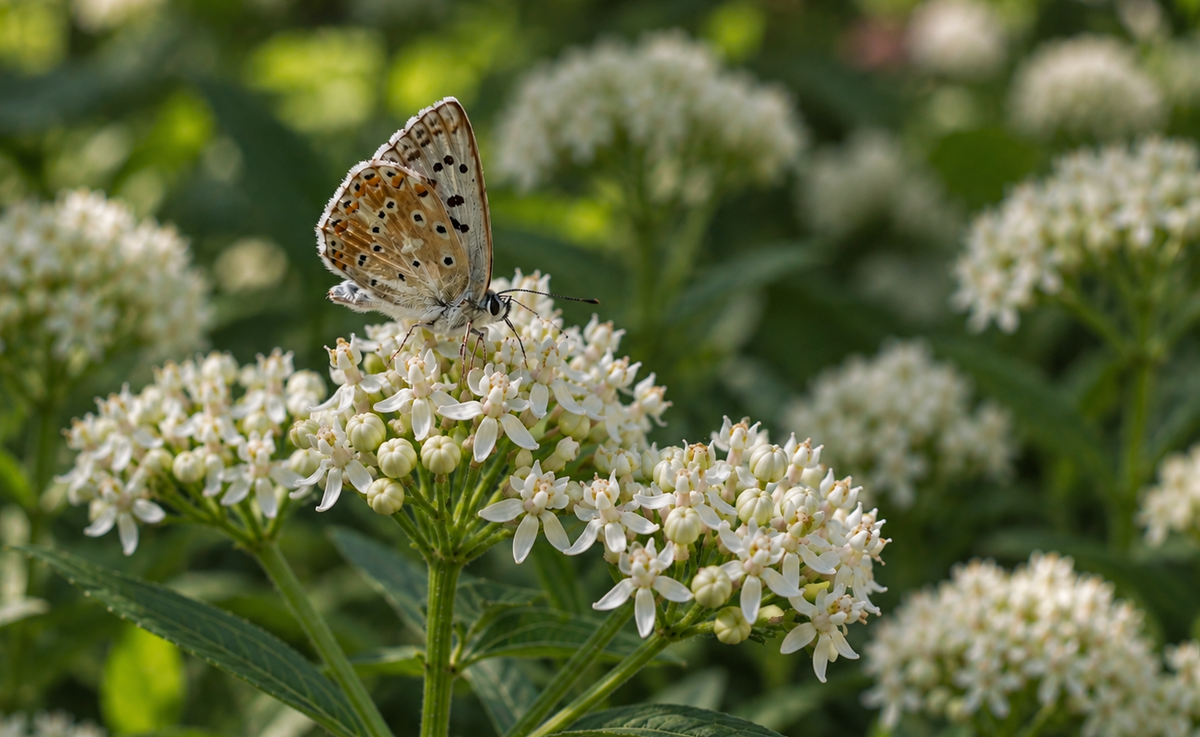
Have a damp corner of your garden where other flowers struggle to grow? Aquatic milkweed (Asclepias perennis) could be just the plant you're looking for.
Also called white swamp milkweed, this native perennial thrives in moist soil and tolerates partial shade. Its delicate white to pale pink flower clusters brighten rain gardens, pond edges, and low-lying beds while providing food for monarch caterpillars.
If you've been looking for a milkweed that suits wetter garden conditions, aquatic milkweed is worth considering.
Aquatic Milkweed (Asclepias perennis)
- A natural fit for rain gardens and pond edges
Aquatic milkweed grows naturally in wet meadows, floodplains, marshes, and swamp margins. It works well in consistently moist garden beds and areas that receive partial shade to full sun. Choose a location that suits your local climate and keeps the roots adequately moist.
- Compact growth for smaller gardens
Growing roughly 1–2 feet tall, aquatic milkweed is suitable for smaller native plant gardens and mixed borders. Unlike common milkweed (Asclepias syriaca), which spreads through underground rhizomes, aquatic milkweed generally grows in compact clumps. It can still self-seed, so remove unwanted seedlings if you prefer a more controlled planting.
- White flowers with a purpose
The clusters of white to pale pink flowers bring a delicate touch to wet garden spaces. More importantly, aquatic milkweed serves as a host plant for monarch caterpillars, which feed on its leaves. Its flowers also provide nectar for visiting pollinators.


White Swamp Milkweed 'Asclepias perennis'
How to Grow Aquatic Milkweed From Seeds
Growing aquatic milkweed from seed is a practical way to establish several plants across a rain garden or moist planting bed. With the right conditions, you can raise seedlings ready for transplanting when the weather is suitable.
What Makes Aquatic Milkweed Seeds Different?
Unlike many milkweed species, Asclepias perennis produces seeds without the familiar silky tufts, called comas, that help seeds travel through the air. Its seeds can float on water, an adaptation that helps them disperse through wetland habitats.
How to Sow Aquatic Milkweed Seeds
- Check stratification requirements. Follow your seed supplier's instructions for any recommended cold, moist treatment before sowing.
- Prepare your containers. Fill seed trays or small pots with a suitable seed-starting mix.
- Sow shallowly. Place seeds on the surface and cover them lightly, following the supplier's directions.
- Keep the mix moist. Water gently and prevent the growing medium from drying out.
- Provide suitable light and warmth. Follow the recommended germination conditions and monitor the trays for seedlings.
You can start seeds indoors for greater control over moisture and temperature, or sow outdoors when conditions are appropriate for your region. If starting indoors, transplant seedlings after they have developed sufficiently and outdoor conditions are suitable.
Germination time varies with seed quality, pretreatment, and growing conditions, so allow for some variation rather than expecting every seed to sprout at once.
Frequently Asked Questions About Aquatic Milkweed
Where is the best place to plant milkweed in your yard?
Plant aquatic milkweed in consistently moist areas such as rain gardens, pond edges, damp flower beds, and low-lying garden spaces. It tolerates partial shade and can also grow in sunnier locations when moisture conditions are suitable.
Where can I buy Asclepias perennis plants and seeds?
You can check Blossomdale's available aquatic milkweed seedlings. Before ordering, review the product details for species identification, growing instructions, and current availability.
How do I germinate and prepare milkweed seeds for planting?
Start by checking whether your seeds require cold stratification. If recommended, follow the supplier's specified treatment period. Sow the seeds shallowly in a suitable growing medium, maintain consistent moisture, and provide the recommended temperature and light conditions.
Can I start milkweed seeds indoors?
Yes. Indoor sowing lets you manage moisture and temperature more closely while seedlings develop. Starting approximately 6–8 weeks before your expected last spring frost may be suitable in climates with distinct winters, provided the timing matches the species' growing requirements. Gardeners in warmer regions should adjust sowing dates to local conditions.
Why are milkweed seeds hard to grow, and how long do they take?
Germination can be affected by seed quality, storage, pretreatment, temperature, and moisture. Some seeds may sprout within a few weeks under favorable conditions, while others take longer. Check the instructions for your particular seed lot before assuming stratification is necessary or that a fixed germination period applies.
Will aquatic milkweed come back every year, and does it spread aggressively?
Yes. Aquatic milkweed is a perennial that can return in subsequent growing seasons when conditions are suitable. It generally forms compact clumps rather than spreading through extensive underground rhizomes like common milkweed. It can produce seedlings, so remove unwanted growth to manage its spread.
Is milkweed poisonous to pets or children?
Milkweeds contain compounds that can be harmful if ingested, and their milky sap may irritate the skin or eyes. Wear gloves when pruning or handling damaged stems, wash your hands afterward, and prevent children and pets from eating the plant. Contact a medical professional or veterinarian if ingestion occurs.
Which milkweed is best for monarchs?
The most suitable milkweed depends on your region and garden conditions. Native species that naturally grow in your area are useful choices. For consistently moist soil and partly shaded locations within its native range, aquatic milkweed can provide a host plant for monarch caterpillars.
Seeds vs. Starter Plants: Which Should You Choose?
Both options can help you establish aquatic milkweed. Your choice depends on your budget, planting area, and how much time you want to spend raising seedlings.
| Seeds | Live starter plants | |
|---|---|---|
| Best for | Larger plantings and tighter budgets | Smaller gardens and a head start on establishment |
| Getting started | Requires germination and seedling care | Ready to transplant when conditions are suitable |
| Time to flowers | May take longer, depending on growing conditions | May establish and flower sooner, depending on plant maturity |
| Growing effort | More hands-on care during germination | Requires transplanting and establishment care |
Seeds are a practical option for filling a larger rain garden or creating a broader native planting over time. Starter plants are convenient when you'd like to establish individual plants without managing germination.
Shop Aquatic Milkweed at Blossomdale
Give that damp garden corner a new purpose with aquatic milkweed. Its compact growth, distinctive white flowers, and value as a monarch host plant make it a useful addition to suitable native gardens.
Check out our asclepias perennis for sale and other plants perfect for your monarch garden here!