


Cleveland sage, botanically known as Salvia clevelandii, is one of the most sought-after California native shrubs for drought-tolerant gardens. Gardeners search for planting tips, pruning guidance, watering schedules, and companion planting ideas because this aromatic sage delivers fragrance, pollinator support, and year-round structure with minimal care.
Cleveland Sage Plant Care Guide
Cleveland sage plant care focuses on full sun exposure, fast-draining soil, and low irrigation. This California native sage evolved in dry coastal and inland slopes, which explains its preference for lean soil and infrequent watering.
How do you care for Cleveland sage?
Cleveland sage thrives in full sun with at least six to eight hours of direct light daily. Plant it in sandy or rocky soil with excellent drainage. Water deeply but infrequently during the first growing season to establish roots. Once established, reduce irrigation to occasional deep watering during prolonged drought. Avoid heavy fertilization, as rich soil reduces fragrance and weakens stems.
How much sun does Cleveland sage need?
Cleveland sage requires full sun. In coastal climates, it tolerates intense afternoon sun. In very hot inland regions, slight afternoon shade is acceptable, but too much shade causes leggy growth and fewer blooms.
Does Cleveland sage tolerate frost?
Mature plants tolerate brief light frost. Extended hard freezes combined with wet soil increase the risk of root rot and structural damage. Cleveland sage is hardy in USDA Zones 8–11.
What type of soil is best for Cleveland sage?
Well-draining soil is essential. Sandy loam or decomposed granite works well. Clay soil must be amended heavily or planted on a mound to prevent root rot. This species does not tolerate standing water.
Watering and Drought Tolerance
Cleveland sage is widely planted in xeriscapes and Mediterranean gardens because of its strong drought tolerance once established.
Is Cleveland sage drought tolerant?
Yes. After the first year of establishment, Cleveland sage becomes highly drought tolerant. It naturally grows in Southern California’s dry hillsides and coastal sage scrub ecosystems.
How often should you water Cleveland sage?
During the first year, water every 7 to 14 days depending on heat and soil drainage. After establishment, water once every 3 to 4 weeks in summer if there is no rainfall. Overwatering is the most common cause of plant decline.
Pruning and Maintenance
Proper pruning keeps Cleveland sage compact and prevents woody, brittle stems. Timing and technique matter.
When should you prune Cleveland sage?
Prune lightly after flowering, typically late spring to early summer. Remove spent flower stalks and shape the plant without cutting into old woody stems. A harder rejuvenation pruning can be done in early fall if necessary.
How do you prune Cleveland sage without killing it?
Never cut into bare, woody growth that has no green leaves. Trim back only soft growth and faded blooms. Cutting too far into old wood may prevent regrowth.
Blooming and Flower Characteristics
Cleveland sage is prized for its violet-blue flowers and powerful fragrance.
When does Cleveland sage bloom?
Bloom time typically runs from late spring through early summer. In favorable conditions, light reblooming may occur in late summer.
What do Cleveland sage flowers look like?
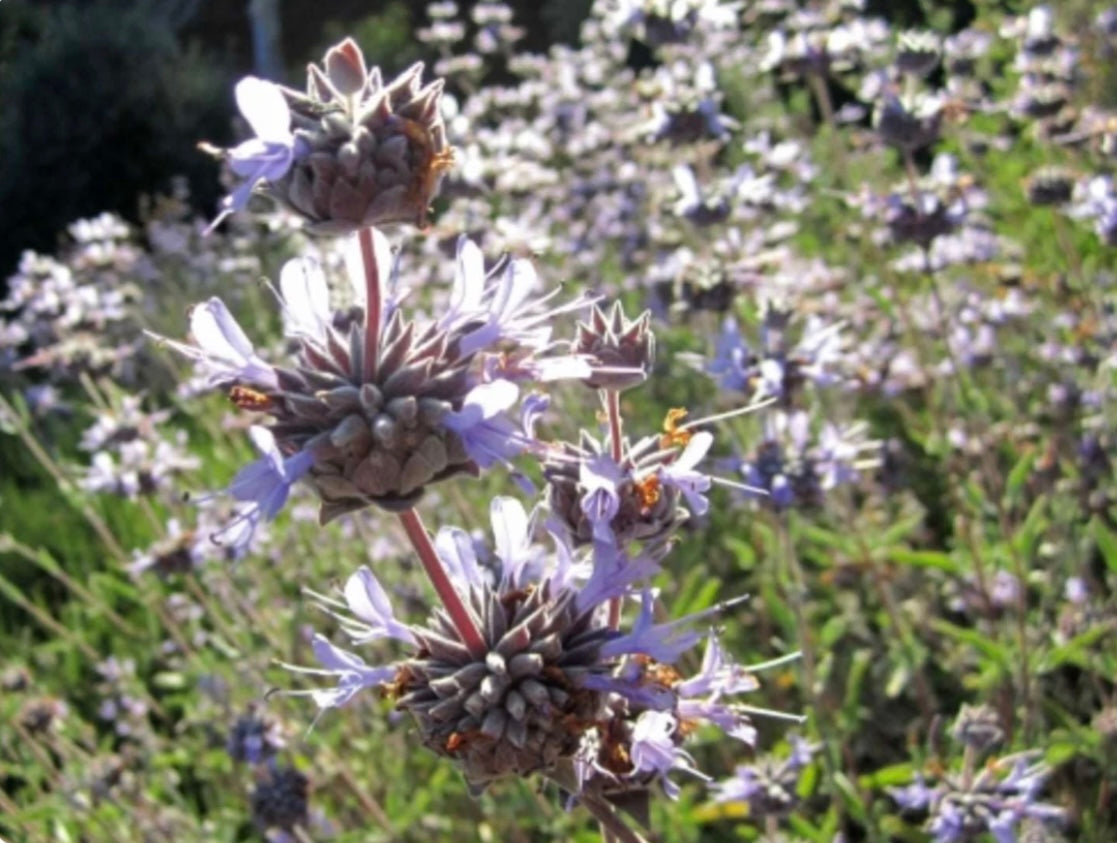
Cleveland sage produces whorls of tubular violet to lavender-blue flowers held above silvery-gray foliage. The blooms attract bees, butterflies, and hummingbirds. The leaves release a strong herbal scent when brushed or crushed.
Growth Size and Landscaping Uses
This California native shrub works beautifully in native landscapes, pollinator gardens, and drought-tolerant borders.
How big does Cleveland sage get?
Cleveland sage typically grows 3 to 5 feet tall and wide. In optimal conditions, it can reach 6 feet with a rounded form.
Is Cleveland sage good for landscaping?
Yes. It is widely used in xeriscaping, Mediterranean gardens, and native plant landscapes. Its silvery foliage contrasts well with ornamental grasses and other drought-tolerant shrubs.
Companion Planting and Pollinator Support
Cleveland sage plays an important ecological role in native plant gardens.
What plants grow well with Cleveland sage?
Strong companions include California buckwheat, manzanita, ceanothus, and ornamental grasses suited for dry climates. These plants share similar water and soil needs.
Does Cleveland sage attract pollinators?
Yes. Cleveland sage attracts bees, butterflies, and hummingbirds due to its nectar-rich tubular flowers. It supports local ecosystems and fits well into pollinator garden designs.
Growing Cleveland Sage from Seed or Cuttings
Propagation is a frequent search topic for gardeners expanding native landscapes.
Can you grow Cleveland sage from seed?
Yes, but germination can be slow and variable. Sow seeds in well-draining soil and provide warmth and light. Many gardeners prefer cuttings for faster, more reliable results.
How do you propagate Cleveland sage from cuttings?
Take softwood cuttings in late spring. Use a clean blade and remove lower leaves. Place cuttings in a sandy propagation mix with good drainage. Keep lightly moist until roots develop, usually within several weeks.