


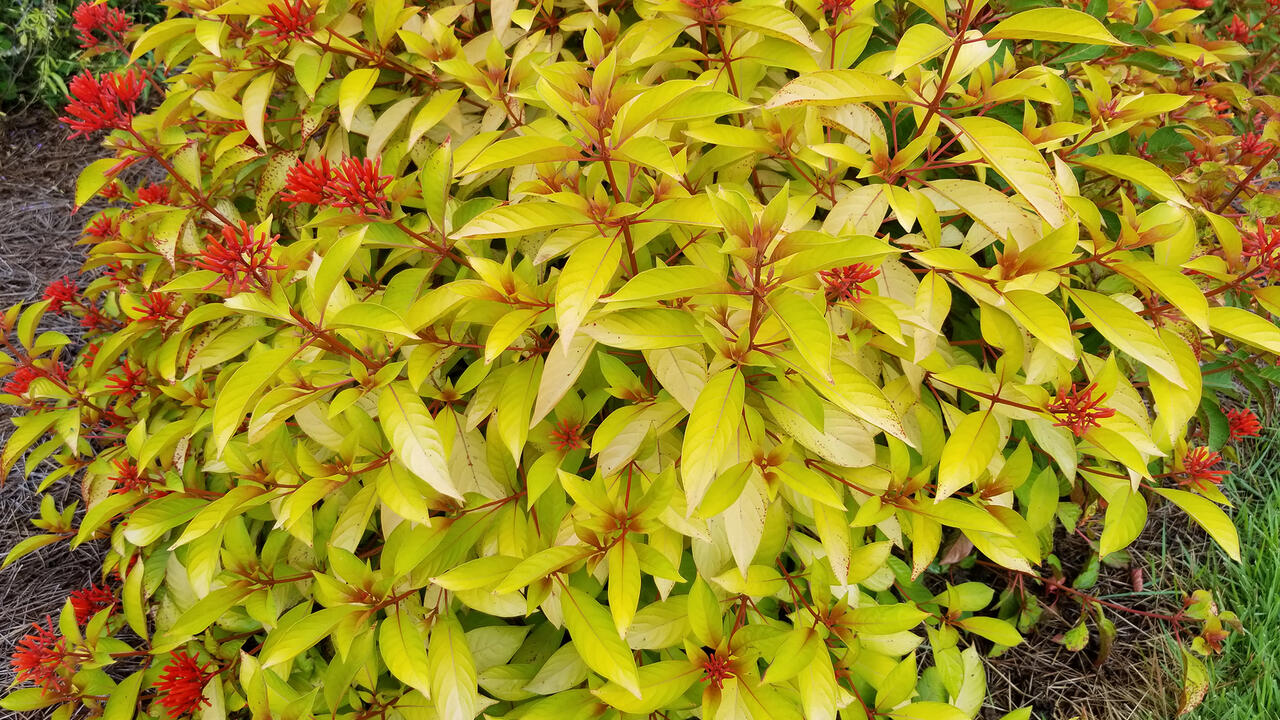
If you want a shrub that delivers bold foliage and bright flowers while attracting pollinators, Lime Sizzler Firebush is an excellent choice. Its lime-green leaves and red-orange blooms make it visually striking, and it adapts well to gardens of many kinds and sizes.
Color and Foliage Contrast: Why ‘Lime Sizzler’ Stands Out
This shrub is visually striking because of its vibrant foliage and bright flowers.
What is a Lime Sizzler Fire Bush?
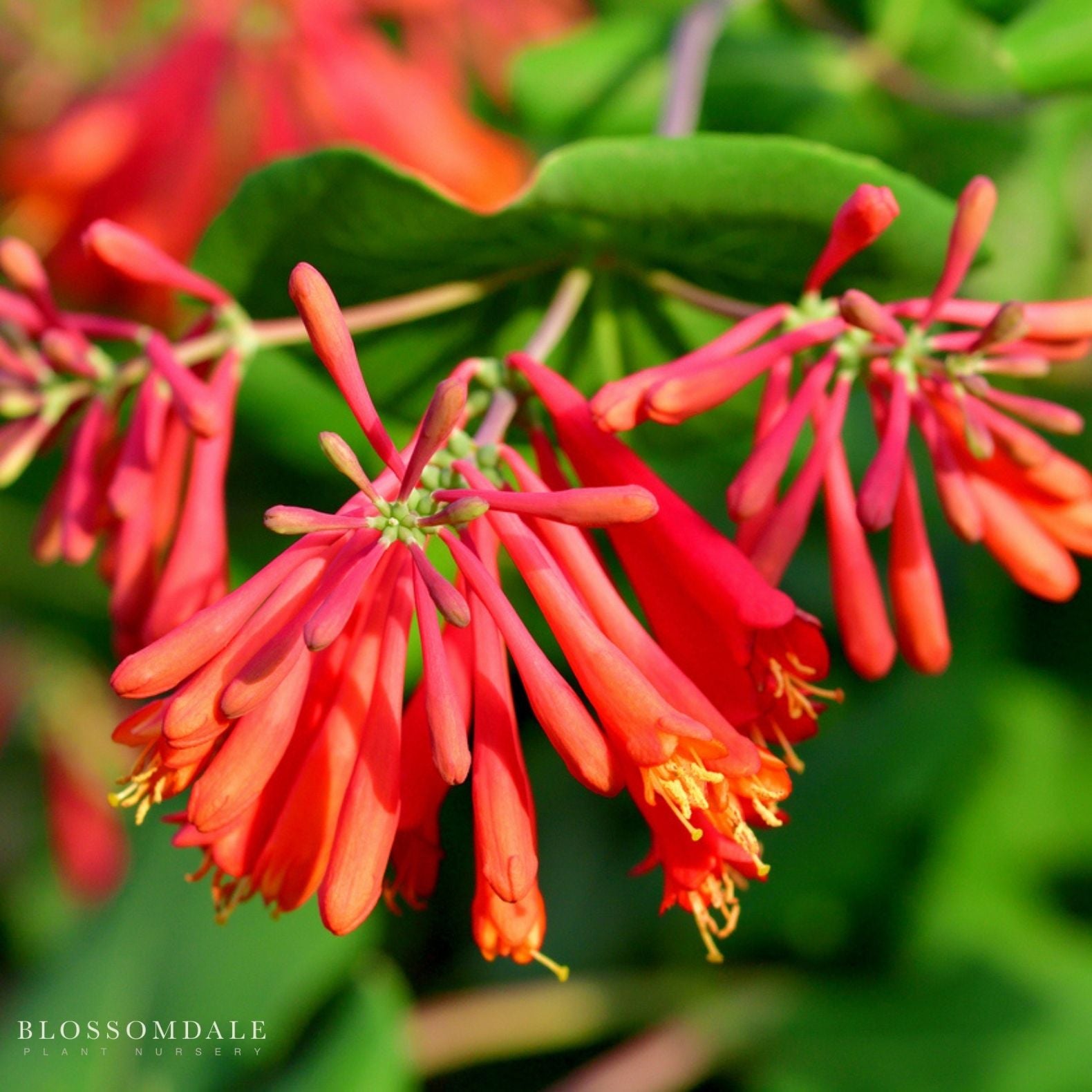
Lime Sizzler Firebush is a hybrid cultivar of Hamelia patens, bred to produce chartreuse-to-light-green variegated foliage. It also bears red-orange tubular flowers that stand out against the leaves. Its leaves — often with lighter yellowish tones — make it brighter than standard Firebush, adding light and texture to garden beds.
Does Lime Sizzler Fire Bush bloom year-round?
In warm climates (USDA zones 9–11), it can bloom from late spring through fall, often producing flowers over extended months. In cooler or frost-prone regions, bloom will be limited to the warmer part of the year, but the foliage still provides color — making it reliable for seasonal interest even when not flowering.
Firebush Varieties Compared: Lime Sizzler vs. Dwarf vs. Native Hamelia patens
Comparing varieties helps you select the best Firebush for your space and style.
How fast does Lime Sizzler Fire Bush grow?
Lime Sizzler grows moderately; under favorable conditions it typically reaches mature shape within a couple of growing seasons.
How big does Lime Sizzler Fire Bush get?
Mature plants generally reach about 4–5 feet tall and wide. That makes it more compact and manageable than standard Firebush species, which in ideal (frost-free) conditions may grow taller and wider. Its moderate size is ideal for smaller gardens, containers, hedges, or mass plantings when you want color without overwhelming vertical growth.
Designing a Pollinator-Friendly Garden with Firebush as the Centerpiece
It attracts hummingbirds, butterflies, and bees, making it ideal for pollinator gardens.
Does Lime Sizzler Fire Bush attract butterflies?
Yes. Its red-orange tubular flowers are rich in nectar and attract hummingbirds, butterflies, and bees. Beyond providing nectar, the shrub also produces small berries that birds may eat — supporting local wildlife. Because the blooms appear repeatedly through warm months, it serves as a reliable food source in a layered pollinator garden.
How to Grow Lime Sizzler Firebush in Containers and Small Spaces
Even in limited spaces, this shrub thrives with proper care.
How much sun does Lime Sizzler Fire Bush need?
Full sun is best — at least 6–8 hours of direct sunlight daily encourages abundant flowering and vivid foliage. In hot climates, light afternoon shade may help protect foliage from scorching.
How often should I water Lime Sizzler Fire Bush?
When newly planted, water regularly to help roots establish. Once established, it tolerates drier conditions. Deep watering followed by a drying period encourages strong root growth.
Can Lime Sizzler Fire Bush grow in shade?
It tolerates partial shade, but flowering and leaf color reduce in low light. Full sun produces the brightest foliage and most flowers.
For containers: plant in a pot with well-draining soil, ensure drainage holes, and water deeply when the topsoil feels dry. Regular drainage avoids root rot and supports healthy growth even in pots.
Low-Water Landscaping with Firebush: Design Ideas for Arid Climates
Lime Sizzler Firebush performs well in drought-tolerant landscapes.
Is Lime Sizzler Fire Bush drought tolerant?
Yes. Once established, it shows moderate to good drought tolerance. It handles heat and humidity well and works in water-wise or xeriscape gardens, especially when planted in well-draining soil and mulched to retain moisture. Deep watering during extended dry spells is beneficial, but overly wet soil should be avoided.
Seasonal Transformation: How Firebush Changes Through the Year
It offers color and interest across multiple seasons with minimal care.
Does Lime Sizzler Fire Bush need fertilizer?
A light balanced fertilizer in early spring (and optionally again midway through the growing season) can support healthy growth and abundant flowering. Heavy fertilization is unnecessary and may favor leaf growth over blooms.
Can Lime Sizzler Fire Bush survive winter?
In warm climates (zones 9–11), it generally remains evergreen or semi-evergreen. In colder areas, frost can kill above-ground growth, but the roots are hardy in milder zones, meaning the plant often regrows from the roots in spring. Seasonal die-back also offers a chance for pruning and reshaping before new growth returns.
Common Pests and Problems in Firebush Shrubs (and How to Solve Them Naturally)
Lime Sizzler Firebush is hardy but can encounter minor pest issues.
What pests affect Lime Sizzler Fire Bush?
Occasional pests include scale insects, aphids, and spider mites, especially on new growth or during hot, dry conditions. Prevent issues by maintaining proper soil moisture, ensuring good drainage, and spacing plants adequately to allow air circulation. Regularly inspect foliage and treat early signs of infestation.
Natural remedies such as insecticidal soap or neem oil, and encouraging beneficial insects, can control pests without harsh chemicals. Stress-related pest or fungal problems are uncommon if basic care is followed.
How to Prune and Shape Lime Sizzler for Maximum Bloom and Balance
Light pruning maintains shape and encourages blooms.
How do you prune Lime Sizzler Fire Bush?
After flowering, remove dead or leggy stems to encourage branching. A gentle trim helps maintain a tidy mound and supports fuller flowering in the next bloom cycle.
If the plant becomes overgrown or woody, perform a harder prune in late winter or early spring (before new growth begins). In frost-prone zones, cut back dead stems after frost to ground level — the plant often resprouts from roots in spring. Avoid heavy pruning during peak bloom, as it may reduce flowering that season.
The Environmental Benefits of Planting Firebush
This shrub supports wildlife and contributes to a sustainable garden ecosystem.
Is Lime Sizzler Fire Bush deer resistant?
Yes. It is typically not preferred by deer. Besides offering nectar for hummingbirds and butterflies, the species produces small berries that birds may eat — contributing to local biodiversity. Firebush also tolerates heat and drought and adapts to a variety of soils, making it useful for sustainable, low-water landscaping.
Used in mass plantings, borders, hedges, or container gardens, Lime Sizzler delivers aesthetic appeal while supporting wildlife and a resilient garden environment.