


Jerusalem sage (Phlomis fruticosa) is a striking Mediterranean shrub admired for its golden-yellow blooms, silvery foliage, and sculptural form. Its drought tolerance, long bloom season, and low-maintenance nature make it a favorite for sunny gardens, borders, and pollinator-friendly landscapes. This guide covers everything gardeners need to know about growing, caring for, and landscaping with Jerusalem sage.
What Is Jerusalem Sage (Phlomis fruticosa)?
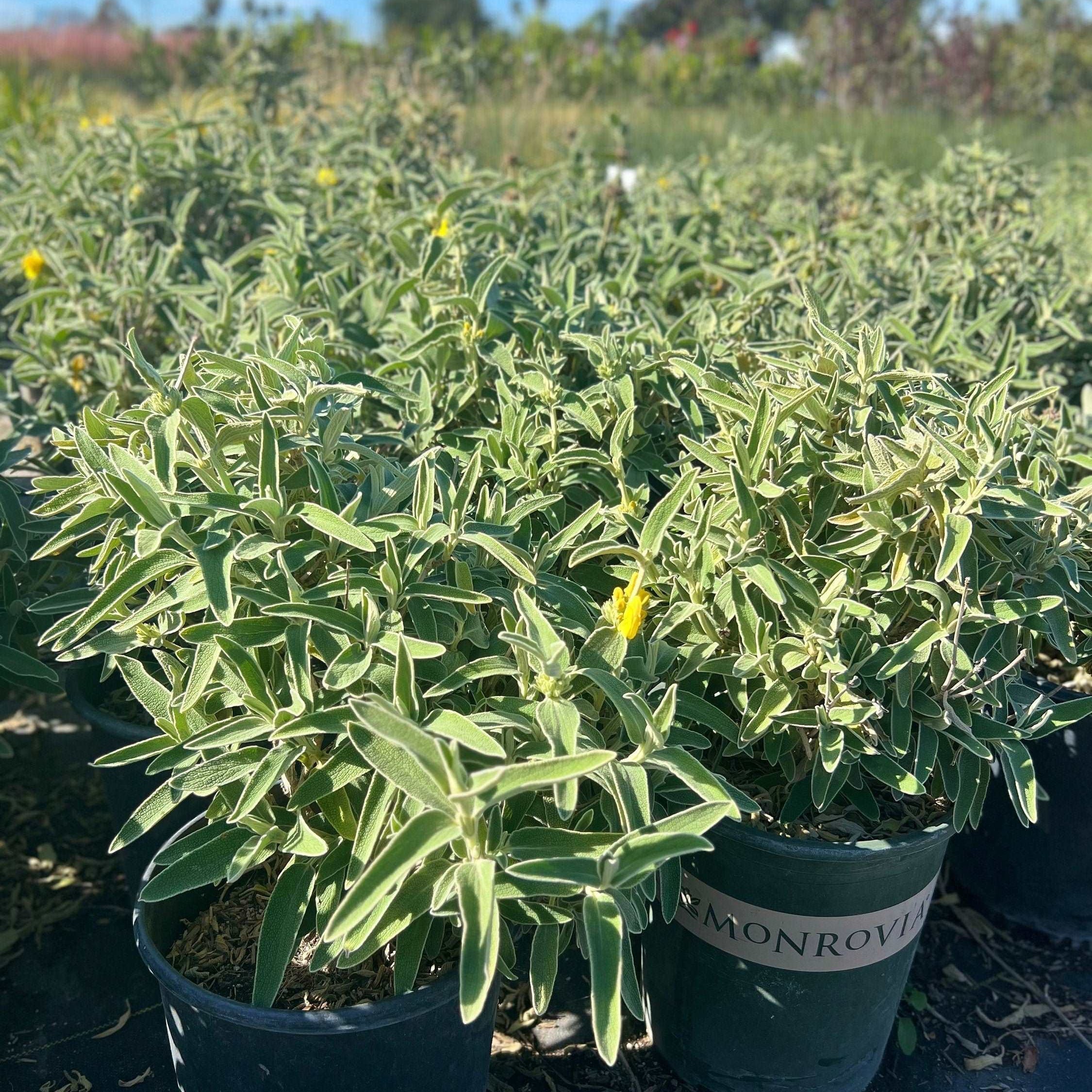
Despite its name, Jerusalem sage is not a true sage (Salvia). It’s a semi-evergreen shrub with soft, velvety leaves and tiered yellow flowers that bloom from late spring to early summer. The plant grows in mounded forms, usually 3–4 feet tall and wide, making it ideal for borders or mass plantings. The flowers attract bees, butterflies, and hummingbirds, while the sculptural seed heads add visual interest long after blooming ends.
Where Does Jerusalem Sage Come From?
Native to the rocky slopes of the Mediterranean, Jerusalem sage is adapted to hot, dry summers and mild winters. Understanding its origin explains why it thrives in sunny, well-drained gardens and why it responds so well to drought and low-maintenance conditions.
Which Growing Zones Are Best for Jerusalem Sage and Where Does It Thrive?
Jerusalem sage performs best in USDA Zones 8–10. These regions offer mild winters and dry summers that mimic its native habitat. In cooler climates, it can be grown in containers and moved indoors during the coldest months or treated as a tender perennial that reemerges each year.
Once established, it handles drought with ease, making it a perfect fit for Mediterranean or xeriscape gardens.
What Soil and Sunlight Conditions Does Jerusalem Sage Need?
The plant prefers lean, well-draining soil. Sandy, gravelly, or loamy soils work best; amend clay soil with sand or gravel to prevent waterlogging. Full sun encourages heavy flowering and a compact, healthy shape. Partial shade may reduce blooms and make the plant leggy.
How Do You Plant and Propagate Jerusalem Sage?
Jerusalem sage can be propagated from seeds, cuttings, or nursery-grown transplants.
- Seeds: Sow indoors in late winter or outdoors after frost. Germination takes about three weeks with consistent warmth and light.
- Cuttings: Take semi-ripe cuttings in summer, dip in rooting hormone, and place in a well-draining mix. Keep lightly moist until roots form.
- Transplants: Plant nursery-grown shrubs at the same depth they were in the container and water deeply to settle roots. Avoid moving mature plants once established. They grow best in a permanent spot.
How Do You Care for Jerusalem Sage: Watering, Feeding, and Pruning?
Jerusalem sage is remarkably low-maintenance once established:
- Watering: Water young plants weekly during the first growing season. Mature plants need irrigation only during extended dry periods.
- Feeding: Fertilizer is usually unnecessary. Too much can cause leggy growth and fewer flowers.
- Pruning: After flowering, remove spent blooms and lightly trim the top third to maintain shape. In late winter or early spring, give another gentle prune to encourage fresh growth.
What Pests or Diseases Affect Jerusalem Sage and How Do You Prevent Them?
Jerusalem sage is generally pest- and disease-free. Occasional aphids may appear on new growth. Overly wet soil can cause root rot. Plant in well-drained soil, provide good air circulation, and avoid overhead watering. Aphids can be removed with a water spray or treated with neem oil.
How Can Jerusalem Sage Be Used in Low-Maintenance Landscaping?
Its drought tolerance, evergreen foliage, and bright flowers make Jerusalem sage ideal for water-wise gardens, Mediterranean-style borders, mass plantings on slopes or rocky areas, and pollinator-friendly landscapes. The plant provides structure and color without demanding frequent care, making it a standout choice for low-maintenance gardens.
What Are the Best Companion Plants for Jerusalem Sage?
Jerusalem sage pairs beautifully with other drought-tolerant plants that love full sun. Try lavender, rosemary, catmint, or Russian sage for soft, harmonious color. For contrast, mix in ornamental grasses like blue fescue or feather reed grass for movement and texture.
In pollinator gardens, pair it with echinacea, salvia, or agastache. Together, they’ll turn your garden into a blooming haven from spring through fall.
What Are the Aesthetic and Ecological Benefits of Jerusalem Sage?
Beyond beauty, Jerusalem sage supports biodiversity. Its nectar-rich flowers attract pollinators, while dense foliage offers shelter for beneficial insects. Its drought tolerance reduces water use, and its sculptural form adds year-round interest.
In short, Phlomis fruticosa is a plant that supports both beauty and biodiversity. Whether filling a sunny border, stabilizing a slope, or creating a pollinator-friendly retreat, Jerusalem sage brings character, color, and resilience.