Blogs
Bay Leaf Laurus nobilis Bay Laurel Sweet Bay Tree
Bay Leaf Laurus nobilis Bay Laurel Sweet Bay TreeSweet Laurel Bay Leaf is a useful addition in a herb garden and makes a great privacy hedge plant. It is an evergreen shrub that is native to the Mediterranean. The leaves are aromatic and are frequently used in soups and pasta. Sweet Bay is fairly easy to grow and does best in full sun to partial shade. Well draining soil is best for this plant, and it needs to be protected form freezing weather. Sweet Bay makes a great landscape plant, because it can pruned into a topiary and also used as a decorative hedge.
Learn moreSurinam Cherry: A Complete Guide for Tropical Fruit Lovers
The Surinam cherry (Eugenia uniflora) is a compact tropical fruit tree celebrated for its bright, tart-sweet berries and striking foliage. Beyond its flavorful fruit, it holds cultural, ecological, and culinary importance throughout its native South America and the Caribbean. Highly adaptable, this resilient tree thrives in a range of climates and garden settings, from backyard landscapes to container patios, making it a versatile choice for gardeners and tropical fruit enthusiasts alike. 1. Surinam Cherry: History, Origins, and Global Cultivation The Surinam cherry (Eugenia uniflora) is a small but remarkable tropical fruit tree, valued as much for its vibrant berries as for its cultural and ecological significance. Native to eastern South America—Brazil, Uruguay, Paraguay, and parts of Argentina—it thrives along riverbanks and forest edges, where Indigenous communities long relied on its fruit for food and its leaves and bark for traditional remedies. European settlers introduced the tree to the Caribbean and other tropical regions, where it adapted quickly, becoming a common feature in home gardens, small orchards, and community plantings. Today, Surinam cherry grows across the Caribbean, Florida, and parts of Asia, offering gardeners both ornamental beauty and practical fruit production. Its ribbed, glossy berries range from bright red to deep purple when fully ripe, balancing tart and sweet flavors that are prized fresh, in jams, or in beverages. Compact yet prolific, the tree suits backyard gardens, patios, and even containers, making tropical fruit accessible to urban gardeners. Beyond its culinary appeal, it supports wildlife, attracting birds and pollinators, and contributes to biodiversity. With its resilience, versatility, and rich history, Surinam cherry stands out as a tropical fruit that is both flavorful and meaningful, bridging heritage, garden utility, and ecological value in every harvest. 2. Container and Patio Growing of Surinam Cherry Trees Despite being a medium-sized tree, Surinam cherry adapts remarkably well to containers, making it ideal for patios, balconies, and urban gardens. Pruning keeps the tree manageable, while a deep, well-draining pot supports root growth. For best results, choose full sun, maintain consistent but moderate watering, and use nutrient-rich soil. Container-growing allows gardeners without large yards to enjoy fresh tropical fruit, while also providing flexibility to move the tree indoors or under protection during cooler months. Its versatility makes it a favorite for urban edible landscaping projects. 3. Propagation Methods for Surinam Cherry: Seeds vs. Cuttings The Surinam Cherry is most commonly propagated from seed—the seeds germinate in three to four weeks under ideal conditions. However, seedlings can show more variation in fruit quality and may take longer to produce. Vegetative methods (cuttings and grafting) are used when uniform fruit quality and faster production are desired. Semi‑hardwood cuttings can be rooted, though success rates vary, and grafting clones onto selected rootstock has been explored for elite cultivars. Your choice depends on your goals: Seeds: Good for genetic diversity, experimentation, and patience. Cuttings or grafts: Better for consistency of fruit traits and earlier harvests, though they require more skill and may involve lower success rates. 4. Surinam Cherry in Traditional Medicine and Folk Remedies Historically, Surinam cherry has played a role in folk medicine across South America and the Caribbean. Leaves, bark, and fruit were used in teas, poultices, or decoctions to address digestive discomfort, inflammation, and minor infections. While modern clinical research is limited, these traditional uses highlight the plant’s dual role as both food and natural remedy, underscoring its cultural significance and illustrating the close relationship between tropical plants and local wellness practices. 5. Climate Adaptability: Can You Grow Surinam Cherry Outside the Tropics? Although Surinam cherry prefers tropical conditions, it can adapt to subtropical and temperate regions with careful management. The tree can survive in greenhouses or indoors through colder months, while outdoor plantings in cooler climates may require frost protection and mulching. Its moderate drought tolerance, rapid growth, and ability to fruit multiple times a year make it suitable for hobbyists in a range of environments. Success outside the tropics depends on monitoring sunlight, temperature, and soil moisture, but with attention, gardeners can enjoy this tropical treat even in marginal zones. 6. The Unique Flavor Profile of Surinam Cherry The Surinam cherry’s taste is a defining feature. Small, ribbed berries transition from green to bright red and then dark purple as they ripen. The flesh combines tartness with sweet notes, often with a resinous, aromatic undertone. Ripeness is key: underripe fruits are sour and crisp, while fully ripe berries develop more sweetness and depth. The flavor’s intensity makes it ideal for jams, sauces, beverages, or fresh eating, though it can be an acquired taste. Varieties with darker fruits generally produce sweeter, less astringent berries. 7. Wildlife and Pollinator Relationships with Surinam Cherry Surinam cherry is valuable for local wildlife. Birds and mammals eat the berries, assisting seed dispersal, while bees and other pollinators are drawn to its small, fragrant flowers. In addition to supporting biodiversity, the tree’s fruiting habits provide consistent resources for wildlife, making it a practical choice for edible landscaping that also encourages ecological balance. However, in some regions, its ability to form dense thickets can lead to invasive tendencies, which gardeners should monitor carefully.
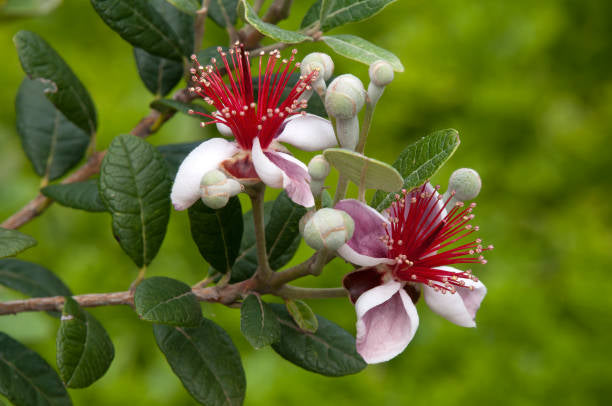
Learn moreGrowing Pineapple Guava Feijoa sellowiana Plants
Growing Pineapple Guava Feijoa sellowiana Plants Pineapple Guava is a subtropical evergreen shrub that is native to South America. Both the fruit and flowers are edible. The tropical fruit is delicious as is the white and red. flowers. The fruit usually ripens in late fall. This guava plant also attracts bees and butterflies to the garden. Pineapple Guava is easy to maintain and grow. It can be grown as a hedge and also in a container. If allowed to grow naturally, it can grow to approximately 15 feet tall. It does best in well draining soil and responds well to frequent pruning. You should fertilize in spring and make sure the plant is well watered during the heat of summer.
Learn more