


What Are the Main Afghan Pine Varieties and How Do You Choose One?
Not all Afghan Pines are the same. Cultivars vary in height, canopy density, and needle color, making it important to match the tree to your region and design goals.
- ‘Eldarica’ – suited for dry, hot climates with full sun.
- ‘Mondell’ – upright, uniform, tolerant of wind and poor soils.
- ‘Desert Green’ – deep green foliage, adaptable to varied soil conditions. When choosing a variety, consider soil type, water availability, and long-term space. Afghan Pines can reach 30–60 feet tall, so they need room to grow.
How Fast Does the Afghan Pine Tree Grow?
Afghan Pines grow at a moderate rate, establishing quickly in warm, dry regions and forming a strong central leader as they mature.
How Big Does an Afghan Pine Tree Get?
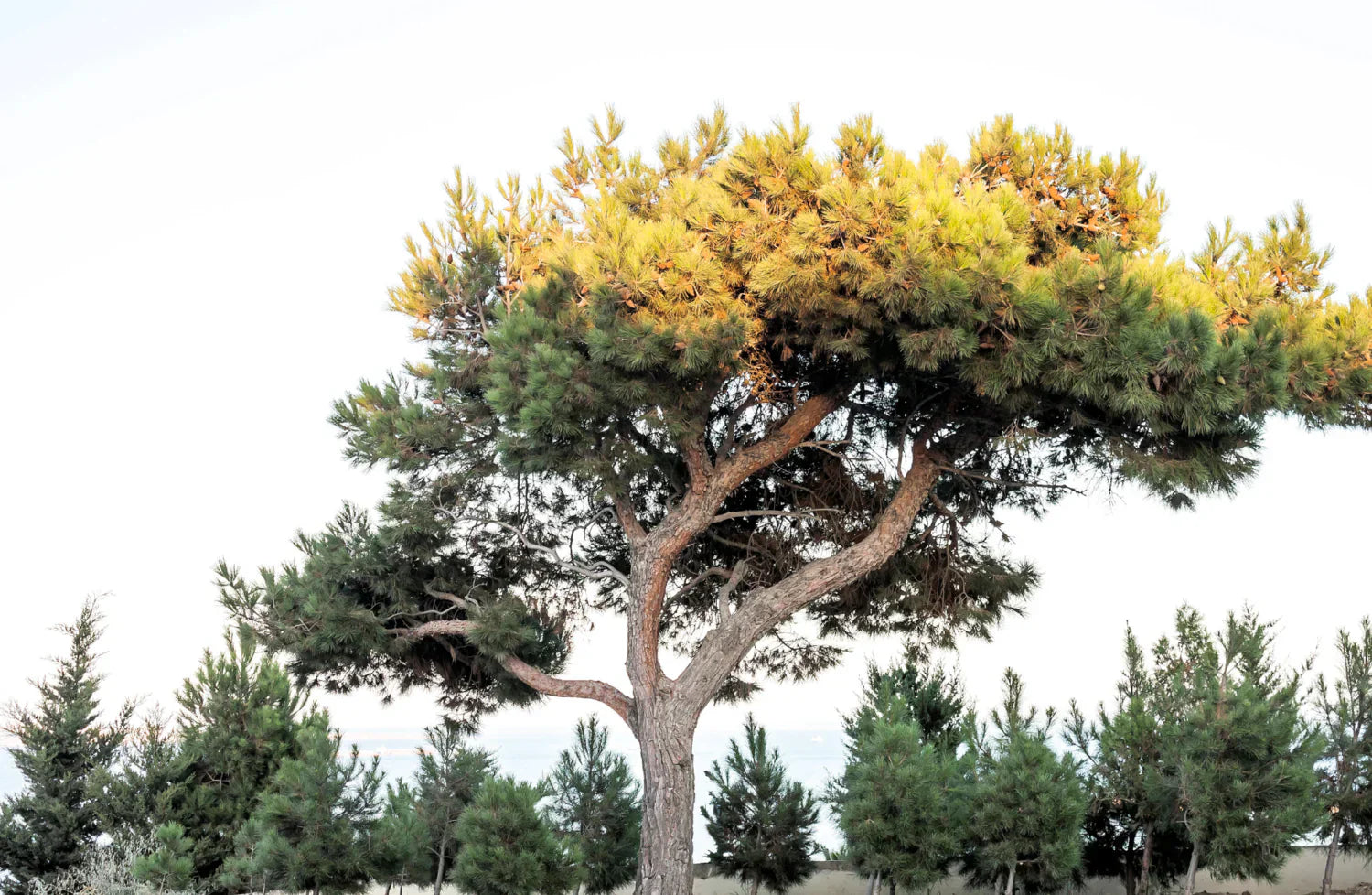
Afghan Pines can reach 30–60 feet in height with a full, pyramidal canopy. Their mature size makes them best suited for wide, open spaces where they can develop naturally.
What Climate Is Best for Afghan Pine Trees?
Afghan Pine (Pinus eldarica) thrives in arid to semi-arid climates with hot summers and mild winters. It performs best in USDA Zones 6–9, where temperatures rarely drop below -10°F (-23°C). These zones provide the warmth and sunlight Afghan Pine needs to establish strong growth and dense foliage.
In cooler climates within Zone 6, protect young saplings during the first few winters with mulch around the root zone and, if needed, temporary windbreaks to prevent frost damage.
Is Afghan Pine Drought-Tolerant?
Afghan Pine is a cornerstone of sustainable, low-water landscapes. Once established, it thrives with minimal irrigation, making it ideal for xeriscaping or Mediterranean-inspired gardens. Its deep roots anchor it through long dry seasons while shading nearby groundcover to conserve soil moisture.
How Much Sunlight Does an Afghan Pine Require?
Full sun is essential. Afghan Pine needs several hours of direct light daily to maintain strong growth and dense needles.
How Much Water Does an Afghan Pine Need?
Deep, infrequent watering supports healthy root development. Once mature, the tree requires far less irrigation and tolerates extended dry periods.
What Soil Type Is Best for Growing Afghan Pine?
Afghan Pine grows best in well-draining soils and tolerates poor or rocky ground. Consistent drainage is more important than soil fertility.
How Often Should You Fertilize Afghan Pine Trees?
Fertilize only as needed based on soil condition. Light, periodic feeding supports young trees, while mature Afghan Pines often require none.
How Does Afghan Pine Help With Erosion Control and Soil Stabilization?
Thanks to its strong root network, Afghan Pine is a natural solution for erosion control on slopes, hillsides, or areas prone to runoff. Its roots bind soil effectively while the canopy reduces water impact on the ground. Landscape architects often use Afghan Pines in reforestation and land reclamation projects where durability matters as much as beauty.
How Can Afghan Pine Be Used in Ornamental and Suburban Landscaping?
This tree brings year-round greenery and structure to residential and public spaces. Its symmetrical form suits driveways, street borders, and open lawns. Afghan Pines blend well with soft-textured companions like Mexican Sage, Jerusalem Sage, and Velvet Leaf Elephant Ear, balancing ruggedness with color and movement.
What Wildlife and Pollinator Benefits Do Afghan Pines Provide?
Afghan Pines are not native to North America but offer ecological value. The dense canopy provides nesting sites for songbirds, while the seeds attract finches and other small wildlife. Their presence supports a wider web of garden life, complementing pollinator-friendly plants such as Black Sage, Goji Berry, and Strawberry Verte Fig Tree.
How Do You Propagate and Plant Afghan Pine Trees?
Growing Afghan Pine from seed is practical and rewarding.
- Seed collection: Choose cones that have matured and opened naturally.
- Stratification: Soak seeds, then refrigerate 30–45 days to mimic winter dormancy.
- Planting: Sow seeds in well-draining soil with access to full sunlight.
- Transplanting: Move young saplings to their permanent spot once 8–12 inches tall. Spacing: Allow 30–40 feet between trees to accommodate mature canopy spread.
What Are the Seasonal Care, Pruning, and Common Challenges for Afghan Pine?
Afghan Pines require minimal maintenance once established.
- Watering: Deep, infrequent watering during dry months encourages strong roots.
- Pruning: Trim lower or crossing branches in late winter to maintain structure.
- Pests: Watch for bark beetles or pine tip moths, which target stressed trees. Proper watering and mulching reduce vulnerability.
What Pests or Diseases Affect Afghan Pine Trees?
Bark beetles and pine tip moths are the main pests. Fungal diseases may appear in poorly drained or stressed trees. Maintaining proper soil moisture and monitoring health prevents most issues.
Why Are the Needles on My Afghan Pine Turning Brown?
Needle browning often indicates stress from pests, underwatering, poor drainage, or environmental strain. Check soil moisture, prune dead branches, and ensure proper sunlight exposure.
How Long Does an Afghan Pine Tree Live?
Afghan Pines typically live 50–100 years, making them reliable long-term landscape trees.
Are Afghan Pine Low-Maintenance?
They are low-maintenance, shedding minimal debris and requiring only occasional pruning and deep watering during extended dry periods.
What Is the Cultural, Historical, and Symbolic Significance of Afghan Pine?
Native to Afghanistan and surrounding regions, the Afghan Pine has long symbolized endurance and peace amid harsh landscapes. Historically used as a windbreak and shelter tree, it represents stability and strength — qualities that translate beautifully into modern garden storytelling.