


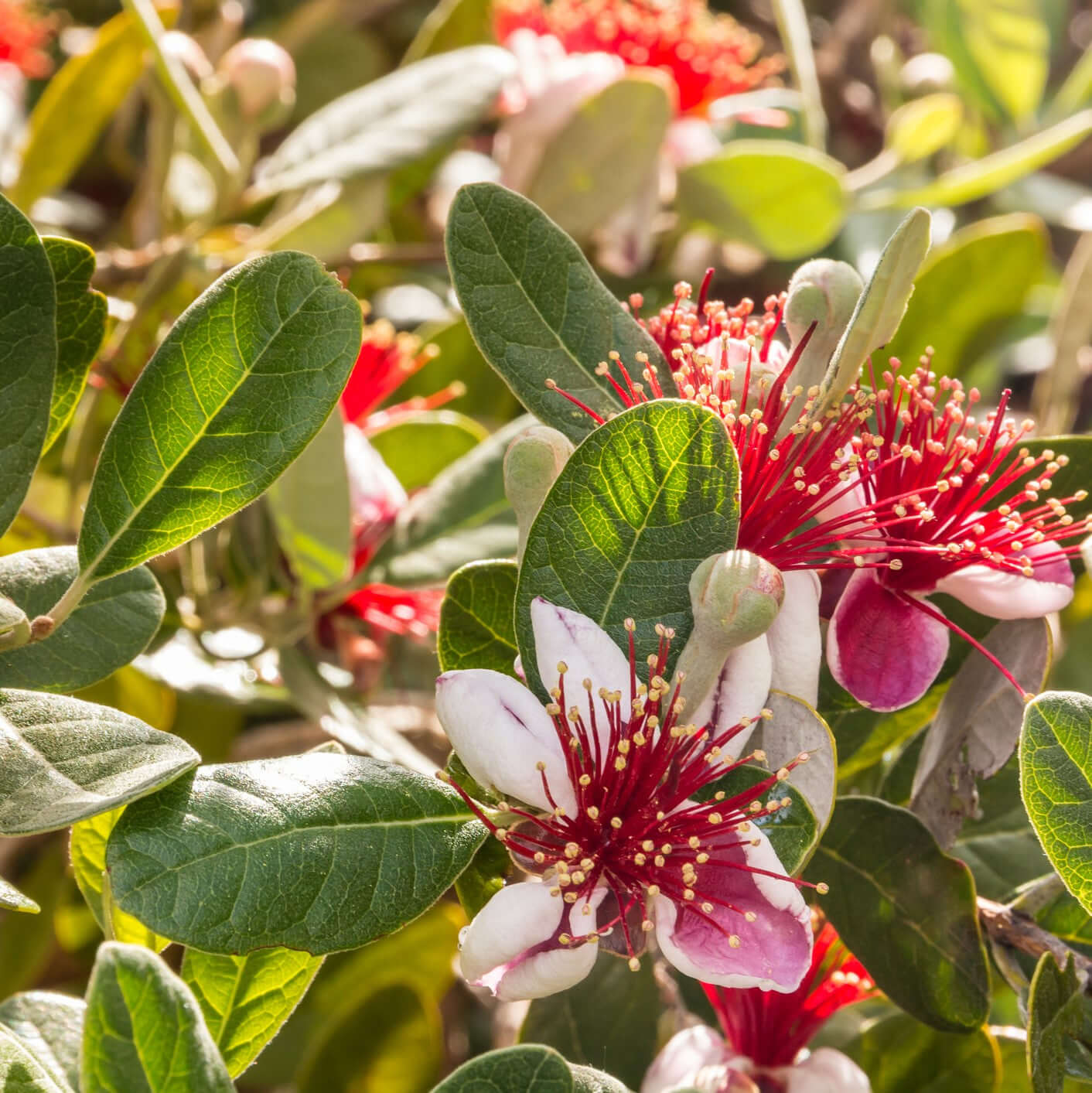
Pineapple guava, also known as Feijoa sellowiana, is one of those plants that gardeners can’t help but adore. It’s a hardy evergreen shrub with silvery green leaves, cheerful red-and-white blossoms, and fruit that tastes like a refreshing mix of pineapple, guava, and mint.
Here at Blossomdale Plant Nursery, we’ve watched many gardeners fall in love with it—not only for its flavor, but for how forgiving it is once you know its simple preferences.
Where Does Pineapple Guava Originally Come From?
Pineapple guava comes from the highlands of southern Brazil, Uruguay, Paraguay, and northern Argentina. It’s long been treasured there for its resilience and bright, tropical flavor. Over time, this adaptable shrub made its way to New Zealand and California in the early 1900s, quickly becoming a garden favorite thanks to its drought tolerance and ornamental charm.
Today, it thrives in gardens around the world—from Mediterranean-style yards to small urban orchards—showing that beauty and productivity can go hand in hand, even outside the tropics.
What Soil Type Is Best for Pineapple Guava?
Sandy or loamy soil with good drainage supports strong root health. A slightly acidic to neutral pH works well. Dense or heavy soil benefits from compost or coarse sand to keep moisture from lingering around the roots.
How Much Sunlight Does a Pineapple Guava Plant Require?
Full sun encourages abundant blooms and high fruit production. In very hot regions, light afternoon shade keeps the foliage fresh. Bright conditions support the plant’s natural growth pattern.
How Often Should You Water a Pineapple Guava Plant?
Young plants need steady moisture while roots establish. Mature plants become water-efficient and perform well with deep watering every one to two weeks, depending on climate and soil type. Consistently well-drained soil prevents root problems.
How Do You Propagate Pineapple Guava: Seeds or Cuttings?
Seeds grow successfully, but plants from cuttings offer better predictability in flavor and growth habit. Semi-hardwood cuttings taken in late summer root well in a light, well-draining mix. Maintaining steady humidity speeds up rooting.
Is Pineapple Guava Cold-Hardy?
Established plants tolerate light frost for short periods. Younger plants benefit from extra protection in colder weather. Gardeners in cooler zones often grow pineapple guava in containers to bring indoors during winter cold spells.
What Climate Does the Pineapple Guava Plant Need?
A warm, temperate climate with gentle winters and consistent summer warmth supports healthy growth. Coastal, Mediterranean, and subtropical climates fit the plant’s natural preferences. Warmth encourages richer fruit flavor and stronger flowering.
What Growing Zones Support Healthy Pineapple Guava Growth?
Pineapple guava grows best in USDA Zones 8 through 11, where winters are gentle and summers are warm. It loves full sun but won’t mind a bit of afternoon shade, especially in hotter regions. Zone 8 may require winter protection for new plants. Zones 9 to 11 provide ideal conditions that match its native environment.
How Big Does a Pineapple Guava Tree Get?
Most plants reach 10 to 15 feet in height. Gardeners can shape them into a single-trunk tree or allow natural multi-stem growth. Width often matches height, giving the plant a balanced, rounded form.
When and How Do You Harvest Pineapple Guava Fruit?
Pineapple guava fruit usually ripens in late fall, around October or November in most regions. The surest sign it’s ready is simple—it falls. Ripe fruit naturally drops from the branches, though you can also gently pick ones that give slightly when pressed.
The skin is edible, though many gardeners prefer to scoop out the fragrant, jelly-like center. The fruit keeps for about a week at room temperature and makes wonderful smoothies, jams, and baked treats.
How Long Does It Take for a Pineapple Guava Plant to Fruit?
Cuttings begin producing fruit in two to three years. Seed-grown plants take longer, often four to five years. Regular sunlight and proper watering help encourage a stronger harvest once the plant reaches maturity.
How Do You Prune a Pineapple Guava Plant?
Prune at the end of winter by removing dead, damaged, or crossing branches. Keep the center open so air and light reach the inner canopy. After fruiting, do a light shaping trim to maintain structure. Mature plants respond best to selective thinning rather than heavy cutting, and keeping yearly pruning minimal supports consistent flowering and fruiting.
What Pests or Diseases Affect Pineapple Guava Plants?
Pineapple guava is generally a tough and healthy grower, but like any plant, it has a few occasional visitors. Scale insects and aphids sometimes gather on tender new shoots, and in warmer areas, fruit fly larvae may find fallen fruit tempting. Keeping the plant pruned for good airflow and promptly collecting dropped fruit helps prevent most issues.
If pests appear, organic options like neem oil or insecticidal soap work well. Diseases are rare, though poor drainage can lead to root rot—another reason to make sure the soil never stays soggy for long.
How Can You Use Pineapple Guava in Low-Maintenance Landscaping?
Pineapple guava suits water-wise gardens, Mediterranean landscapes, and coastal designs. Its evergreen foliage stays attractive throughout the year. It works well as a hedge, privacy screen, or specimen shrub and provides fruit with little maintenance.
What Are the Best Companion Plants for Pineapple Guava?
Since pineapple guava thrives in sunny, well-drained soil, it pairs beautifully with other Mediterranean and subtropical favorites like lavender, rosemary, and lantana. These companions draw pollinators such as bees and hummingbirds, which help boost fruit production.
For edible landscapes, consider planting it alongside citrus, pomegranates, or olive trees. They share similar growing conditions and together create a lush, climate-smart garden that looks as good as it tastes.