


Okinawa spinach is gaining attention among home gardeners, health-conscious cooks, and tropical plant lovers. Known for its deep green leaves with purple undersides, this leafy green thrives in warm climates and produces year-round harvests in the right conditions.
What Is Okinawa Spinach?
Okinawa spinach refers to Gynura bicolor, a fast-growing perennial leafy green native to Southeast Asia and widely cultivated in Japan, particularly in Okinawa. It is not a true spinach. It belongs to the Asteraceae family, the same family as daisies and sunflowers.
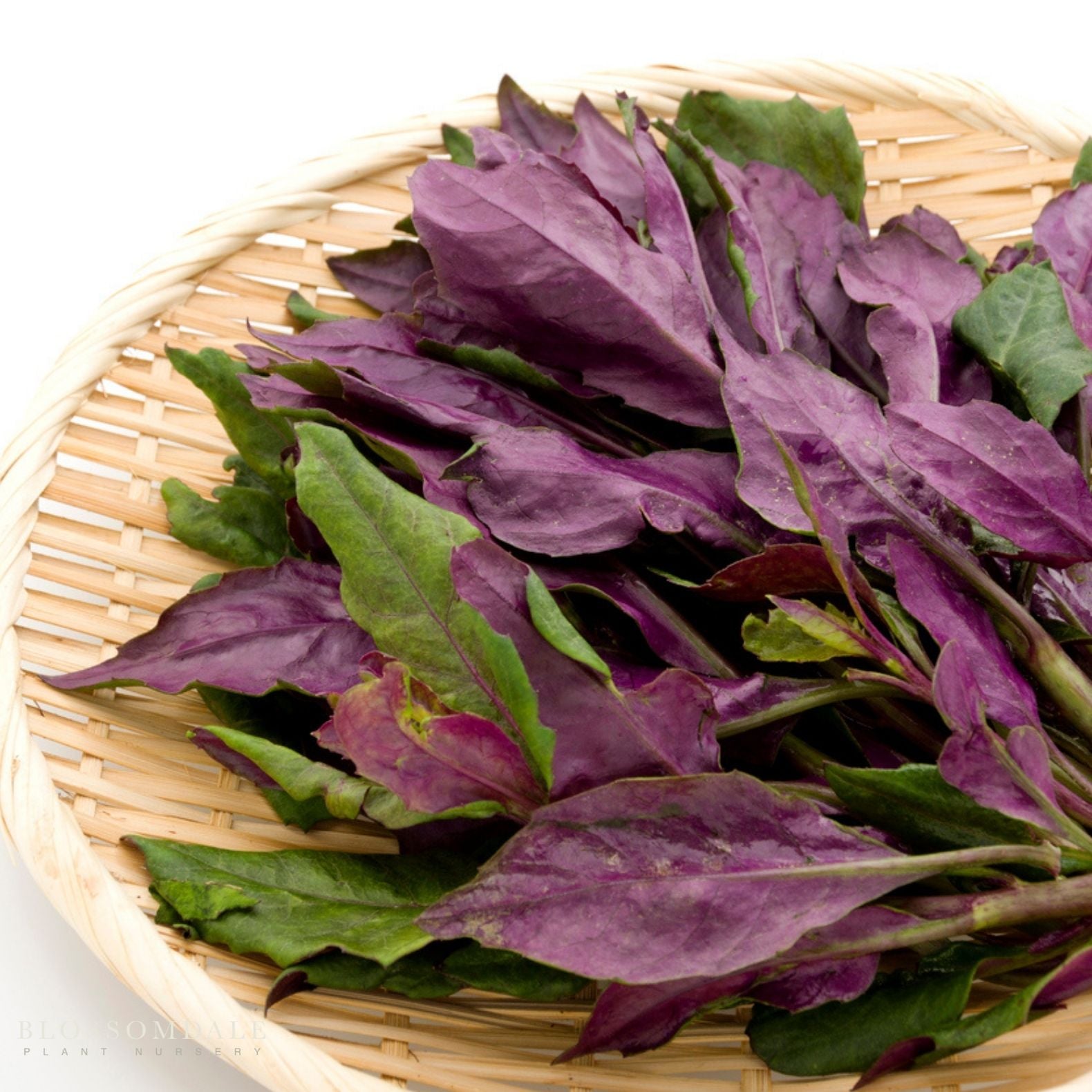
The plant features dark green leaves with striking purple undersides and slightly serrated edges. It grows as a low, spreading plant and produces small orange-yellow flowers when mature.
Is Okinawa spinach the same as longevity spinach?
Okinawa spinach is often confused with longevity spinach, but they are different species. Longevity spinach usually refers to Gynura procumbens.
Both plants have purple tones and belong to the same genus, yet they differ in leaf shape, taste, and medicinal reputation. Gynura procumbens is more commonly associated with traditional herbal medicine in Southeast Asia.
Is Okinawa spinach really spinach?
Okinawa spinach is not related to true spinach, which is Spinacia oleracea.
True spinach belongs to the Amaranthaceae family. Okinawa spinach is an ornamental edible perennial with a milder, slightly sweet flavor and thicker leaves. Its name is based on culinary use rather than botanical classification.
What does Okinawa spinach taste like?
Okinawa spinach has a mild, slightly nutty flavor with subtle earthy undertones. The texture is thicker and more succulent than traditional spinach. Young leaves are tender and work well raw in salads, while mature leaves are better lightly sautéed or steamed.
Health Benefits and Nutrition of Okinawa Spinach
What are the health benefits of Okinawa spinach?
Okinawa spinach contains antioxidants, including anthocyanins that give the underside of the leaves their purple color. Anthocyanins are studied for their potential role in reducing oxidative stress.
The plant also contains fiber, iron, calcium, and vitamins A and C. Leafy greens in general are associated with heart health, improved digestion, and immune support when consumed regularly.
Is Okinawa spinach good for you?
Okinawa spinach can be a nutritious addition to a balanced diet. Like many leafy greens, it provides micronutrients and phytonutrients with relatively low calories.
Its antioxidant compounds and fiber content support overall health, though it should be consumed as part of a varied diet rather than as a single “superfood” solution.
Does Okinawa spinach help with longevity?
Okinawa, Japan is known for high life expectancy, and leafy greens are part of the traditional Okinawan diet. However, no clinical studies confirm that Okinawa spinach alone promotes longevity.
Longevity in Okinawa is associated with an overall dietary pattern rich in vegetables, sweet potatoes, soy-based foods, and moderate caloric intake.
What nutrients are in Okinawa spinach?
Okinawa spinach typically contains:
- Vitamin A (important for vision and immune health)
- Vitamin C (supports immune function and skin health)
- Iron (supports red blood cell production)
- Calcium (supports bone health)
- Dietary fiber (supports digestion)
Exact nutrient levels vary depending on soil quality and growing conditions.
How to Grow Okinawa Spinach (Planting and Care Guide)
How do you grow Okinawa spinach?
Okinawa spinach grows best in warm, humid climates. It thrives in USDA zones 9 to 11 and can be grown as a perennial in tropical areas. In cooler regions, it can be grown in containers and brought indoors during cold seasons.
Plant it in well-draining soil enriched with compost. It prefers partial sun but tolerates full sun in humid climates.
Can Okinawa spinach grow in pots?
Yes, Okinawa spinach grows well in containers. Choose a pot with good drainage and at least 8 to 12 inches of depth. Container growing makes it easier to control soil quality and move the plant indoors if temperatures drop below 50°F (10°C).
Regular trimming encourages bushier growth in pots.
How often should you water Okinawa spinach?
Okinawa spinach prefers consistently moist soil but does not tolerate waterlogged conditions. Water when the top inch of soil feels dry. In hot tropical climates, watering may be needed several times per week.
Mulching helps retain soil moisture and regulate temperature.
How do you propagate Okinawa spinach?
Okinawa spinach is easily propagated through stem cuttings. Cut a 4 to 6-inch stem section, remove the lower leaves, and place it in water or directly into moist soil. Roots typically form within one to two weeks.
Propagation by cuttings is faster and more reliable than growing from seed.
Cooking and Using Okinawa Spinach
How do you eat Okinawa spinach?
Okinawa spinach can be eaten raw or cooked. Young leaves work well in salads and smoothies. Mature leaves are commonly sautéed with garlic, added to soups, or lightly steamed.
Cooking softens the leaves and enhances their mild flavor.
Can you eat Okinawa spinach raw?
Yes, the young leaves are tender enough to eat raw. Wash thoroughly before use. Raw leaves retain more vitamin C compared to prolonged cooking.
If the leaves are older and thicker, light cooking improves texture.
What are popular Okinawa spinach recipes?
Common preparations include:
- Garlic sautéed Okinawa spinach
- Stir-fried Okinawa spinach with tofu
- Okinawa spinach omelets
- Blended into green smoothies
- Added to miso soup
Light cooking preserves color and texture.
Safety, Harvesting, and Maintenance
When can you harvest Okinawa spinach?
Harvest begins once the plant is established and produces healthy leaves, usually 6 to 8 weeks after planting. Pick outer leaves first to encourage continuous growth.
Regular harvesting promotes fuller plants.
Is Okinawa spinach safe to eat?
Okinawa spinach is generally safe to eat when properly identified and grown in clean soil. As with all leafy greens, wash thoroughly to remove dirt or insects.
Avoid consuming ornamental look-alikes unless you are certain of correct plant identification. When in doubt, consult a local agricultural extension office or plant expert.