


Hot Lips Sage is a striking, easy-to-grow plant that brings vivid color, fragrance, and wildlife appeal to home gardens. Known for its bicolor red-and-white blooms, this perennial shrub is a favorite among gardeners for its long flowering season, aromatic leaves, and versatility in landscaping. Whether you’re looking to attract pollinators or simply add a splash of color, Hot Lips Sage is a reliable and eye-catching choice.
Plant Botany & Identification
Botanical Description of Salvia microphylla ‘Hot Lips’
Hot Lips Sage is a compact, woody perennial shrub that typically reaches 2–4 feet in height and spreads 2–3 feet wide. Its stems are sturdy and slightly woody at the base, while younger growth is soft and green. The leaves are small, ovate, and aromatic, releasing a pleasant, slightly minty scent when brushed or crushed.
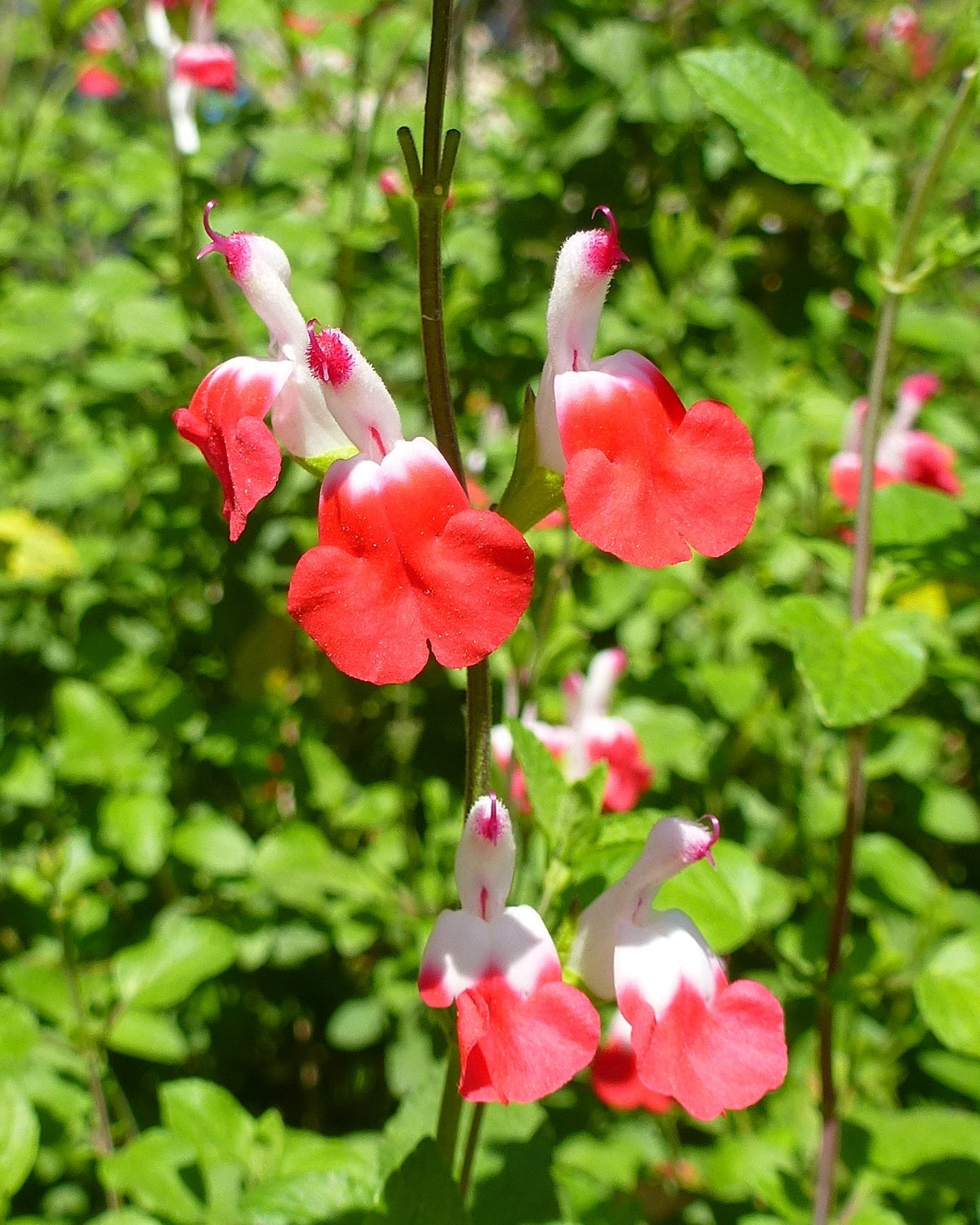
The plant is best known for its distinctive bicolor flowers, which are red at the tips and white at the base, often appearing to “kiss” each other—hence the name Hot Lips. Flowering can occur from late spring through fall, and in mild climates, even year-round.
Native Distribution
Hot Lips Sage is native to Mexico and the Southwestern United States, where it grows in dry, sunny environments. In its natural habitat, it thrives on rocky slopes and well-drained soils, making it well-suited for gardens with similar conditions. Its adaptability has allowed it to flourish in gardens across North America and other temperate regions worldwide.
Leaf Shape, Texture, and Aromatic Qualities
The leaves are small, ovate, and slightly fuzzy, giving the plant a soft texture. They are fragrant when touched, with a fresh, minty aroma that can be used in small amounts for herbal teas or potpourri. This aromatic quality also makes the plant less appealing to deer and other herbivores, giving it an added advantage in home gardens.
Distinctive Bicolor Flowers and Blooming Habits
Hot Lips Sage is instantly recognizable by its dual-colored blooms, which can vary slightly depending on temperature and sun exposure. Cooler temperatures often intensify the red portion of the flower. Each flower grows on a short spike, and the plant produces numerous flowers in dense clusters, creating a continuous display that attracts hummingbirds, bees, and butterflies.
Taxonomy Within the Lamiaceae (Mint) Family
Hot Lips Sage is part of the Lamiaceae family, also known as the mint family. This group of plants is well-known for aromatic leaves, square stems, and paired leaf arrangements, traits that make them recognizable and useful in gardens. Many members—like basil, rosemary, thyme, and lavender—are valued not just for flavor or fragrance, but also for their ability to attract beneficial insects and deter pests.
Within this family, the genus Salvia stands out for its tubular flowers, which are perfectly shaped for pollinators such as hummingbirds, bees, and butterflies. Across the hundreds of species, Salvias offer a wide range of colors, bloom times, and growth habits, giving gardeners flexibility in landscape design.
Hot Lips Sage vs. Other Salvias: Identification Guide
It’s easy to confuse Hot Lips Sage with other red-and-white flowering salvias, such as Salvia greggii or Salvia splendens. Key differences include:
- Hot Lips Sage (Salvia microphylla ‘Hot Lips’): Compact shrub, aromatic small leaves, flowers that are mostly red-and-white in each bloom.
- Salvia greggii: Slightly smaller, more upright habit, flowers often solid red, pink, or purple.
- Salvia splendens: Taller, bushier, blooms are typically solid red or pink with larger, more tubular flowers.
How to Grow Hot Lips Sage in Home Gardens
Hot Lips Sage is easy to grow in gardens that mimic its natural dry, sunny habitat. Tips for success:
- Soil: Prefers well-draining soil; sandy or rocky soil is ideal. Avoid heavy clay that retains water.
- Sunlight: Full sun encourages the most vibrant blooms, though it tolerates light shade.
- Water: Drought-tolerant once established, but regular watering helps young plants thrive. Avoid overwatering.
- Planting: Space plants 2–3 feet apart to allow airflow and encourage bushy growth. Mulch lightly to retain soil moisture and reduce weeds.
Hot Lips Sage works well in mixed borders, rock gardens, and containers, adding color and fragrance throughout the growing season.
Pruning and Maintenance Tips for Hot Lips Sage
Seasonal care ensures the plant remains healthy and blooms consistently:
- Spring cutback: Trim back old or leggy growth to encourage new shoots.
- Deadheading: Remove spent flowers to prolong bloom and prevent the plant from self-seeding too aggressively.
- Winter prep: In colder regions, prune lightly and mulch around the base to protect roots from frost.
Regular pruning also helps maintain a compact, attractive shape and prevents woody growth from dominating the plant.
Attracting Pollinators with Hot Lips Sage
Hot Lips Sage is pollinator-friendly and attracts a wide range of beneficial wildlife:
- Hummingbirds: The tubular, red-tipped flowers are ideal for nectar feeding.
- Bees and butterflies: The abundant flowers provide both nectar and shelter.
- Garden ecology: Incorporating Hot Lips Sage supports pollinator health and encourages a balanced garden ecosystem.
Planting it alongside other flowering plants can create a continuous pollinator-friendly habitat through the growing season.
Designing a Colorful Garden with Hot Lips Sage
This plant is not only functional but also aesthetic:
- Borders and beds: Its compact size makes it ideal for defining edges or filling gaps.
- Mediterranean and xeriscape gardens: Tolerates dry conditions, perfect for low-water landscapes.
- Mixed plantings: Combines beautifully with other salvias, herbs, or succulents for color contrast and texture.
Its vibrant blooms and aromatic foliage make it a centerpiece or companion plant, enhancing both the beauty and ecological value of your garden.
Final Thoughts
Hot Lips Sage is a colorful, resilient, and fragrant shrub that adds value to any garden. Easy to grow, low-maintenance, and attractive to pollinators, it is a standout choice for gardeners seeking beauty, scent, and wildlife benefits. From sunny borders to container gardens, this plant brings color and life all season long.