


The Arizona cypress tree (Cupressus arizonica) is a native evergreen conifer adapted to arid and semi-arid environments of the southwestern United States. Known for its blue-gray foliage, drought tolerance, and long lifespan, it is widely used in residential landscapes, restoration projects, and windbreak plantings.
What Is the Arizona Cypress Tree?
Arizona cypress is a long-lived conifer that evolved in dry mountainous regions where water availability is limited and soils are often rocky or shallow.
What is an Arizona cypress tree?
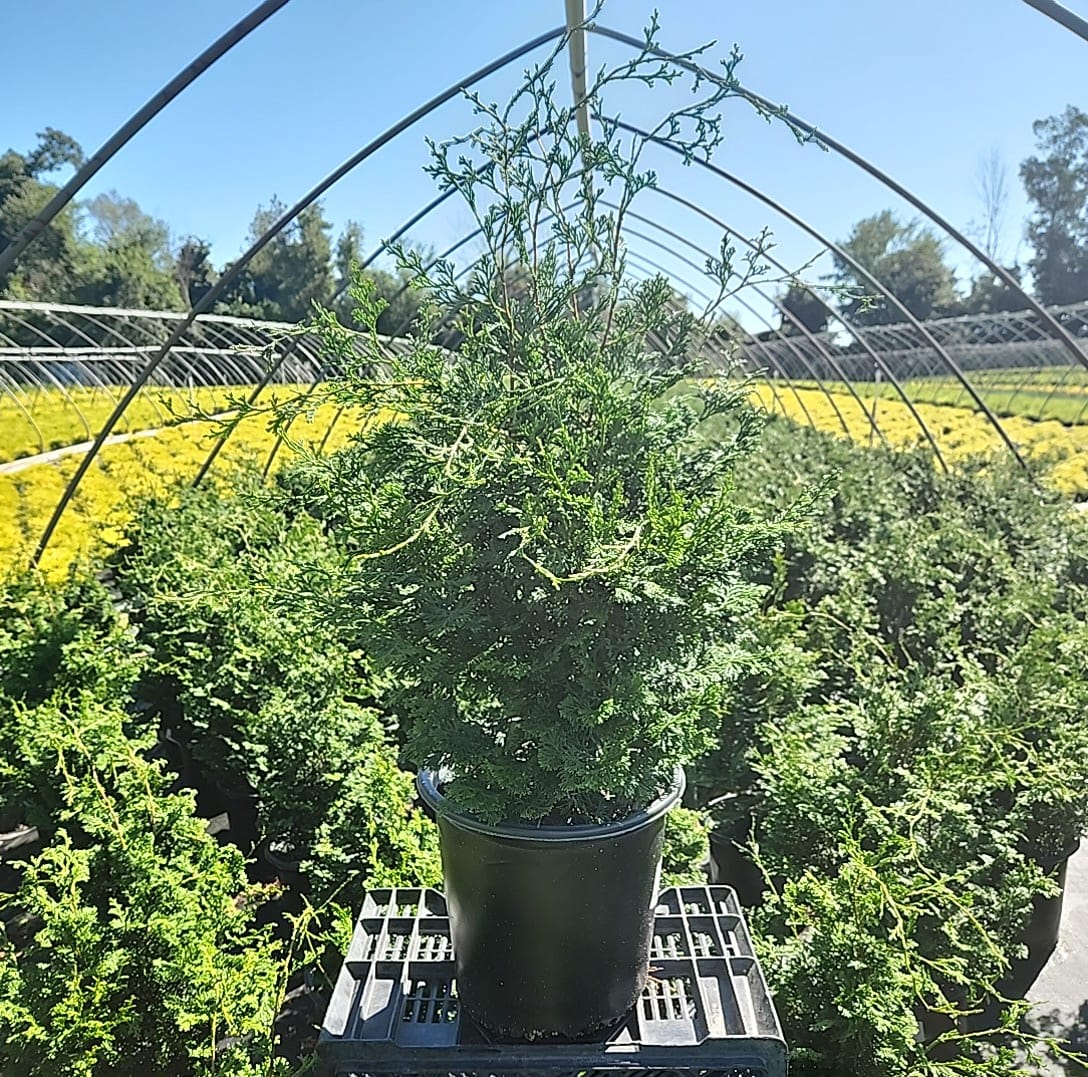
Arizona cypress (Cupressus arizonica) is an evergreen conifer in the Cupressaceae family. It develops a pyramidal to broadly conical form with dense branching and scale-like foliage. The foliage ranges from blue-green to silvery gray depending on genetics and growing conditions.
Is Arizona cypress native to the United States?
Arizona cypress is native to the southwestern United States. Natural populations are found primarily in southeastern Arizona, southwestern New Mexico, and western Texas.
What is the difference between Arizona cypress and other cypress trees?
Arizona cypress differs from non-native cypress species in several ways. It has greater tolerance to heat, drought, and alkaline soils. Its bark exfoliates naturally, reducing pest buildup. Many commonly planted cypress species originate from the Mediterranean or Asia and do not share these adaptations.
Native Range, Ecology, and Natural Habitat
Where does Arizona cypress grow naturally?
Arizona cypress grows in canyon bottoms, rocky slopes, and intermittent stream corridors at elevations between 3,000 and 8,000 feet. These areas experience seasonal rainfall patterns and large temperature fluctuations.
What climate does Arizona cypress prefer?
Arizona cypress (Cupressus arizonica) prefers dry, low-humidity climates with good air circulation, which helps prevent fungal issues. It is well adapted to temperature extremes and performs reliably in USDA hardiness zones 7–9, with some varieties tolerating conditions at the edges of zone 6.
What role does Arizona cypress play in native ecosystems?
In its native habitat, Arizona cypress stabilizes soil, provides shelter for birds, and contributes to watershed protection. It often grows alongside juniper, oak, and pine species in mixed woodland communities.
Identification and Physical Characteristics
How do you identify an Arizona cypress tree?
Arizona cypress has scale-like leaves arranged in flattened sprays that emit a resinous scent when crushed. The bark peels in thin strips, revealing smooth reddish-brown layers beneath. Seed cones are round, woody, and mature over two growing seasons.
How tall does Arizona cypress grow?
In natural settings, Arizona cypress typically reaches 40 to 60 feet in height. Under ideal conditions, some specimens may grow taller. Width usually ranges from 20 to 30 feet.
How fast does Arizona cypress grow?
Growth rate is moderate, averaging 12 to 24 inches per year. Growth is faster during the establishment phase and slows as the tree matures and develops a dense canopy.
Types, Varieties, and Cultivars of Arizona Cypress
What are the main varieties of Arizona cypress?
Recognized varieties include Cupressus arizonica var. arizonica, var. glabra (smooth Arizona cypress), and var. nevadensis. These varieties differ mainly in bark texture, foliage color, and cone characteristics.
Is blue Arizona cypress a real variety?
Blue Arizona cypress commonly refers to Cupressus arizonica var. glabra. This form features smooth bark and intense blue-gray foliage. It is frequently selected for ornamental planting and drought-tolerant landscapes.
Is Arizona cypress the same as Italian cypress?
Arizona cypress is a different species from Italian cypress (Cupressus sempervirens). Italian cypress has a narrow columnar form and originates from the Mediterranean region. Arizona cypress has a broader canopy and greater adaptability to desert climates.
Soil, Water, and Growing Requirements
What type of soil does Arizona cypress need?
Arizona cypress prefers well-drained soils, including sandy, rocky, or gravelly substrates. It tolerates alkaline and nutrient-poor soils. Poor drainage increases disease risk.
How much water does Arizona cypress need?
Young trees require deep watering every few weeks during establishment. Mature trees typically rely on natural precipitation. Excess irrigation increases susceptibility to root disease and canker.
Does Arizona cypress need fertilizer?
Arizona cypress generally does not benefit from fertilizer. High nitrogen levels promote soft growth that is less tolerant of drought and pests.
Pruning, Maintenance, and Longevity
How do you prune Arizona cypress?
Pruning should be limited to removing dead, damaged, or crossing branches. Structural pruning is best done when the tree is young. Heavy pruning is discouraged, as cypress trees do not regenerate from old wood.
How long does an Arizona cypress live?
Arizona cypress can live 50 to 150 years. Trees growing in natural, low-irrigation settings often live longer than those in urban environments.
Does Arizona cypress have invasive roots?
Arizona cypress roots are deep and spreading but not typically invasive. They rarely damage foundations or hardscape when planted with adequate spacing.
Common Problems, Diseases, and Pests
Most issues arise from improper site selection or excess moisture.
What diseases affect Arizona cypress?
Cypress canker is the most serious disease affecting Arizona cypress. It causes branch dieback and eventual tree decline. Stress reduction and proper spacing reduce infection risk.
Are pests a problem for Arizona cypress?
Arizona cypress has relatively few insect issues. Bark beetles and spider mites may appear during periods of drought stress or poor airflow.
Why is my Arizona cypress turning brown?
Browning foliage is often caused by overwatering, poor drainage, or disease. Environmental stress is a more common cause than nutrient deficiency.
Landscaping, Windbreaks, and Practical Uses
Arizona cypress is valued for function as much as appearance.
What is Arizona cypress used for in landscaping?
Arizona cypress is used as a specimen tree, windbreak, privacy screen, and erosion control plant. Its evergreen foliage provides year-round coverage and structure.
Is Arizona cypress good for privacy screens?
When spaced correctly, Arizona cypress forms an effective privacy screen. Trees should be planted far enough apart to allow airflow and reduce disease risk.
Is Arizona cypress good for low-water landscapes?
Arizona cypress is widely recommended for low-water and drought-adapted landscapes. Municipal water conservation programs and extension services often list it as a suitable species.
Is Arizona cypress fire resistant?
Arizona cypress shows moderate fire resistance due to thick bark and low resin content compared to some conifers. Proper spacing and maintenance improve fire performance.
Is Arizona cypress suitable for climate-resilient planting?
Arizona cypress is considered climate-adaptive due to tolerance for heat, drought, and variable rainfall. It is increasingly used in long-term resilience planning.