



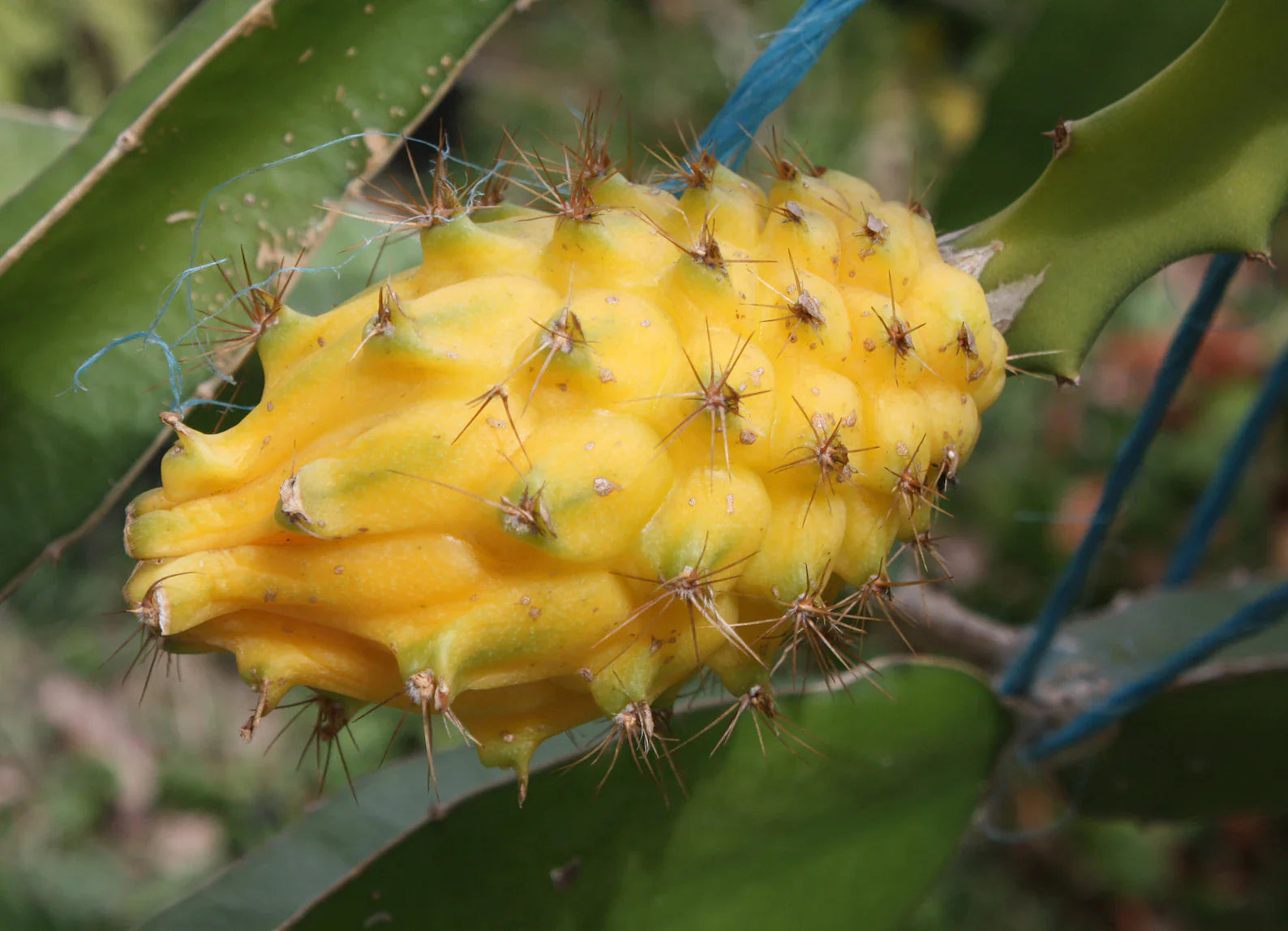
Ecuadorian Palora Yellow Dragon Fruit (Selenicereus megalanthus) is a unique tropical cactus known for its bright yellow skin, sweet pulp, and striking night-blooming flowers. This guide explores its origin, cultivation, identification, care requirements, and culinary uses, giving growers, gardeners, and fruit enthusiasts a full resource in one place.
What is Ecuadorian Palora Yellow Dragon Fruit (Selenicereus megalanthus)?
Selenicereus megalanthus, commonly called Ecuadorian Palora Yellow Dragon Fruit, is a climbing cactus native to northern South America. It produces oval, bright yellow fruits with sweet, white, speckled flesh and large nocturnal flowers.
Why is it called “Palora Yellow”?
“Palora” refers to the region in Ecuador where this cultivar became commercially popular, and “Yellow” describes its skin color, distinguishing it from the red-skinned varieties (Selenicereus undatus).
Is it the same as red or white dragon fruit?
No. Yellow dragon fruit is sweeter and has a higher sugar content compared to red (S. undatus) or white-fleshed varieties. Its growth habit is slightly more vigorous, with thinner stems and prolific fruiting.
Origin, History, and Distribution
Where does Ecuadorian Palora Yellow dragon fruit originate?
It is native to northern Ecuador and surrounding areas of Colombia. It grows naturally in tropical forests and dry scrublands as a climbing epiphytic cactus.
How did it become popular commercially?
Its sweetness, bright color, and high yield made it a favorite for export markets. Ecuador now leads global production of yellow dragon fruit, with specialized cultivars like Palora prized for flavor and transportability.
How widespread is it today?
Today, it is grown throughout tropical and subtropical regions globally, including Southeast Asia, Central America, and parts of the United States (Florida, Hawaii, Puerto Rico).
Identifying Ecuadorian Palora Yellow Dragon Fruit
What does the plant look like?
The plant has climbing, triangular stems with small aerial roots for support. Flowers are large, white, fragrant, and bloom at night, opening for a single evening. Fruits are oval, bright yellow, and around 400–600 grams each.
How do you identify Palora Yellow fruits?
Fruits have thick yellow skin with small, raised “scales.” The pulp is white, juicy, and filled with tiny black seeds. It has one of the sweetest flavor profiles among dragon fruit varieties.
How is it different from other dragon fruit species?
Yellow dragon fruit stems are thinner but more vigorous climbers. Flowers are similar but fruits differ in color, sugar content, and acidity. Red and white dragon fruit typically have pink to red skin and are less sweet.
Growth Requirements and Care
What kind of soil does it need?
Well-draining soil is essential. Sandy loam or cactus potting mixes enriched with organic matter work best. Avoid waterlogged conditions, which can cause root rot.
How much sunlight does it need?
It thrives in full sun but tolerates partial shade. In extremely hot regions, filtered afternoon sun reduces sunburn on stems and fruits.
How much water does Ecuadorian Palora Yellow need?
Consistent irrigation is important during flowering and fruiting, but overwatering should be avoided. Allow the topsoil to dry between waterings. Drip irrigation works well for commercial setups.
What is its temperature range?
Optimal growth occurs between 20–35°C (68–95°F). It is frost-sensitive and requires protection if temperatures drop below 10°C (50°F).
Does it require fertilization?
Yes. Balanced fertilizers high in potassium encourage flowering and fruiting. Organic compost and diluted liquid fertilizers work well during the active growth season.
Flowering, Pollination, and Fruit Production
When does the Ecuadorian Palora Yellow dragon fruit flower?
Flowers bloom late spring to summer. Each flower lasts a single night, attracting nocturnal pollinators like moths and bats in natural settings.
How is it pollinated?
Hand pollination is common in commercial cultivation to ensure fruit set. Flowers are highly fragrant and open fully after dusk, producing viable pollen.
How long does it take to produce fruit?
Plants usually begin flowering within 1–2 years in optimal conditions. Fruits mature 30–50 days after pollination depending on climate and care.
How much fruit can one plant produce?
Mature plants can produce 20–50 fruits per season, depending on size, growth conditions, and pollination success.
Culinary Uses and Nutrition
How sweet is Ecuadorian Palora Yellow dragon fruit?
It is sweeter than red or white varieties, often measuring 16–20° Brix in sugar content. Its flavor is tropical, mild, and aromatic, with low acidity.
How is it eaten?
The fruit can be eaten fresh, blended into smoothies, added to salads, or made into desserts. Seeds are edible and provide extra fiber.
What are the nutritional benefits of Palora Yellow?
It is low in calories, rich in vitamin C, antioxidants, fiber, and minerals like magnesium. It may support digestion, immune function, and hydration.
Propagation and Commercial Cultivation
How do you propagate it?
Propagation is usually by stem cuttings, which root quickly in moist, well-drained media. Seeds can also be used but take longer to mature.
How do you support climbing growth?
Plants need trellises, posts, or fences to climb. Proper support ensures healthy fruiting and reduces stem breakage.
What are the common pests and diseases of Ecuadorian Palora Yellow?
Mealybugs, aphids, stem rot, and fungal infections are common. Proper spacing, irrigation management, and monitoring reduce risks.
Landscaping, Ornamental, and Practical Uses
Can it be grown as an ornamental?
Yes. Its dramatic flowers, climbing stems, and tropical look make it ideal for garden trellises, patios, and vertical green screens.
Does it attract pollinators?
Night-blooming flowers attract moths, bats, and nocturnal insects. In a garden, it can complement other pollinator-friendly plants.
Can it be grown in containers?
Yes. With strong trellis support and adequate sun, container-grown plants can fruit and remain compact for patios or small spaces.




2 comments
Interested in purchasing equadorian palora dragon fruit plants
Interested in purchasing equadorian palora dragon fruit plants