


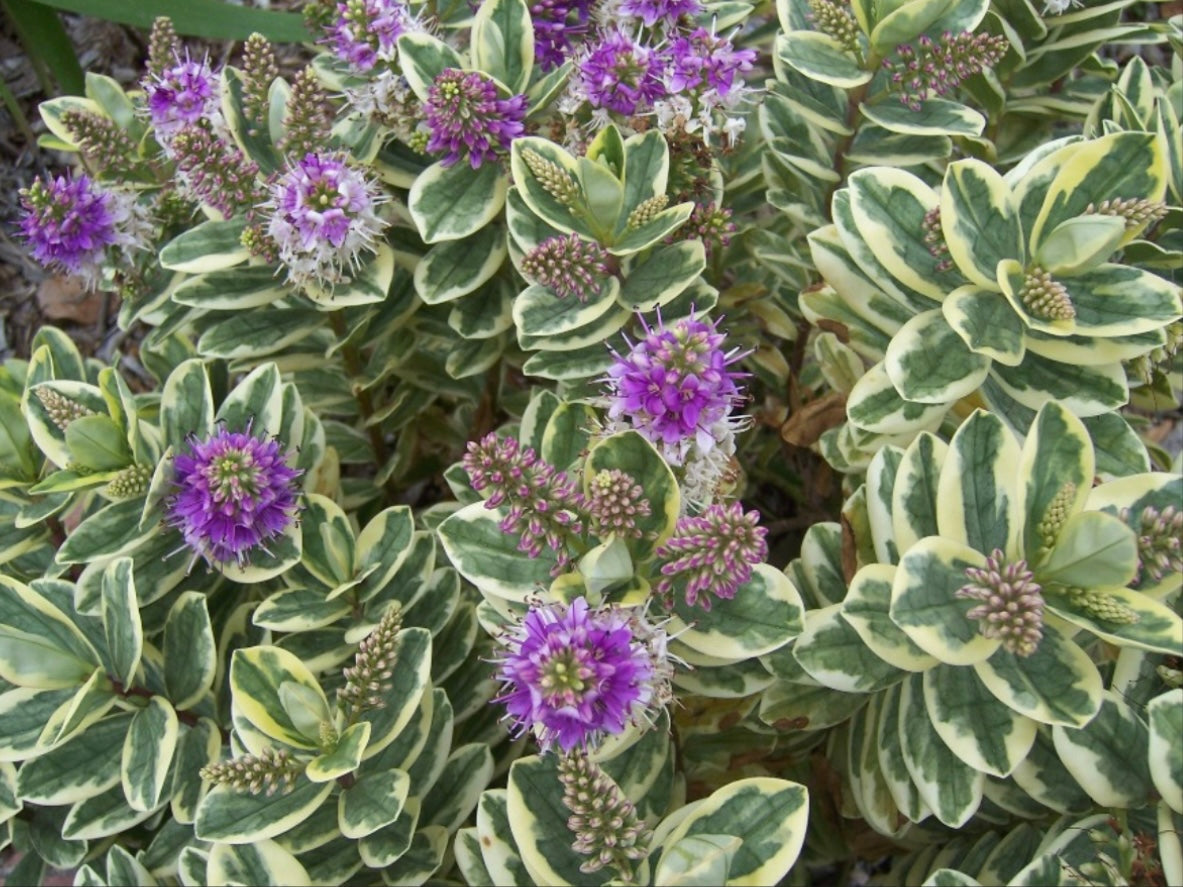
Hebe Speciosa Variegata, commonly called variegated Hebe, is a versatile evergreen shrub known for its striking green-and-cream foliage and vibrant flowering spikes. This plant is prized for low-maintenance garden appeal, pollinator support, and adaptability to a variety of landscaping styles. Below, we explore everything gardeners need to know about cultivating, maintaining, and designing with this stunning plant.
1. Why Hebe Speciosa Variegata Is the Perfect Accent Plant for Any Garden
Variegated Hebe offers both foliage interest and floral color, making it a focal point or accent in any garden. Its compact habit and evergreen leaves provide year-round structure.
What makes Hebe Speciosa Variegata different from other Hebe varieties?
Hebe Speciosa Variegata is distinguished by its variegated leaves with creamy margins, in contrast to the solid green leaves of other Hebe cultivars. Its flower spikes, often pink or lilac, bloom over summer into fall, adding seasonal color to borders, rockeries, or containers.
Does Hebe Speciosa Variegata attract pollinators?
Yes. Hebe flowers are rich in nectar, attracting bees, butterflies, and other pollinators. This makes it an excellent choice for wildlife-friendly gardens and supports local biodiversity.
2. Planting and Establishing Variegated Hebe
Proper planting ensures healthy growth, vibrant foliage, and abundant blooms.
How do you grow Hebe Speciosa Variegata successfully?
Choose a location with full sun to partial shade and well-draining soil. Dig a hole slightly larger than the root ball, position the plant at the same depth it was in the nursery pot, and backfill with amended soil. Water deeply after planting to settle roots.
Best soil and sunlight conditions for variegated Hebe?
Hebe prefers neutral to slightly alkaline soil with good drainage. Full sun enhances flower production and maintains leaf variegation, though it tolerates light shade. Avoid waterlogged conditions, which can cause root rot.
How long does it take for Hebe Speciosa Variegata to establish?
Newly planted Hebe typically takes one to two growing seasons to become fully established. During this period, regular watering and light fertilization support root development and initial flowering.
3. How to Maintain Hebe Speciosa Variegata for Maximum Color and Blooms
Consistent care ensures healthy foliage and repeated flowering.
How do you maintain variegation in Hebe Speciosa Variegata?
Variegation is most pronounced in plants grown in full sun. Avoid heavy shade, which may cause leaves to revert to solid green. Light pruning after flowering also helps maintain compact shape and encourages fresh variegated growth.
How do you encourage more blooms on Hebe Speciosa Variegata?
Deadheading spent flower spikes and applying a balanced, slow-release fertilizer in spring and early summer encourages repeat flowering and vigorous growth.
What fertilizers work best for variegated Hebe?
A general-purpose, low-nitrogen fertilizer promotes flowering without excessive leafy growth. Organic options like seaweed extract or compost also improve soil health while boosting blooms.
4. Pruning and Shaping Variegated Hebe for a Vibrant Garden
Pruning maintains structure and encourages denser growth.
Pruning tips for Hebe Speciosa Variegata?
Lightly trim after flowering to remove spent blooms and maintain shape. Avoid heavy pruning into old wood, as Hebe may not readily regenerate from older stems. Annual shaping in spring or early summer keeps the plant tidy and compact.
5. Propagation Made Easy: Growing More Hebe Speciosa Variegata at Home
Propagation allows gardeners to expand plantings or share with friends.
How to propagate Hebe Speciosa Variegata at home?
Softwood or semi-hardwood cuttings taken in late spring to early summer root readily in a moist, well-draining propagation mix. Cover cuttings with a clear plastic dome to maintain humidity until roots form. Layering can also be used for larger plants.
6. Top Pests and Diseases That Affect Hebe Variegata and How to Manage Them
Keeping plants healthy prevents infestation and disease.
Common pests and diseases affecting Hebe Variegata?
Aphids, spider mites, and whiteflies can affect Hebe, particularly in hot, dry conditions. Powdery mildew and leaf spot may occur if air circulation is poor.
How to prevent pests naturally on Hebe Speciosa Variegata?
Promote strong plant health through proper watering, sunlight, and pruning. Introduce beneficial insects like ladybugs and lacewings, or use insecticidal soaps for targeted control. Ensure good air circulation around the plant to minimize fungal problems.
7. Landscape and Container Design Ideas Using Variegated Hebe
Variegated Hebe adapts to multiple garden styles and container setups.
Can Hebe Speciosa Variegata be grown in containers?
Yes. Its compact habit and attractive foliage make it ideal for patio containers, balcony gardens, or small courtyards. Use a well-draining potting mix and water carefully to prevent soggy roots.
Variegated Hebe companion plants for garden design?
Pair with lavender, rosemary, or ornamental grasses for Mediterranean-style borders. Hebe also complements colorful perennials and low shrubs in mixed beds.


Can Hebe Speciosa Variegata be used in xeriscaping?
Yes. Its drought tolerance and low-maintenance needs make it ideal for water-wise gardens, rockeries, and sustainable landscapes.
8. Seasonal Care and Climate Adaptation for Hebe Speciosa Variegata
Understanding climate and seasonal needs ensures year-round health.
How often should Hebe Speciosa Variegata be watered?
Water young plants regularly until established. Once mature, Hebe prefers moderate watering and tolerates some drought. Avoid waterlogging to prevent root rot.
Can Hebe Variegata survive frost or cold climates?
Variegated Hebe is hardy to mild frost (USDA zones 9–11). In colder climates, grow in containers for winter protection or provide frost covers.
How fast does Hebe Speciosa Variegata grow?
Hebe has a moderate growth rate, typically reaching a mature height of 1–1.5 meters in 2–3 years under optimal conditions. Regular pruning encourages bushier growth and more flowers.