


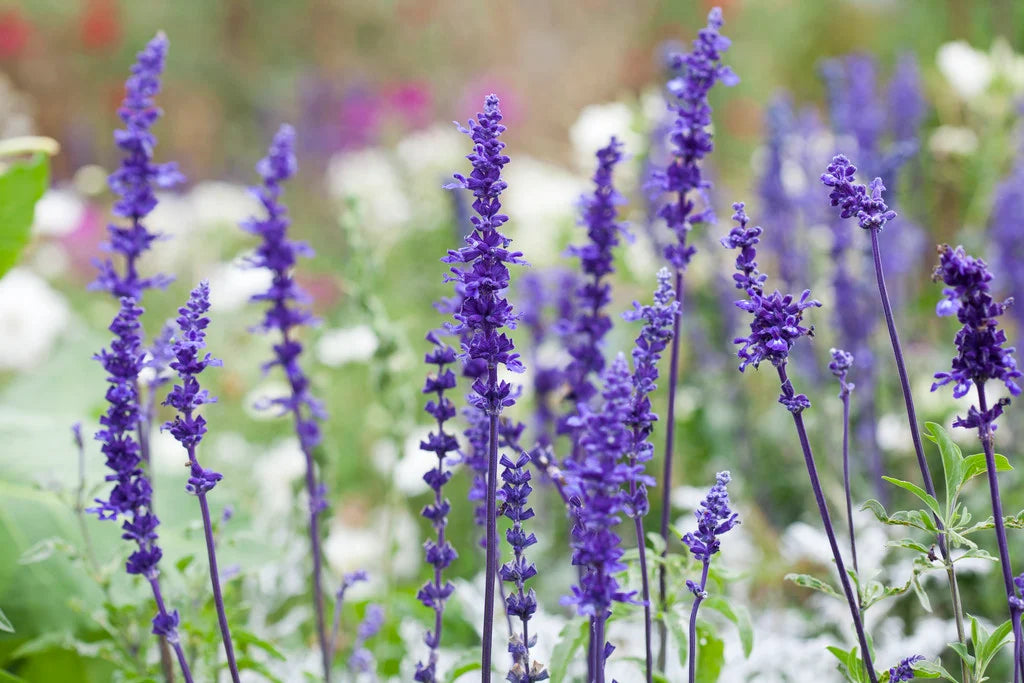
Salvia farinacea ‘Victoria Blue’, commonly known as Mealy Cup Sage, is a striking perennial that brings vivid violet-blue flower spikes to your garden from late spring through fall. Beyond its ornamental beauty, it supports pollinators, attracts butterflies, bees, and hummingbirds, and thrives in both borders and containers, making it ideal for low-maintenance, wildlife-friendly gardens.
Growing Conditions for Victoria Blue Sage
Providing the right environment helps Victoria Blue Sage grow strong and bloom profusely.
What soil does Victoria Blue Sage prefer?
It thrives in well-draining soil enriched with organic matter. Sandy or loamy soils are ideal, and incorporating compost improves nutrient retention and encourages robust root development.
How much sun does it need?
Full sun—at least six hours per day—ensures healthy growth and maximum blooms. Partial shade can reduce flowering and may result in leggy stems.
How often should I water Victoria Blue Sage?
Young plants need regular watering to establish roots. Mature plants are moderately drought-tolerant but benefit from deep watering during prolonged dry periods.
Which growing zones are best for Victoria Blue Sage?
It grows best in USDA zones 8–11. In colder climates, container plants can be moved indoors or protected with frost cloth during winter.
How to Propagate Salvia farinacea ‘Victoria Blue’
Propagation is simple and allows you to expand your garden or share plants.
Can I grow Victoria Blue Sage from seed?
Yes. Soak seeds overnight, then sow in a moist, well-draining medium. Germination takes 14–21 days in warm, bright conditions. Starting seeds indoors early can give a head start on the growing season.
How do I take cuttings for propagation?
Use healthy, semi-hardwood stems, remove lower leaves, and place in a perlite-peat mix. Maintain indirect sunlight and keep the medium moist; roots form in 2–3 weeks.
When is the best time to propagate?
Propagation is most successful in spring or early summer, when growth is active and the plant is resilient.
Attracting Pollinators and Wildlife with Victoria Blue Sage
Victoria Blue Sage turns your garden into a hub for pollinators.
Which pollinators are attracted to Victoria Blue Sage?
Its tubular violet-blue flowers attract butterflies, bees, and hummingbirds, offering abundant nectar and helping maintain a healthy ecosystem.
How can I design a pollinator-friendly garden with this plant?
Plant it alongside nectar-rich companions like lavender, coneflowers, and other salvia varieties. Keep the garden chemical-free, and include sunny and sheltered areas to maximize pollinator visits.
Color and Bloom Timing: Maximizing Visual Impact
Strategic planning ensures Victoria Blue Sage provides long-lasting beauty.
When does Victoria Blue Sage bloom?
Blooms appear from late spring through fall, providing long-lasting color that pairs well with yellow, white, or pink flowers for contrast.
How do I create continuous color with Victoria Blue Sage?
Layer plants of varying heights and bloom times. Deadhead spent flowers to encourage new blooms and maintain vibrant garden color.
What is the ideal height and spacing?
Plants grow 2–4 feet tall; space them 12–18 inches apart to allow airflow, prevent disease, and encourage bushy growth.
Seasonal Care and Maintenance for Mealy Cup Sage
Simple maintenance extends flowering and keeps plants healthy.
How should I prune Victoria Blue Sage?
Prune lightly after flowering and deadhead spent blooms to stimulate new growth and maintain a tidy appearance.
Do I need to fertilize it?
Monthly application of a balanced, slow-release fertilizer supports prolonged blooming, strong stems, and vibrant foliage.
How do I protect it in winter?
In colder regions, move container plants indoors or cover outdoor plants with frost cloth. Mulching around the base reduces frost damage and preserves soil warmth.
Common Pests and Diseases Affecting Mealy Cup Sage
Keeping an eye out for pests and diseases protects your plants’ health.
What pests commonly affect Victoria Blue Sage?
Aphids, whiteflies, and spider mites are common. Treat infestations with organic solutions like neem oil or insecticidal soap for eco-friendly management.
How do I prevent fungal diseases?
Maintain good air circulation, avoid overwatering, and ensure well-draining soil to prevent powdery mildew and root rot.
Ornamental and Practical Uses of Victoria Blue Sage
This versatile plant enhances both aesthetics and function in your garden.
How can I use Victoria Blue Sage in my garden?
It works as a border accent, pollinator attractor, or cut flower for indoor arrangements.
What design benefits does it offer?
Its tall violet-blue spikes, long bloom period, and vertical structure add height, color, and texture to beds and containers, making it perfect for vibrant, wildlife-friendly gardens.