


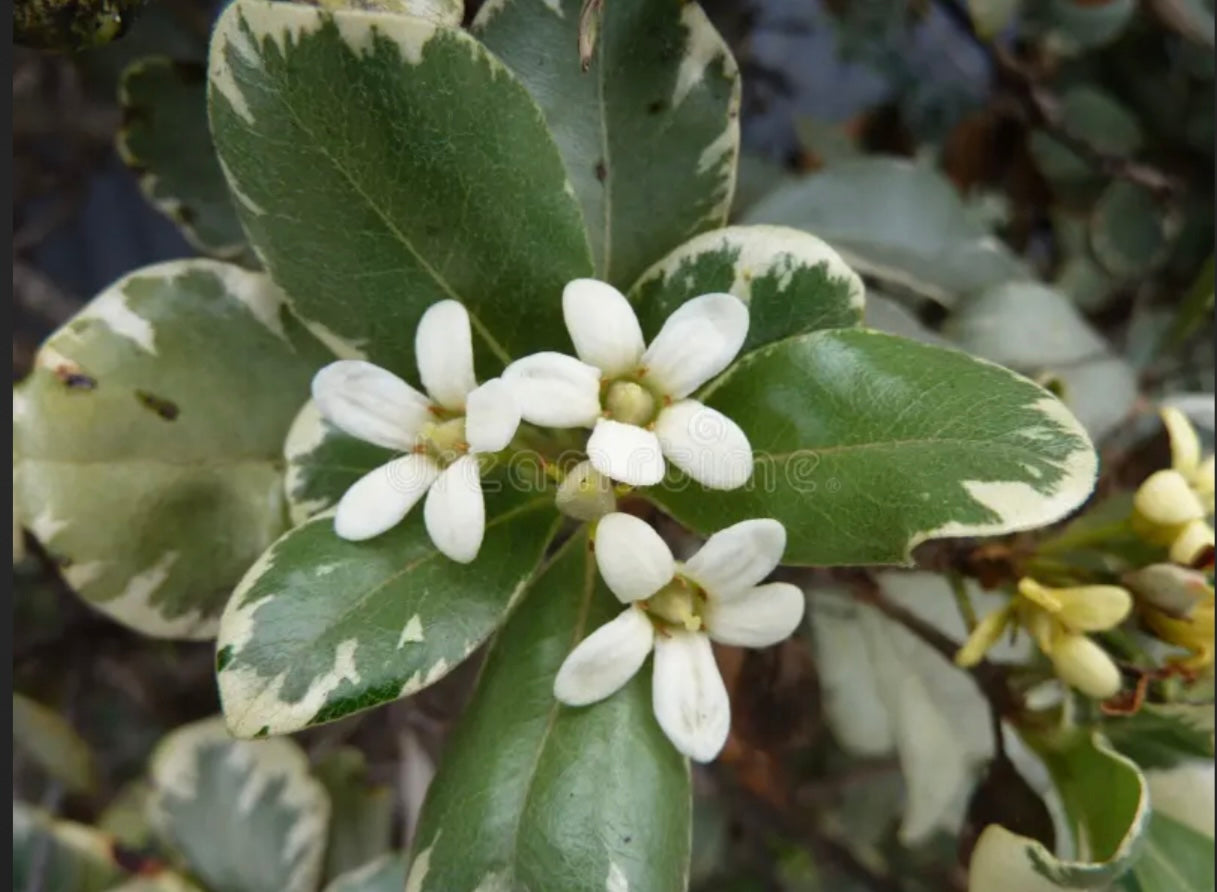
Pittosporum tobira ‘Variegata’, commonly called variegated Japanese Mock Orange, is an evergreen shrub admired for its cream-edged leaves, fragrant white flowers, and versatile use in landscapes. Whether used as a hedge, border, or focal plant, its ornamental foliage and low-maintenance nature make it a favorite in subtropical and mild temperate gardens. This guide covers everything from beginner curiosity to advanced uses, including propagation, pest management, and landscape design.
Fragrance and Flowering: Why Mock Orange Appeals to Gardeners
Variegated Pittosporum draws attention with its fragrant white flowers in spring and vibrant cream-edged foliage year-round. This section helps beginners and casual gardeners understand why it’s so popular.
What is Pittosporum tobira ‘Variegata’ and how is it used in gardens?
It’s a variegated form of Pittosporum tobira, grown for hedges, borders, or as a specimen plant. Its slow-to-moderate growth, dense foliage, and fragrant blooms make it suitable for both formal and casual landscapes.
What are the best landscape uses for Pittosporum tobira ‘Variegata’?
Ideal uses include low hedges, privacy screens, foundation plantings, and container display. Its compact form and variegated foliage make it an attractive accent plant.
How do you maintain the variegation in Pittosporum tobira ‘Variegata’?
Ensure the plant receives bright, indirect sunlight; too much shade can reduce variegation, while excessive sun may scorch leaf edges. Proper fertilization supports vibrant foliage.
How to Grow and Care for Pittosporum Tobira Variegata
This section is for gardeners ready to plant and maintain the shrub. Care involves soil preparation, watering, pruning, and fertilization to keep the plant healthy and variegated.
How do you care for Pittosporum tobira ‘Variegata’?
Plant in well-draining soil, water regularly during establishment, and fertilize lightly in spring and summer. Mulching helps retain moisture and suppress weeds.
Does variegated pittosporum need full sun or partial shade?
It grows best in full sun to partial shade. Morning sun with afternoon protection in hot climates ensures vibrant foliage without scorching.
How often should you water Pittosporum tobira ‘Variegata’?
Water moderately; allow the soil to dry slightly between watering. Avoid waterlogging, which can cause root rot.
How tall and wide does Pittosporum tobira ‘Variegata’ grow?
Typically 3–6 feet tall and wide in landscapes, though it can reach up to 10 feet in ideal outdoor conditions.
How fast does Pittosporum tobira ‘Variegata’ grow?
Growth is slow to moderate, usually 6–12 inches per year depending on climate and care.
How do you prune variegated pittosporum shrubs?
Lightly prune to shape and remove dead or damaged stems. Pruning after flowering encourages dense growth and maintains form.
What soil type does Pittosporum tobira ‘Variegata’ prefer?
Well-draining soils enriched with organic matter. Sandy loam or loamy soils are ideal. Avoid heavy clay or waterlogged conditions.
What pests and diseases affect Pittosporum tobira ‘Variegata’?
Common issues include scale insects, aphids, spider mites, leaf spot, and root rot in poorly drained soils. Regular inspection, proper watering, and organic insecticidal soaps can prevent and treat most problems.
Variegated vs. Green Pittosporum Tobira: Key Differences
What is the difference between variegated and green Pittosporum tobira?
Variegated varieties have cream-edged leaves and slightly slower growth. Green forms are solid green, grow faster, and tolerate more shade but lack ornamental leaf color.
Does variegated Pittosporum tolerate sun and shade differently than green varieties?
Yes, variegated forms need more light to maintain vibrant foliage, while green forms tolerate partial shade better.
Do variegated and green Pittosporum grow at the same rate?
No, green varieties generally grow faster, while variegated plants are slower but more visually striking.
Landscape Design Ideas with Mock Orange Shrubs
Pittosporum tobira ‘Variegata’ is versatile in hedges, borders, foundation plantings, and container displays.
Can Pittosporum tobira ‘Variegata’ be used for hedges or screens?
Yes, its dense foliage and moderate growth rate make it ideal for formal and informal hedges, privacy screens, and windbreaks.
How do you propagate Pittosporum tobira ‘Variegata’?
Use semi-hardwood cuttings with rooting hormone or grafting to maintain variegation. Seeds are less reliable for true-to-type foliage.
Where can you buy Pittosporum tobira ‘Variegata’?
Available at specialty nurseries, online garden suppliers, and local plant markets. Choose healthy, pest-free plants with vibrant variegated leaves.
How do you protect Pittosporum tobira ‘Variegata’ in winter?
In cold climates, provide frost protection or grow in containers that can be moved indoors. Mulching helps protect roots.
Pittosporum Tobira in Coastal and Drought-Tolerant Landscapes
Experienced gardeners and landscapers use variegated pittosporum for resilient, low-maintenance plantings.
Is Pittosporum tobira ‘Variegata’ drought tolerant?
Yes, once established, it tolerates moderate drought but performs best with occasional deep watering.
Can Pittosporum tobira ‘Variegata’ tolerate coastal or salt-spray conditions?
Yes, it’s moderately salt-tolerant, making it suitable for coastal landscapes with occasional wind and salt exposure.