


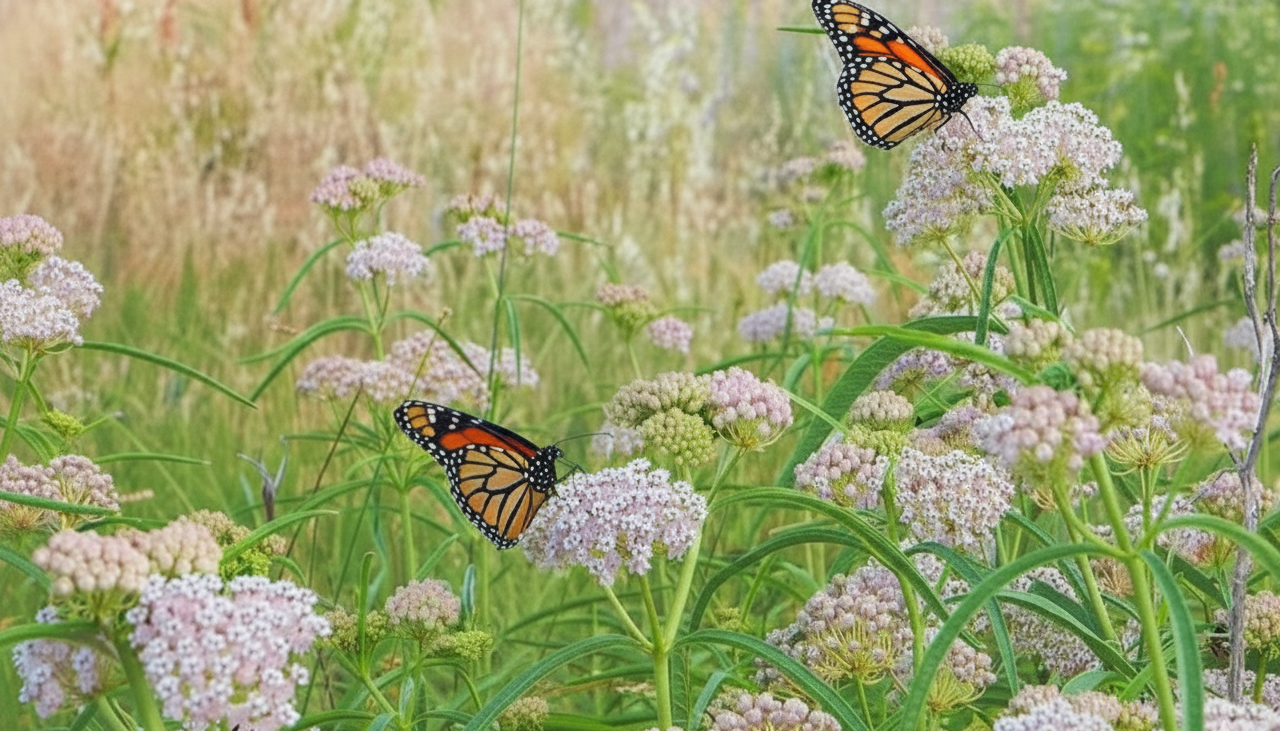
Narrowleaf milkweed (Asclepias fascicularis) is a slender, perennial native to western North America. With its tall green stems and clusters of pale pink to white flowers, it adds structure and seasonal color to any garden. Beyond aesthetics, it is vital for pollinators, particularly monarch butterflies, providing food, nectar, and breeding habitat. Understanding its growth, care, and ecological role allows gardeners to cultivate a thriving patch that supports biodiversity.
Why Narrowleaf Milkweed Is Essential for Monarch Butterflies
Milkweed is the backbone of the monarch lifecycle, and narrowleaf milkweed is no exception.
Why Is Narrowleaf Milkweed Essential for Monarch Butterflies?
Monarch butterflies rely on milkweed as the only plant for laying eggs. Caterpillars feed exclusively on its leaves, accumulating toxins that deter predators, while adult monarchs benefit from nectar-rich flowers.
How Does Narrowleaf Milkweed Support Monarch Migration?
By planting milkweed along migratory corridors, gardeners provide critical feeding and breeding stops for monarchs traveling between breeding grounds and overwintering sites.
Which Pollinators Are Attracted to Narrowleaf Milkweed?
Bees, butterflies, and hummingbirds are drawn to its nectar, making it a pollinator hotspot and supporting overall garden biodiversity.
How to Grow Narrowleaf Milkweed in Your Garden
Growing milkweed is straightforward with attention to soil, sunlight, and water.
How Do You Plant Narrowleaf Milkweed from Seeds?
Cold stratify seeds for 2–4 weeks to simulate winter conditions. Sow lightly on the soil surface, keep consistently moist, and avoid deep covering to allow germination.
What Soil Conditions Are Best for Narrowleaf Milkweed?
Prefers well-draining sandy or loamy soils with moderate fertility. It tolerates poor soils but struggles in heavy clay or waterlogged areas.
How Much Sun Does Narrowleaf Milkweed Need?
Full sun, at least six hours daily, promotes strong growth and abundant flowering. Partial shade is tolerated but can reduce vigor and bloom density.
How Much Water Does Narrowleaf Milkweed Require?
Young seedlings need regular watering. Once established, the plant is drought-tolerant and requires minimal supplemental irrigation.
Can You Grow Narrowleaf Milkweed in Containers?
Yes, in deep pots with well-draining soil. Container plants may require occasional fertilization and more frequent watering than ground-planted specimens.
Creating a Butterfly Garden with Narrowleaf Milkweed
Pairing milkweed with other native flowers enhances visual appeal and pollinator value.
Which Plants Pair Well with Narrowleaf Milkweed?
California poppy (Eschscholzia californica), yarrow (Achillea millefolium), and native sages create staggered bloom times and continuous nectar sources.
How Do You Design a Pollinator-Friendly Garden with Milkweed?
Place milkweed centrally or along garden edges, layer plants by height, leave sunny patches, and add sheltered spots for resting butterflies. Companion plant diversity increases both visual interest and ecosystem support.
When and How to Collect Narrowleaf Milkweed Seeds
Collecting seeds ensures propagation for home gardens and restoration projects.
When Should You Harvest Narrowleaf Milkweed Seeds?
Late summer to early fall, once pods turn brown and begin splitting. Harvest before seeds naturally disperse.
How Do You Store Narrowleaf Milkweed Seeds?
Dry pods for a few days, then remove seeds and store in a cool, dry place. Proper storage maintains viability for multiple planting seasons.
Common Pests and Problems with Narrowleaf Milkweed
Monitoring for pests ensures healthy plants and safe pollinator habitats.
What Are Common Pests on Narrowleaf Milkweed?
Aphids, milkweed bugs, and milkweed beetles are the most frequent visitors. They can cluster on stems and seed pods but rarely kill the plant.
How Do You Manage Milkweed Pests Without Harming Caterpillars?
Avoid broad-spectrum insecticides. Use gentle insecticidal soaps, water sprays to dislodge pests, or hand-picking, ensuring caterpillars remain unharmed.
Restoring Habitats with Narrowleaf Milkweed
Milkweed is a cornerstone species in pollinator restoration and habitat improvement.
How Is Narrowleaf Milkweed Used in Restoration Projects?
It is planted along roadsides, meadows, and urban green spaces to provide food and breeding habitat for monarchs and other pollinators.
What Role Does Narrowleaf Milkweed Play in Native Ecosystems?
It supports biodiversity by sustaining monarch populations, attracting beneficial insects, and contributing to pollination networks. Including milkweed in landscapes strengthens ecosystem resilience and promotes ecological balance.