


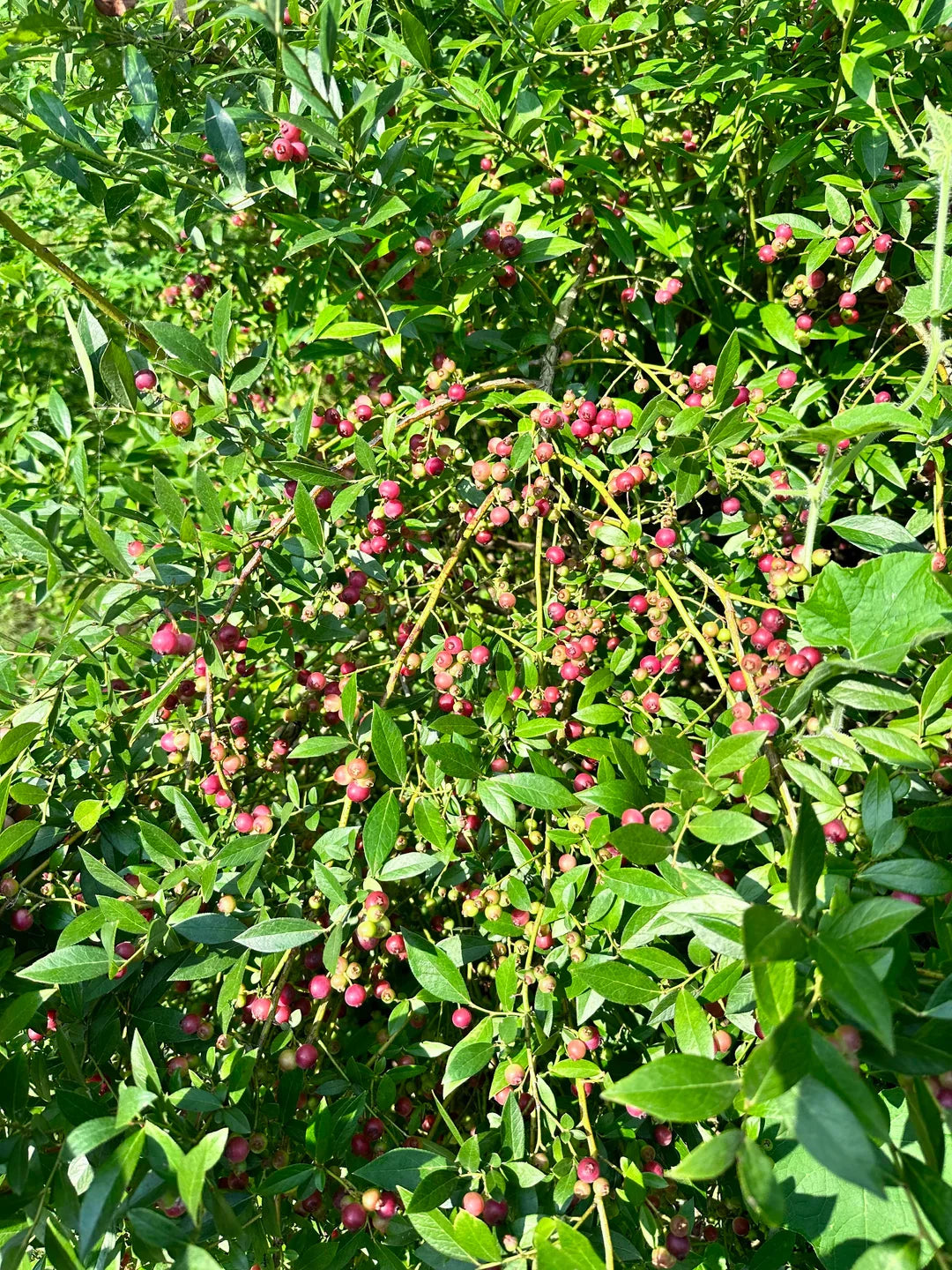
Pink Lemonade blueberry stands out the moment it begins to ripen. Its berries shift from pale yellow to soft rose and coral tones, creating a look that feels almost ornamental. Gardeners enjoy its sweet, candy-like flavor and consistent growth habit, which make it a practical addition to small or large home gardens.
Pink Lemonade Blueberry shrub has become a favorite at Blossomdale Plant Nursery because of how this variety bridges the worlds of ornamental and edible gardening. It’s proof that something practical can also be truly beautiful.
What Is a Pink Lemonade Blueberry?
Pink Lemonade is a specialty hybrid created from Northern Highbush and Rabbiteye genetics. This combination brings cold tolerance, steady vigor, and strong adaptability. Its unique berry color comes from its breeding and not from artificial modification, which contributes to the variety’s appeal among gardeners who enjoy growing uncommon fruit plants.
Do Pink Lemonade Blueberries Really Taste Like Lemonade?
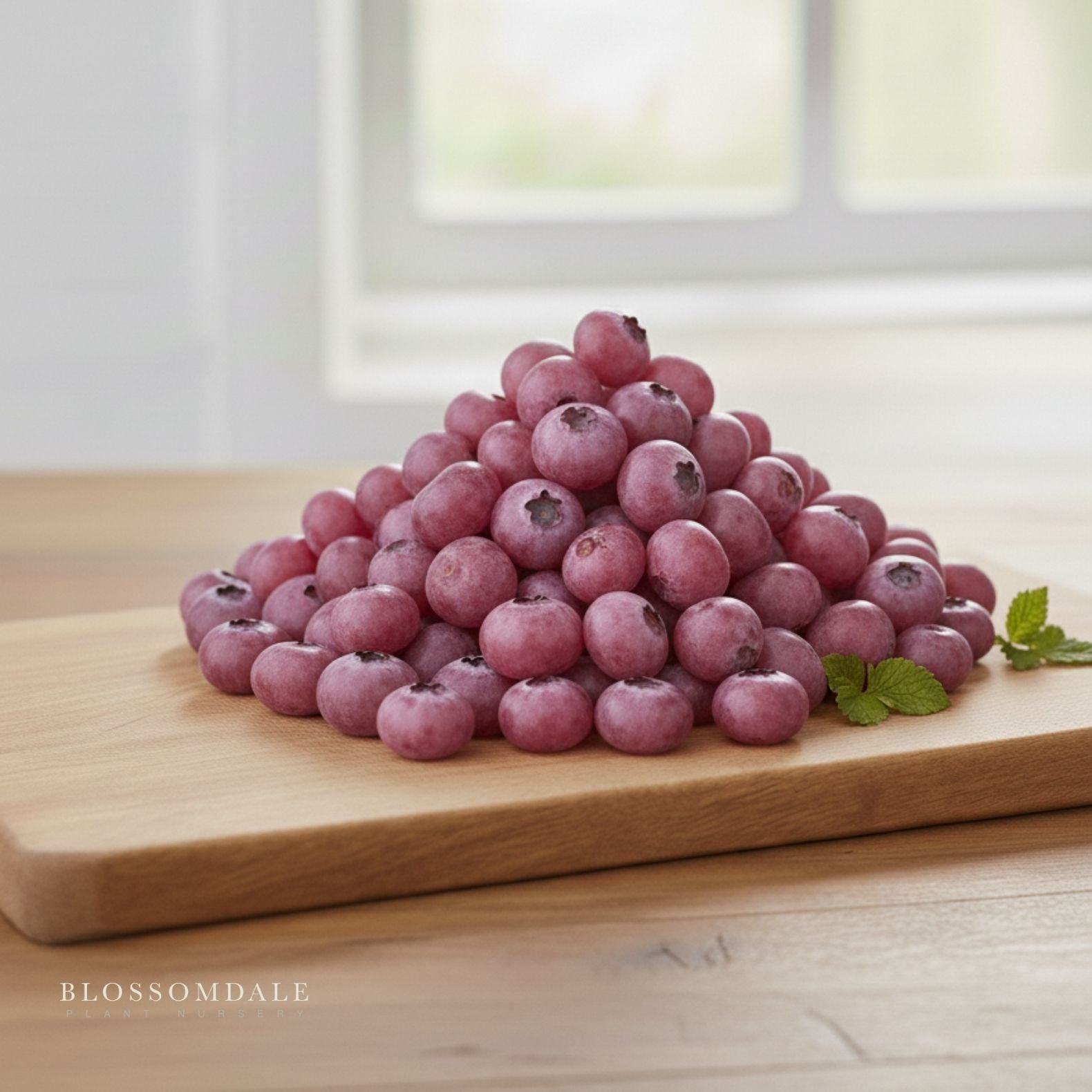
The name refers to the fruit’s color rather than its flavor. Pink Lemonade berries taste sweet with a light, honeyed finish. They do not have citrus or lemon-like notes, and the flavor leans milder and less tart than many traditional blueberries.
What USDA Zones Are Best for Pink Lemonade Blueberries?
Pink Lemonade Blueberries thrive in USDA Zones 4 through 8. This range means the shrub can tolerate cold winter temperatures while still producing fruit reliably in areas with moderate warmth. In cooler zones, the plant benefits from the full sun exposure needed to encourage flowering and fruit set. In the warmer end of its range, especially in Zones 7 and 8, providing some afternoon shade can help prevent heat stress and leaf scorch, keeping the berries flavorful and the foliage healthy.
How Big Do Pink Lemonade Blueberry Bushes Get?
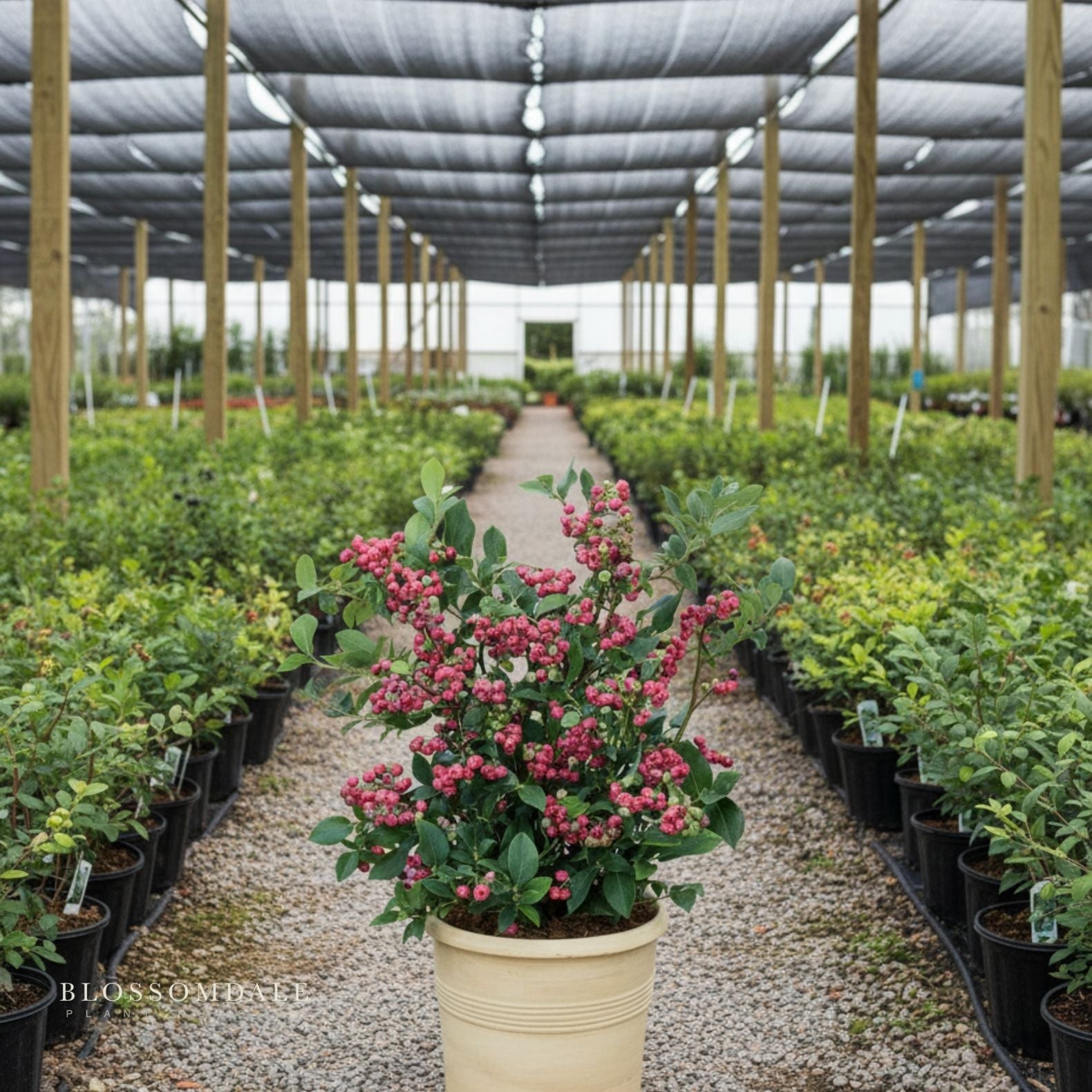
This variety matures at about three to four feet tall and wide, which makes it suitable for compact gardens, mixed borders, and container plantings. Its size helps gardeners incorporate it into landscapes without crowding surrounding plants.
How Much Sunlight Does a Pink Lemonade Blueberry Plant Require?
Full sun supports the plant’s best performance. Aim for six to eight hours of direct sunlight to encourage dense blooms and rich berry color. Cooler climates benefit from full exposure, while warmer regions can allow very light afternoon shade.
Soil Acidity and Fertility: Why Pink Lemonade Blueberries Need Specific Conditions
Blueberries are picky about one thing: soil. They need acidic, nutrient-rich, well-draining soil with a pH between 4.5 and 5.5. Anything higher, and the roots can’t absorb nutrients properly.
Before planting, mix in peat moss, composted pine bark, or leaf mold to lower pH naturally. Avoid heavy clay, which traps moisture and suffocates roots. If you’re planting in pots, use a potting mix formulated for acid-loving plants, the same kind suitable for azaleas and camellias.
Keeping your soil balanced is the secret to rich growth and vibrant fruit color.
How Often Should You Water Pink Lemonade Blueberries?
Provide consistent moisture without waterlogging the roots. Deep watering once or twice weekly is usually enough, depending on temperature and soil type. Container-grown plants dry faster and need closer monitoring. Mulch helps stabilize soil moisture and keeps roots cool.
What Fertilizers Work Best for Pink Lemonade Blueberry Plants?
Use fertilizers formulated for acid-loving plants. Controlled-release nitrogen sources work well because they support steady growth without forcing excess foliage at the expense of fruit. Apply in early spring and again in late spring if needed.
Blueberry Varieties Guide: From Jewel to Pink Lemonade
Blueberries come in many forms, and understanding the differences helps you grow the best kind for your climate.
Southern Highbush varieties like Jewel and Misty thrive in warmer regions with short winters. They produce early and handle humidity well. Northern Highbush blueberries, such as Bluecrop and Patriot, prefer cooler climates and longer chill periods.
Then there are specialty types like Pink Lemonade—a hybrid that combines the cold tolerance of Northern Highbush with the adaptability of Rabbiteye blueberries. This blend gives it both resilience and beauty.
If you already grow Jewel, adding Pink Lemonade creates a diverse, staggered harvest season—and a striking contrast in the garden.
Are Pink Lemonade Blueberries Self-Pollinating?
Pink Lemonade is self-fruitful, though yields increase when pollinators are active. Its soft pink spring flowers attract bees naturally. Companion plants such as Jerusalem Sage, lavender, or Pineapple Guava help maintain regular pollinator activity around the shrubs, strengthening fruit set.
What Pests or Diseases Affect Pink Lemonade Blueberries?
Blueberries generally remain healthy when grown in acidic, well-drained soil. Birds are the most common issue as fruit begins to ripen. Poor drainage can cause root decline, and humid conditions occasionally encourage fungal problems. Adequate spacing, airflow, and careful watering help prevent most concerns.
How Do You Prune a Pink Lemonade Blueberry Bush?
Prune in late winter while the plant is dormant. Remove dead or weak stems, then shape the shrub by encouraging several strong canes. Opening the center to light improves airflow and steady berry production. Light annual pruning maintains plant vigor.
Container and Small-Space Gardening with Pink Lemonade Blueberries
Pink Lemonade adapts easily to containers at least 18 inches wide. Growing in pots offers full control over soil acidity and drainage. Containers can be moved to capture more sun, avoid strong winds, or protect the plant from late frost. Its compact size makes it a strong option for patios, balconies, and decorative edible groupings with herbs or foliage plants.
When Do Pink Lemonade Blueberries Produce Fruit?
Pink Lemonade ripens mid to late season. Flowers appear in spring, followed by berries that gradually shift from yellow to pink as summer progresses. Harvest often continues into early fall, extending the picking window beyond many traditional varieties.
How Long Does It Take for a Pink Lemonade Blueberry Bush to Fruit?
Most shrubs begin producing small harvests in their second or third year. As the plant matures, yields increase steadily, and established bushes deliver more consistent crops.
Are Pink Lemonade Blueberries Genetically Modified?
No. Pink Lemonade blueberries were developed through traditional breeding practices and are not genetically modified.
Nutritional and Culinary Benefits of Pink Lemonade Blueberries
Beyond their garden appeal, Pink Lemonade Blueberries are a treat for your table. They’re rich in vitamin C, antioxidants, and fiber, just like traditional blueberries, but have a unique, honeyed flavor.
Their vibrant color makes them perfect for fresh desserts, salads, or homemade jams. You can also freeze them for smoothies or bake them into muffins for a pop of pink sweetness.
If you love edible gardening, growing specialty varieties like Pink Lemonade adds a creative, flavorful touch to your harvest.
Why Pink Lemonade Blueberry Deserves Space in Your Garden
Pink Lemonade balances ornamental appeal, steady yields, and compact growth. It adapts to containers, supports pollinators, and fits neatly into home landscapes where beauty and practicality meet. For gardeners seeking a specialty fruit plant that performs consistently and stands out visually, this variety brings strong value to modern home gardens.