


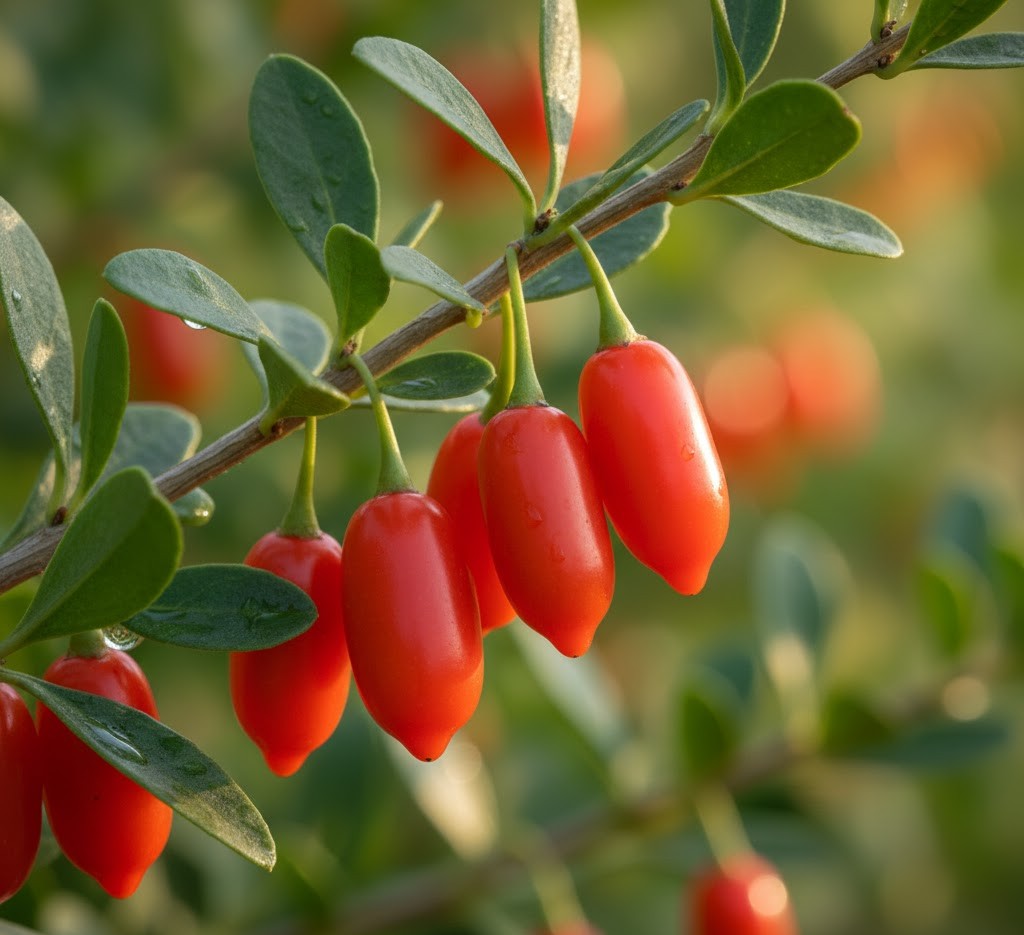
Growing your own goji berries (Lycium barbarum) is one of the most rewarding things you can do as a home gardener. Known as the “longevity fruit” in traditional Chinese medicine, goji berries are packed with antioxidants, vitamin C, and amino acids, making them both delicious and highly nutritious.
Goji grows well in warm, sunny spots and adapts to many soil types, making it ideal for home gardens, raised beds, and even small urban spaces.
What Are Goji Berries?
Goji berries are small, bright red-orange fruits from the Lycium barbarum shrub, native to Asia. They have been cultivated for centuries for their nutritional and medicinal properties. Fresh berries are sweet-tart and juicy, while dried berries are chewy with a concentrated flavor. Beyond being edible, goji berries are visually striking, making them popular in ornamental gardens and edible landscapes. Their soft gray-green foliage and delicate flowers provide visual interest even when the plant is not fruiting.
Are Goji Berries Easy to Grow?
Goji berries are beginner-friendly. They are hardy, tolerate moderate drought, and resist many pests naturally. While pruning and basic care improve fruit production and plant shape, they generally require minimal maintenance, making them suitable for both novice and experienced gardeners. Their adaptability also makes them a good choice for container planting or small urban spaces.
Ho Do You Grow Goji Berry Plants?
Goji berry plants thrive in full sun, requiring at least six to eight hours of direct light each day. While they can tolerate partial shade, too little sunlight may reduce fruit yield and leaf density. Choosing a sunny, sheltered spot also protects the plant from strong winds and supports robust growth.
These plants prefer well-draining soil, such as sandy or loamy types with moderate fertility. Heavy clay or waterlogged areas can harm the roots, so ensuring proper drainage is essential. A light layer of compost can boost nutrients without overfeeding the plant. Spacing is important for airflow and growth, whether planting in the ground or using containers, which should be at least five gallons with drainage holes.
Water consistently during the first year to help roots establish, letting the soil dry slightly between watering. A balanced organic fertilizer in early spring and mid-season promotes flowering and abundant berry production. Regular pruning improves airflow, reduces the risk of disease, and encourages new growth.
Goji plants can be trained as compact bushes, hedges, or espaliered against fences, offering both ornamental beauty and productive fruit. With proper care, they provide lush foliage, vibrant red berries, and a rewarding addition to any garden.

What Climate Do Goji Berries Need?
Goji berries grow best in USDA zones 5–9. They prefer warm, sunny climates with moderate rainfall. They can tolerate light frost but may need protection in colder regions. In subtropical areas, careful management of humidity and soil drainage is essential to prevent fungal diseases and ensure robust berry production. Well-chosen conditions promote both healthy foliage and abundant fruiting.
How Much Sunlight Does a Goji Berry Plant Need?
These plants thrive in full sun, ideally receiving six to eight hours of direct sunlight each day. Partial shade is tolerated, but shaded plants may produce fewer flowers and smaller berries. Sufficient sunlight encourages compact growth, healthier foliage, and maximum berry production. For gardeners in less sunny locations, positioning the plant near a reflective surface or using a raised bed can help increase light exposure.
Container and Small-Space Gardening
You don’t need a large yard to grow goji berries. They thrive in containers and raised beds, making them perfect for balconies, patios, or urban gardens. Use a large pot, at least five gallons in size, with well-draining soil. Place it in a sunny location, water consistently but lightly, and prune regularly to maintain a compact, productive shape. Container gardening allows gardeners in limited spaces to enjoy homegrown berries without sacrificing yield or plant health.
Medicinal and Herbal Plant Traditions
Goji berries have a long history in traditional Chinese medicine, where they have been used to support energy, eye health, and immunity. They are often dried and steeped in teas, soups, or herbal tonics, which allows their nutrients to infuse liquids effectively. By planting goji berries in your garden, you connect to centuries of herbal tradition and create a functional garden space. They pair well with herbs like sage or pineapple guava, which can enhance both the aesthetic and wellness qualities of your garden.
Are Goji Berries Safe to Eat Raw?
Yes, goji berries are safe to eat raw. Fresh berries are mildly sweet and can be eaten straight from the bush. For longer storage, they can also be dried or frozen. However, individuals taking blood-thinning medications or those with certain allergies should consult a healthcare professional before consuming large amounts. Enjoying them in moderation ensures you get their full nutritional benefits safely.
How Do You Know When Goji Berries Are Ripe?
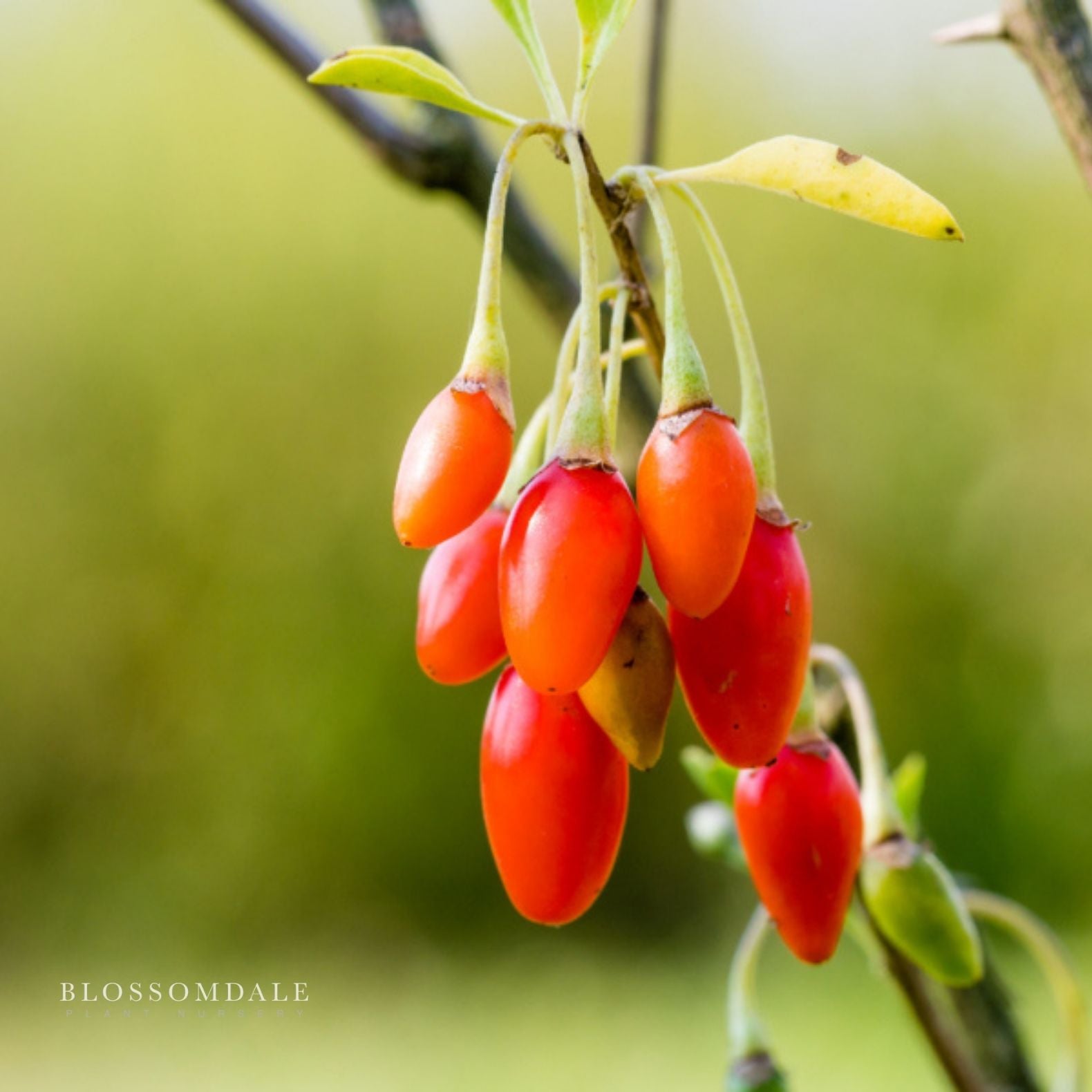
Goji berries are ready for harvest when they turn a bright red-orange and feel slightly soft to the touch. Gently pluck ripe berries, leaving unripe ones to continue developing. Correct harvest timing ensures maximum flavor, texture, and nutrient content. Overripe berries may fall off or lose some sweetness, so frequent checking during peak season is recommended.
What Are the Health Benefits of Goji Berries?
These berries are packed with antioxidants, carotenoids, vitamin C, and amino acids. Eating goji berries may support immune function, promote healthy vision, increase energy, and protect cells from oxidative stress. Fresh berries, dried snacks, and teas all deliver these benefits. Homegrown berries often retain more nutrients and superior flavor compared to commercial varieties, making them a particularly valuable addition to a home garden.
Harvesting, Preserving, and Using Homegrown Goji Berries
Goji berries are ready to harvest when their skin turns a vivid red-orange and they feel slightly soft. Regularly checking the plant during late summer and early fall prevents overripe berries from falling and reduces waste.
Once harvested, fresh berries can be eaten immediately, offering a naturally sweet-tart flavor far superior to store-bought options. For longer storage, drying them in a dehydrator or oven preserves nutrients for months while concentrating their flavor. Freezing is another option that maintains both texture and taste for smoothies or baking.
In the kitchen, goji berries are highly versatile. They can be steeped in teas, blended into smoothies, added to granola or salads, baked into muffins or breads, or simmered into jams, sauces, and broths.
Pest and Disease Management for Goji Plants
Although hardy, goji plants can attract aphids, spider mites, or powdery mildew if conditions are too humid or airflow is poor. Ensure proper spacing, avoid overwatering, and prune annually to maintain an open center. Applying neem oil or insecticidal soap can help control pests naturally. With basic care, goji berries remain productive, healthy, and aesthetically pleasing for many years.
Final Thoughts
Growing goji berries at home combines beauty, nutrition, and wellness in one plant. Hardy, ornamental, and nutritionally valuable, these shrubs support pollinators, enrich your garden ecosystem, and provide delicious fruits that connect you to centuries of herbal tradition.
At Blossomdale Plant Nursery, we believe every garden can be practical, nourishing, and vibrant. Start with a goji berry plant and transform your space into a sanctuary of health, abundance, and natural beauty.