


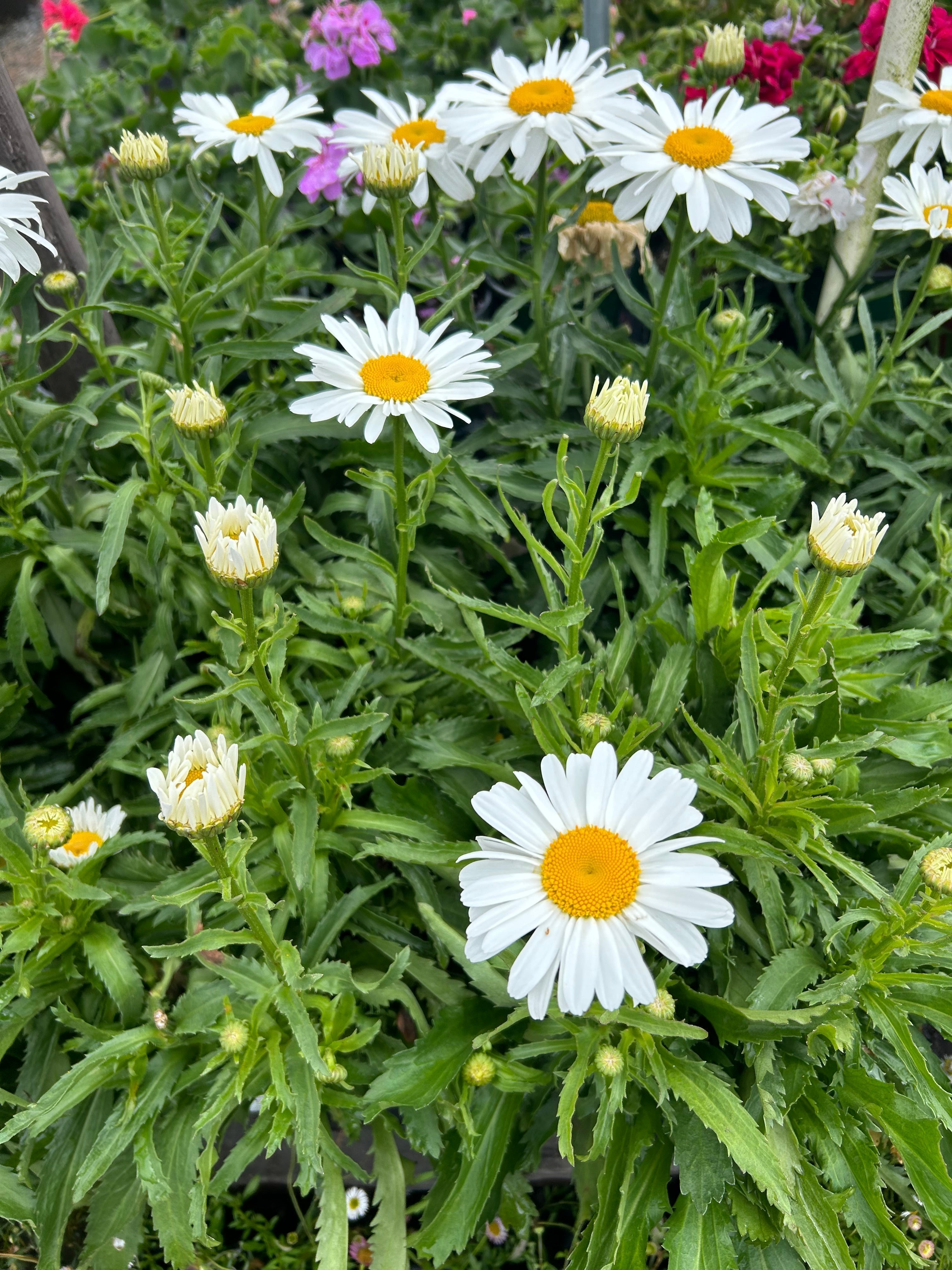
Snow Lady is a compact, early-flowering Shasta daisy with crisp white petals and sunny yellow centers — beginner-friendly, drought-tolerant, and loved by pollinators.
The Snow Lady Shasta Daisy (Leucanthemum × superbum) is a long-blooming perennial that has excellent performance in garden landscaping. Beyond its beauty, it's beginner-friendly, drought-tolerant once established, and loved by pollinators.
01What Is Snow Lady Shasta Daisy?
Snow Lady Shasta Daisy belongs to a group of hybrid daisies developed from European species such as Leucanthemum vulgare and Leucanthemum maximum. Understanding its origin, structure, and growth habit helps clarify how it differs from other daisies and how best to use it in planting design.
What is Snow Lady Shasta Daisy?
Snow Lady is a dwarf cultivar of Leucanthemum × superbum, a hybrid species bred for ornamental use. It forms a compact clump of dark green, slightly toothed leaves and produces large, daisy-like flower heads with white ray florets surrounding a yellow disc. The flowers are borne on sturdy stems, making them suitable for both garden display and cut arrangements.
Is Snow Lady Shasta Daisy a perennial or annual?
It is a herbaceous perennial in USDA zones 5–9. The plant enters dormancy in winter, with top growth dying back, and regrows from the crown in spring. In warmer climates without a strong winter chill, it may behave as a short-lived perennial.
What makes Snow Lady different from other Shasta daisies?
Snow Lady is significantly more compact than standard Shasta daisy cultivars, typically reaching only 25 to 30 cm (10 to 12 inches) in height. It also flowers earlier, often in late spring, and has a more uniform, dense growth habit. These traits make it suitable for edging, container planting, and mass plantings where taller varieties would be too large or prone to flopping.
02Ideal Growing Conditions
Shasta daisies are native to temperate regions and perform best under specific environmental conditions. Matching these conditions improves flowering, plant longevity, and resistance to disease.
Where does Snow Lady Shasta Daisy grow best?
It grows best in temperate climates with moderate summers and cool winters. It performs reliably in USDA zones 5 to 9. In hot, humid climates, especially lowland tropical regions, plants may struggle with heat stress, reduced flowering, and fungal issues.
What type of soil does Snow Lady Shasta Daisy need?
Well-draining soil is essential for root health. Snow Lady prefers moderately fertile soil with a neutral to slightly alkaline pH (around 6.5 to 7.5). Heavy clay soils should be amended with organic matter or grit to improve drainage, as waterlogged conditions can lead to crown rot.
How much sunlight does Snow Lady Shasta Daisy need?
Full sun is required for optimal growth and flowering. A minimum of 6 to 8 hours of direct sunlight daily promotes compact growth, strong stems, and abundant blooms. In areas with intense summer heat, light afternoon shade can help reduce stress, though too much shade reduces flowering.
03Growth Rate, Mature Size, and Blooming Cycle
Understanding how Snow Lady develops through the growing season helps with spacing, design planning, and maintenance scheduling.
How fast does Snow Lady Shasta Daisy grow?
It is considered a fast-establishing perennial. Plants grown from seed or transplants can flower in their first year under favorable conditions. Growth is most vigorous in spring when temperatures are moderate.
How big does Snow Lady Shasta Daisy get?
Mature plants typically reach 25 to 30 cm (10 to 12 inches) in height and spread 30 to 45 cm (12 to 18 inches) wide. The plant forms a dense clump that gradually expands over time.
When does Snow Lady Shasta Daisy bloom?
Blooming typically begins in late spring to early summer. With regular deadheading, flowering can continue into mid to late summer. Each flower head can last several days, and continuous bud formation extends the overall bloom period.
04Watering, Nutrient Needs, and Seasonal Care
Proper watering and nutrient management support consistent flowering and reduce plant stress, especially during warmer months.
How often should you water Snow Lady Shasta Daisy?
During establishment, soil should be kept consistently moist but not saturated. Once established, the plant is moderately drought-tolerant but performs best with regular watering during dry periods. Allowing the soil surface to dry slightly between watering helps prevent root issues.
Does Snow Lady Shasta Daisy need fertilizer?
Snow Lady benefits from moderate feeding. A balanced, slow-release fertilizer applied in early spring supports healthy growth and flowering. Excess nitrogen should be avoided, as it promotes leafy growth at the expense of blooms.
05Pruning, Deadheading, and Division
Routine maintenance improves flowering performance and extends the plant's lifespan.
Should you deadhead Snow Lady Shasta Daisy?
Yes, deadheading encourages the plant to produce additional flowers by preventing seed formation. Removing spent blooms regularly can significantly extend the flowering period.
Should you prune Snow Lady Shasta Daisy?
Light pruning after the main bloom flush helps maintain a compact shape and may encourage a secondary bloom. In late fall, cutting back the plant to the base helps prepare it for winter dormancy.
06Propagation Methods
Propagation ensures continued plant vigor and allows gardeners to expand plantings efficiently.
Can you grow Snow Lady Shasta Daisy from seed?
Yes, Snow Lady can be grown from seed. Seeds germinate best in well-draining soil with consistent moisture and light exposure. Flowering may occur in the first growing season if started early.
How do you propagate Snow Lady Shasta Daisy?
Division is the most reliable method. Mature clumps should be divided every 2 to 3 years in spring or early fall to maintain vigor, prevent overcrowding, and improve flowering performance.
07Common Problems, Pests, and Disease Management
Identifying and addressing issues early helps maintain plant health and consistent flowering.
Why is my Shasta daisy not blooming?
Common causes include insufficient sunlight, overcrowded clumps, and excessive nitrogen fertilization. Dividing plants, improving light exposure, and adjusting feeding practices usually restore blooming.
What pests and diseases affect Snow Lady Shasta Daisy?
Common pests include aphids, leaf miners, and slugs. Diseases such as powdery mildew and root rot may occur in humid or poorly drained conditions. Good air circulation, proper spacing, and well-draining soil reduce these risks.
08Is Snow Lady Shasta Daisy Worth Growing?
Snow Lady Shasta Daisy is widely used in ornamental gardening due to its balance of visual impact and ease of care. Evaluating its strengths helps determine whether it fits specific garden conditions.
Is Snow Lady Shasta Daisy easy to grow?
It is considered easy to grow in temperate climates. Its compact size, adaptability to different soils, and relatively low maintenance requirements make it suitable for both beginner and experienced gardeners.
Why should you grow Snow Lady Shasta Daisy?
Snow Lady offers classic daisy blooms in a compact form that fits small gardens, borders, and containers. It provides early-season color, supports pollinators, and integrates well into mixed perennial plantings.