


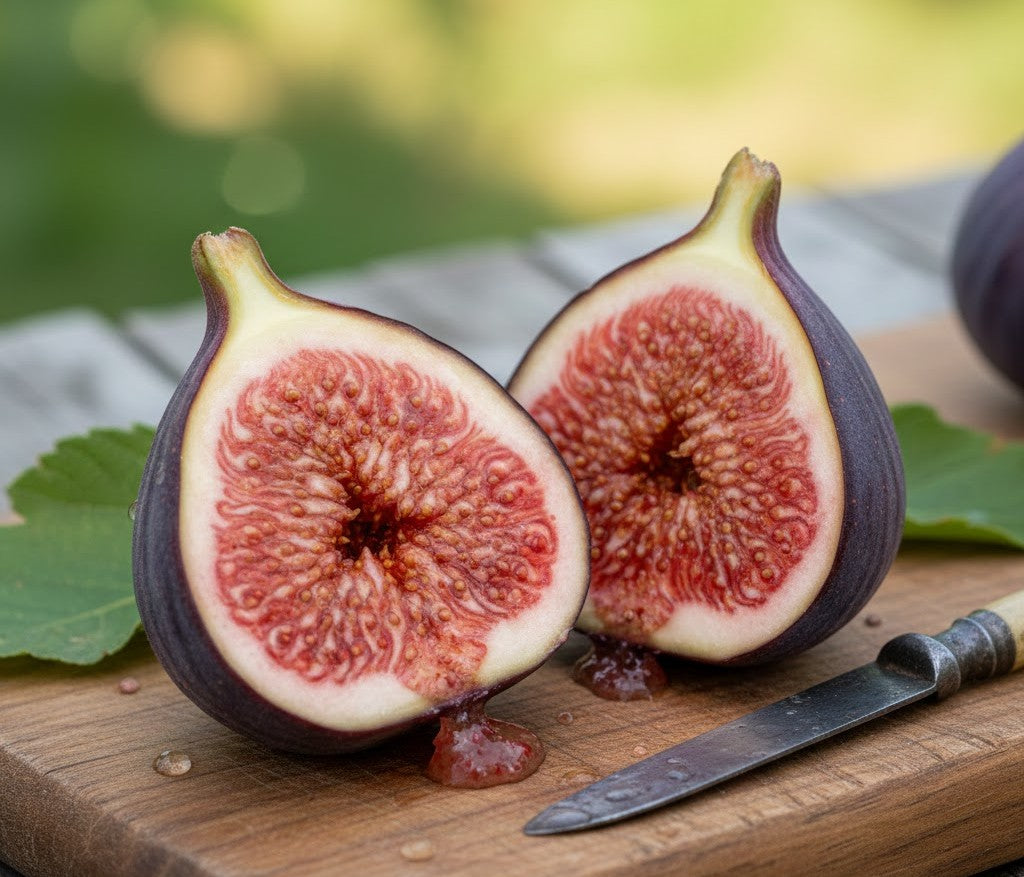
The Strawberry Verte Fig Tree has the kind of charm that makes a garden feel more personal. Its soft green skin and berry-red interior bring a surprisingly luxurious touch to small spaces, patios, and edible landscapes. It’s an easy tree to live with—productive, compact, and generous—perfect for gardeners who want beauty and homegrown sweetness without unnecessary fuss.
Fig Varieties: What Makes the Strawberry Verte Fig Unique for Backyard Cultivation?
Among the many fig varieties available today, Strawberry Verte stands out for its rosy interior and naturally balanced sweetness. It’s a wonderful fit for home growers who want something flavorful but not overly sugary. While classics like Black Mission and Kadota earn plenty of attention, Strawberry Verte fills a lovely middle ground: fruity, mild, and versatile in the kitchen.
Its compact growth habit makes it friendly for suburban backyards or patios that can’t accommodate large orchard trees. Whether you’re planting a small edible garden or rebuilding your outdoor space after years of neglect, this fig happily adapts to whatever room you have.
Fig History: Why Have Figs Been Culturally Significant for Thousands of Years?
Figs have been part of human life for more than 5,000 years. They appear in ancient writings, ceremonies, and family orchards passed down through generations. In many Mediterranean communities, fig trees symbolized nourishment and wisdom—plants that fed both the body and spirit.
Strawberry Verte comes from those old European growing traditions, where flavor and resilience were prized above all. Planting one carries a bit of that legacy into modern gardens, blending ancient practicality with today’s love for homegrown food.
Fig Climate Requirements: What Conditions Help Strawberry Verte Thrive?
Strawberry Verte loves warmth and long stretches of sun. USDA Zones 7–10 give it exactly what it needs: hot summers, mild winters, and the chance to develop full flavor. If you live in a cooler zone, you can still grow it successfully in a large container that can move indoors before deep winter sets in.
The tree prefers well-draining soil—loamy or sandy works beautifully. Improving your soil with compost boosts drainage and aeration, especially if your garden tends to hold water. With the right foundation, this fig becomes a reliable, low-maintenance producer.
What USDA zones does the Strawberry Verte fig grow in?
Strawberry Verte grows reliably in USDA Zones 7–10, where winters stay mild enough for the wood to remain protected and fruiting stays consistent. In cooler regions, gardeners often treat it as a container plant, moving it into a garage or sheltered space once temperatures drop.
With proper winter care, even Zone 6 growers can keep it productive. The tree responds well to heat, but it also appreciates moderate coastal climates, making it a flexible choice for many home orchards.
Is the Strawberry Verte fig tree self-fertile?
Yes, the Strawberry Verte fig tree is self-fertile, meaning a single tree can produce a full crop of fruit without needing another fig nearby for pollination. This makes it ideal for home gardens or small spaces where planting multiple trees isn’t practical.
Container vs. Ground Planting: Which Option Works Best for Strawberry Verte Fig Trees?
You can grow this fig almost anywhere—raised beds, garden soil, or a sturdy container. When planted in the ground, expect a full, rounded canopy about 10 to 12 feet across. In this setting, the root system strengthens and supports heavier fruiting.
Container planting is ideal for smaller homes or apartment-style setups. A pot about 20 inches wide with drainage holes is enough to get started. Container trees stay around 6 to 8 feet tall, making them easier to move, shape, and harvest.
How big does a Strawberry Verte fig tree get?
A Strawberry Verte fig tree can reach 10–12 feet tall and wide when planted directly in the ground, forming a dense, spreading canopy. In containers, growth is naturally more compact, typically 6–8 feet in height and width, which makes it ideal for patios or small gardens.
When does the Strawberry Verte fig tree produce fruit?
The tree usually begins fruiting in mid to late summer, producing ripe, sweet figs between July and September. Proper sunlight, watering, and occasional pruning help maximize both growth and fruit production.
How do you know when Strawberry Verte figs are ripe?
You’ll know a Strawberry Verte fig is ready the moment it starts behaving like it’s done holding itself together. The fruit softens noticeably, the neck relaxes, and the fig begins to hang with a slight downward tilt. The skin deepens in color, sometimes showing a faint blush, and may develop tiny sugar cracks near the surface. When you press it lightly, it should give without feeling mushy.
How Should You Prune and Maintain a Strawberry Verte Fig?
Caring for a Strawberry Verte fig is wonderfully manageable. Winter is the best time for structural pruning—removing crossing branches and opening the center of the canopy so sunlight can reach all sides. This not only improves fruiting but makes harvesting more comfortable, especially if you don’t want to deal with ladders or tangled growth.
During the growing season, a light trim keeps the tree shaped and encourages strong fruiting wood. Compost or organic mulch in spring is usually enough to keep the tree nourished, and once established, it needs only moderate watering. It’s hardy, calm, and forgiving—exactly what a busy gardener needs.
What Pests and Diseases Commonly Affect Strawberry Verte?
Strawberry Verte fig trees are naturally resistant to most major problems, though a few pests occasionally appear. Aphids, scale insects, and mites tend to show up during dry periods, and a quick treatment with neem oil or insecticidal soap usually clears them.
Birds and squirrels are another story—they adore ripe figs just as much as we do. Netting helps protect your fruit as it nears ripeness. Avoid letting the soil stay overly wet to prevent fungal issues like leaf spot or root rot. Good airflow and steady sun go a long way in keeping the tree healthy.
How Do You Harvest and Preserve Strawberry Verte Figs?
Strawberry Verte figs ripen in soft shades of pale green, hiding their jewel-toned centers until picked. Handle ripe figs carefully—they bruise with the slightest pressure. Eat them fresh within a few days, or freeze, dry, or turn them into preserves for longer enjoyment.
The leaves are also pleasantly aromatic and useful in teas or as natural wraps for cooking. If you like to gather ingredients that feel nurturing and practical, this tree becomes a lovely part of your yearly kitchen routine.
How Can Strawberry Verte Figs Be Enjoyed in the Kitchen?
Fresh Strawberry Verte figs have a gentle sweetness that pairs beautifully with soft cheeses, fresh herbs, honey, and a glass of something cold after a long day. They shine in salads, desserts, tarts, and homemade jam. Roasted figs make an elegant yet unfussy treat, perfect for weekend dinners or quiet evenings.
Beyond food, figs carry cultural meaning—gratitude, comfort, and a sense of sharing. Growing them at home turns even a small harvest into something worth celebrating.
Conclusion
At Blossomdale Plant Nursery, we’ve always believed that a garden should feel like an extension of your life—easy, uplifting, and rewarding. The Strawberry Verte Fig Tree embodies all of that. Whether it lives in a sunny backyard or a patio container, it gives warmth, beauty, and fruit that feels like a small luxury you grew yourself.