
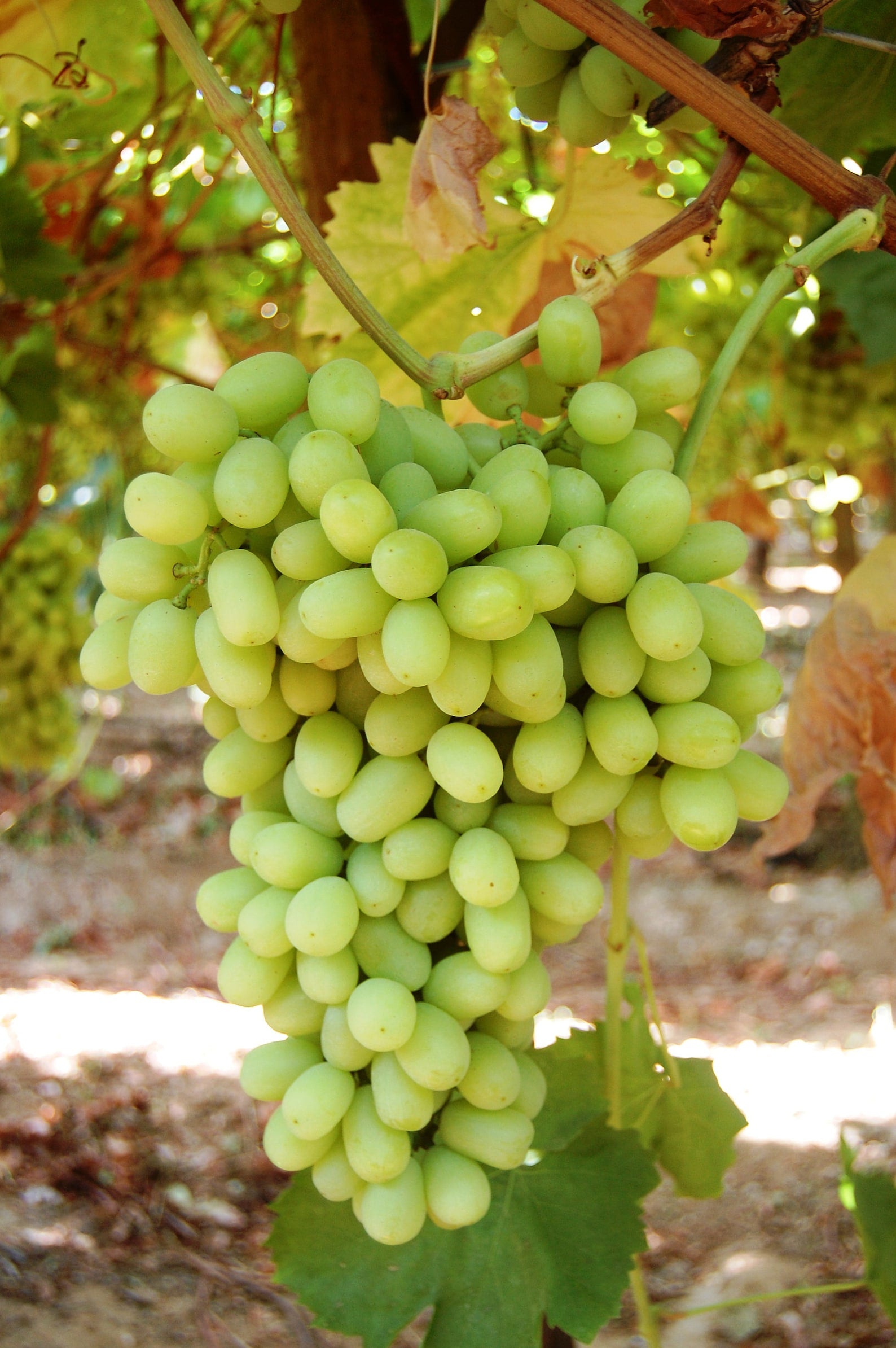
Thompson Seedless grapes are one of the most widely cultivated grape varieties in the world.
Known for their pale green color, mild sweetness, and lack of seeds, these grapes dominate global raisin production and are a staple in fresh fruit markets. The variety belongs to the species Vitis vinifera and is widely grown in regions with warm, dry climates.
Because of its versatility and reliable yields, Thompson Seedless has become the most planted grape variety in California vineyards and remains one of the most recognizable seedless grapes worldwide.
01What Are Thompson Seedless Grapes?
Thompson Seedless grapes are a green, seedless table grape variety known for their sweet flavor and thin skin. They are commonly eaten fresh, dried into raisins, or used in juices and concentrates. The fruit typically forms long clusters of oval berries with firm, juicy flesh.
Where do Thompson Seedless grapes originate?
The variety originates from the eastern Mediterranean and Asia Minor, especially areas that are now part of Turkey and Iran. The grape later spread throughout Europe and eventually to California, where it became the dominant raisin grape.
Why are Thompson Seedless grapes so widely grown?
Thompson Seedless grapes are widely grown because they produce consistent yields, have strong market demand, and adapt well to warm climates. The grapes work equally well for fresh eating, drying, juice production, and wine blending, which increases their economic value to growers.
Are Thompson Seedless grapes actually seedless?
Thompson Seedless grapes are considered seedless because the seeds fail to fully develop. This process is called stenospermocarpy, where fertilization occurs but the embryo stops developing, leaving only tiny undeveloped seed traces. (Wikipedia)
02Growing Thompson Seedless Grapes
Growing Thompson Seedless grapes is popular among home gardeners and commercial vineyards because the vines are productive and relatively easy to manage. The plants perform best in warm regions with plenty of sunlight and well-drained soil.
What climate and conditions do Thompson Seedless grapes need to grow?
Thompson Seedless grapes grow best in warm, sunny climates with low humidity and well-drained soil. Regions with long summers and minimal rainfall reduce fungal disease risk and help the fruit develop sweetness.
How do you plant Thompson Seedless grape vines?
Grape vines are planted in deep holes large enough to accommodate the root system. After planting, the roots are covered with soil and watered thoroughly. Vines are typically trained onto trellises or fences to support their climbing growth.
How long does it take for a Thompson Seedless vine to produce grapes?
Most vines begin producing fruit two to three years after planting once the root system is established and the vine develops strong canes.
03Vine Care and Vineyard Management
Proper vine care ensures consistent grape production and healthy plant growth. Grape vines can live for decades when maintained through pruning, irrigation, and training systems.
How much sun and water do Thompson Seedless grapes need?
These vines require six to eight hours of direct sunlight daily and moderate watering, especially during the first year of growth. The soil should remain moist but not waterlogged.
How do you prune and train Thompson Seedless grape vines?
Pruning typically occurs during winter dormancy. Growers cut back the vines to a few fruiting canes to encourage vigorous new growth and better fruit production the following season.
Can Thompson Seedless grapes be grown in containers or small gardens?
Yes. With proper pruning and support structures, Thompson Seedless vines can be grown in large containers or small garden spaces. They still require full sun, strong trellising, and consistent watering.
04Harvest and Yield of Thompson Seedless Grapes
Harvest timing and productivity vary depending on climate and vineyard management. Mature vines can produce large quantities of grapes each season.
When are Thompson Seedless grapes harvested?
Harvest usually occurs in late summer to early fall once the berries develop their characteristic sweetness and pale green color. In many regions, the harvest window falls between August and September.
How many grapes can a Thompson Seedless vine produce?
A mature vine can produce roughly 10–15 pounds of grapes per season, though yields vary depending on climate, pruning practices, and soil fertility.
05Nutrition and Health Benefits of Thompson Seedless Grapes
Fresh grapes contribute hydration, natural sugars, and plant compounds that support general health. Thompson Seedless grapes provide similar nutritional benefits to other green grapes.
What nutrients are found in Thompson Seedless grapes?
These grapes contain carbohydrates for energy, dietary fiber, vitamin C, vitamin K, and antioxidants. They also provide hydration due to their high water content.
What are the health benefits of Thompson Seedless grapes?
Regular consumption may support heart health, digestion, and overall vitality due to antioxidants and polyphenols found in grapes. The fruit also offers quick natural energy from its carbohydrate content.
06Culinary and Agricultural Uses of Thompson Seedless Grapes
Thompson Seedless grapes play a major role in both fresh produce markets and food processing industries.
What are Thompson Seedless grapes used for?
The grapes are widely used for:
- Fresh table grapes
- Raisin production
- Juice and concentrate
- Wine blending
- Canned or processed grape products
Most raisins produced in California are made from this variety because the berries dry well and retain sweetness during dehydration.