


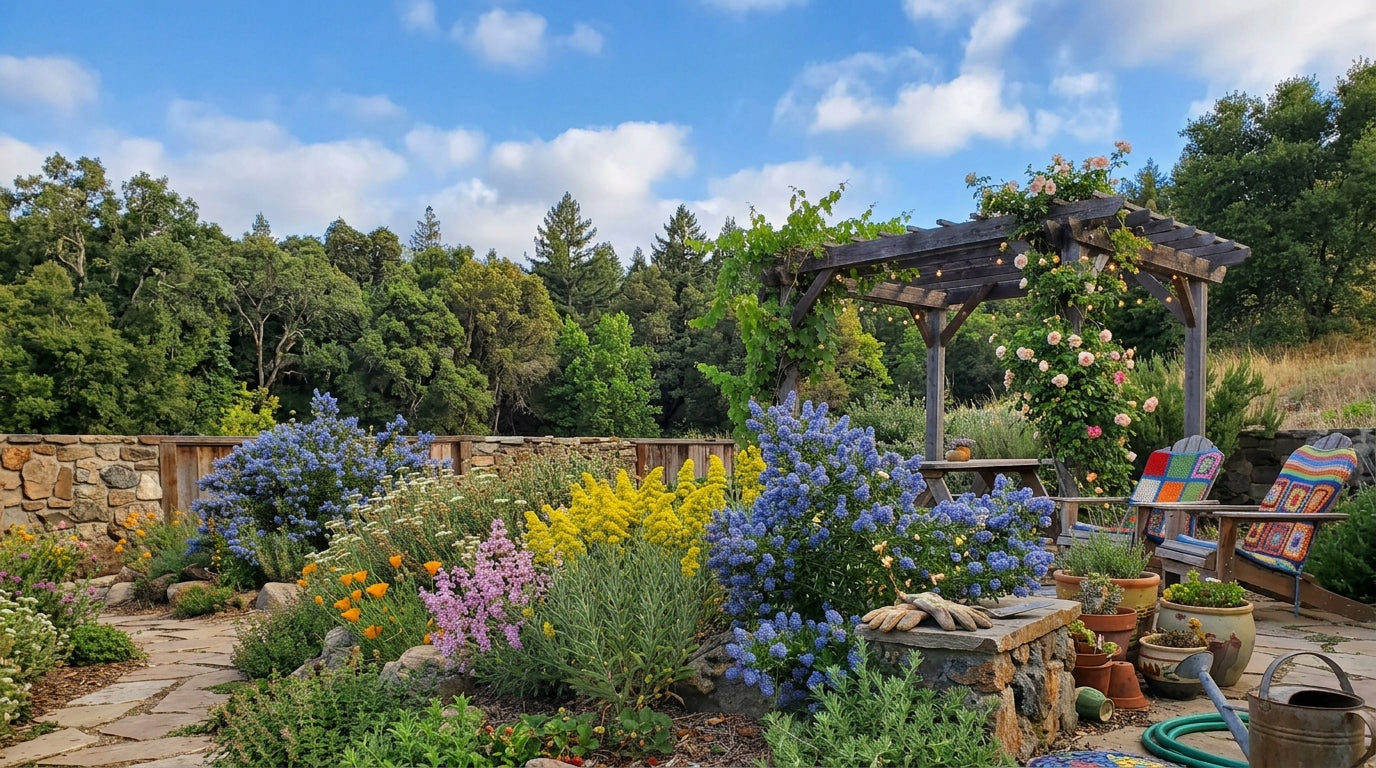
Creating a native garden is one of the most practical ways to design a landscape that works with your environment instead of against it. By choosing plants already adapted to your local climate, soil, and rainfall, you build a garden that needs less water, fewer fertilizers, and far less upkeep, while giving pollinators, birds, and backyard wildlife a place to thrive.
This guide walks through the process from start to finish: assessing your site, planning a layout, choosing the right plants, and keeping the garden resilient for years to come. Work through the ten steps in order, or jump to the one you need below.
Assess your site
Before you plant anything, spend time simply observing. Note where sunlight falls throughout the day, which areas sit in shade, and how your soil drains after rain. These conditions determine which native species will actually thrive, rather than just survive.
Do thisMark areas of full sun, partial sun, and shade on a rough sketch. Take a soil sample to test pH and drainage before you commit to a layout.
What do I need to know before starting a native garden?
Understanding your sunlight, soil, and moisture patterns lets you select species that will grow with minimal intervention, instead of fighting the conditions you already have.
How do you choose the right native plants for your area?
Cross-reference what you observed on site with a local native plant guide or app, and prioritize species already suited to those exact conditions.
Plan your garden layout
Sketch a simple map of the space, grouping plants that share similar water and light needs. Leave room for paths, open ground, and pockets set aside for wildlife to move through.
Do thisDraw zones for shrubs, flowers, and groundcovers. Plan in loose clusters rather than straight rows for a more natural look.
How do I map out my native garden layout?
Graph paper or a simple digital sketch tool works well for visualizing planting zones before anything goes in the ground.
How do I design a native garden layout well?
Factor in mature plant heights, bloom times across the seasons, and the needs of the wildlife you want to support, so the space stays balanced year-round.


Pink Swamp Milkweed 'Asclepias incarnata'

Prepare the soil
Healthy soil is what makes everything after this step easier, but for native plantings that usually means disturbing it as little as possible. Digging or tilling breaks down soil structure and brings dormant weed seeds to the surface, so clearing existing growth gently is generally the better route.
Do thisSmother existing grass and weeds with cardboard or a layer of mulch, or remove them by hand, rather than tilling. Top with organic mulch to help the soil hold moisture.
How do I prepare soil for a native plant garden?
Well-drained soil with intact structure gives roots room to establish quickly, which is the main thing native plants need in their first season. Minimal disturbance helps that structure stay intact.
Should I till the soil first?
Generally, no. Tilling disturbs soil structure and exposes dormant weed seeds, which often creates more weed pressure than it solves. Sheet mulching or hand-clearing is the gentler alternative.
Should I use mulch, and what kind?
A 2–3 inch layer of wood chips or leaf litter retains moisture and keeps weed pressure down without adding synthetic inputs.
Select your native plants
With your site and layout mapped, choose species adapted to the exact conditions you found. Decide between seeds, plugs, or established small plants based on how quickly you want the garden to fill in.
Do thisVisit a local native nursery or consult a regional plant guide. Mix perennials, shrubs, and groundcovers for a layered, resilient effect.
Should I start with seeds or plants?
Small plants establish faster and give more predictable results, while seeds cost less and allow more natural spacing over time.
What should I ask myself when planning a native garden?
Weigh how much time you have for maintenance, how much space is available, and what wildlife benefits matter most to you.


Plant strategically
Dig each hole about twice as wide as the root ball, set the plant gently, and backfill with the native soil you removed. Give each species enough room to reach its mature size.
Do thisWater immediately after planting, then apply mulch around the base of each plant to help it retain moisture.
How should I use plant heights and colors in the design?
Place taller species toward the back, shorter ones in front, and alternate textures and colors so the bed reads as intentional from any angle.
Can hardscape elements be used in native gardens?
Rocks or paths can define zones and add structure while still keeping the overall look natural rather than manicured.
Attract wildlife
A native garden earns its keep by feeding and sheltering the pollinators, birds, and beneficial insects that depend on local plant life. A few flowering species and a small water source go a long way.
Do thisInclude early- and late-blooming species so food is available across the whole season, and skip pesticides that harm pollinators.
What plants and features attract wildlife to a native garden?
Native flowers, seed-bearing plants, and berry-producing shrubs consistently draw in birds and pollinators.
What practices support pollinators specifically?
Leaving some stems and seed heads standing through winter gives insects shelter and a food source when little else is available.
Water wisely
Newly planted natives need consistent watering while their roots establish. After that first season, most will need only minimal irrigation, which is where the long-term water savings really show up.
Do thisWater deeply once or twice a week through the first season, and group plants with similar water needs together to avoid waste.
How often should I water native plants?
Newly planted natives need regular water while they root in; once established, most require very little supplemental watering.
Can native gardens actually conserve water?
Mulching, grouping plants by water needs, and collecting rainwater all reduce a native garden's water use significantly over time.
Maintain without overfertilizing
Native plants are adapted to your local soil as it already is, which means heavy fertilizing usually does more harm than good. Less intervention is the point.
Do thisSkip high-phosphorus fertilizers entirely, and reach for compost or natural amendments only when a plant clearly needs the boost.
Do native gardens need fertilizer at all?
Most natives thrive in their local soil without any added fertilizer, which is one of the biggest maintenance savings of this approach.
Control weeds and prune thoughtfully
A little regular attention keeps a native garden looking intentional. Pull weeds by hand, remove dead or crowded growth, and time pruning carefully so you're not disturbing wildlife that depends on the plants.
Do thisPrune in early spring, and stay on top of hand-weeding through the first year while new plants are still establishing.
How do I control weeds in a native garden?
Hand weeding paired with a healthy layer of mulch cuts down on competition for young, still-establishing plants.
Should I prune native plants, and when?
Early spring pruning keeps structure in check without disturbing insects that may be overwintering in old stems.
Enhance biodiversity and resilience
The final step is really an ongoing one: plant a genuine variety of species, build small habitat features, and let some natural regeneration happen on its own. A diverse garden adapts better to pests, drought, and a changing climate.
Do thisAdd leaf litter, small logs, or a rock pile to give wildlife shelter and support long-term soil health.
How does a native garden benefit the environment?
It provides food and habitat for local wildlife, cuts down on maintenance, and steadily improves soil health over time.
How do I make my native garden resilient to changing conditions?
Plant diversity and small habitat features both add stability, helping the whole ecosystem absorb stress rather than one weak point taking it all.
Your native garden checklist
Print this out or check items off as you go — ten steps from bare yard to established native garden.