


Boxwood Beauty Natal Plum is a compact evergreen shrub commonly used where a clean, structured look is needed in warm climates. Known for its dense foliage and tidy form, it is often selected as a substitute for traditional boxwood. This section explains how to recognize the plant and understand its natural growth habit.
How can Boxwood Beauty Natal Plum be identified?
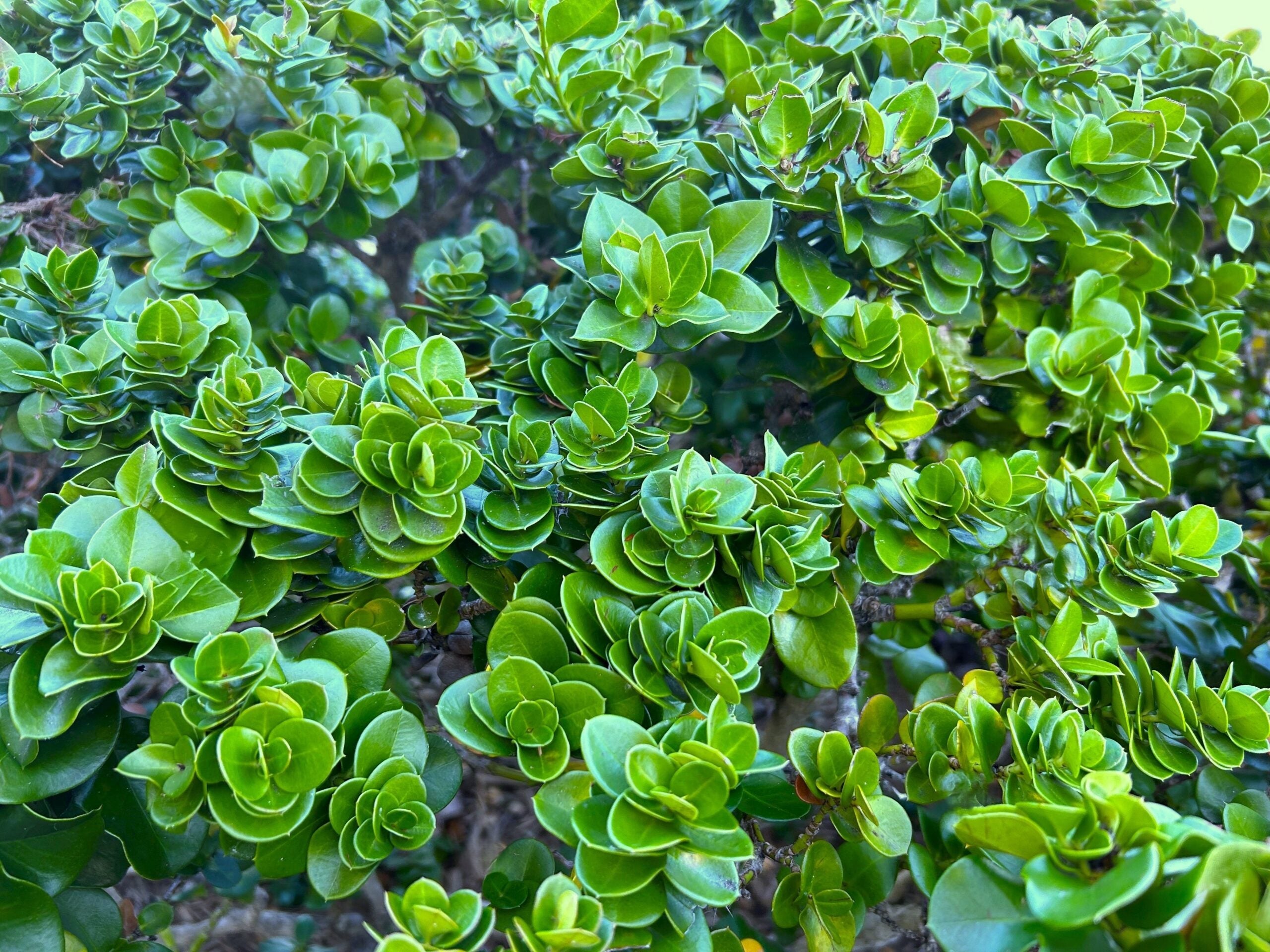
Boxwood Beauty Natal Plum is identified by its small, oval, dark green leaves, naturally dense branching, and compact, rounded form. The foliage is glossy and leathery, creating a clean, manicured appearance even without frequent pruning.
Is Boxwood Beauty Natal Plum a cultivar or a separate plant species?
Boxwood Beauty is a cultivated variety of Natal plum, a species in the Apocynaceae family. It was selected specifically for compact growth and ornamental use rather than fruit production.
What size and shape does Boxwood Beauty Natal Plum reach over time?
Over time, Boxwood Beauty Natal Plum forms a low, rounded shrub approximately 3 to 4 feet tall and wide. Its slow, controlled growth makes it easy to manage in small or formal landscape spaces.
Boxwood Beauty Natal Plum Native Background and Growing Conditions
The plant’s condition in heat, sun, and coastal areas is closely tied to its geographic origins and natural adaptations.
What region is Natal Plum originally native to?
Natal plum is native to southern Africa, where it grows in coastal scrublands and warm, dry environments. These conditions shaped its tolerance for sun, wind, and saline air.
What types of climates allow Boxwood Beauty Natal Plum to thrive?
Boxwood Beauty Natal Plum thrives in warm, frost-free climates with mild winters. It performs best in USDA Zones 9–11 and is commonly planted in subtropical and coastal regions.
How does soil drainage affect Boxwood Beauty Natal Plum health?
Good drainage is essential for healthy growth. While the plant adapts to sandy, loamy, or rocky soils, consistently wet or compacted soil increases the risk of root decline.
Boxwood Beauty Natal Plum Light, Water, and Establishment Needs
Correct placement and early care help the plant maintain dense foliage and long-term durability.
Where should Boxwood Beauty Natal Plum be planted for best growth?
Planting in full sun to partial shade produces the best results. Full sun encourages compact growth, while partial shade is suitable in areas with intense afternoon heat.
What watering approach supports strong root establishment?
During the first growing season, regular watering helps establish a balanced root system. Deep, infrequent watering is preferred over frequent shallow irrigation.
How does Boxwood Beauty Natal Plum perform during dry conditions?
Once established, Boxwood Beauty Natal Plum tolerates drought well. Its thick leaves reduce moisture loss, allowing it to maintain appearance during extended dry periods.
Boxwood Beauty Natal Plum Pruning, Maintenance, and Safety
This shrub is favored for its tidy structure and manageable maintenance requirements.
How much ongoing maintenance does Boxwood Beauty Natal Plum require?
Maintenance needs are low. Occasional trimming keeps the plant shaped, though its natural form often remains neat without frequent pruning.
Why is Boxwood Beauty Natal Plum suitable for formal hedging?
Dense branching and slow growth allow the plant to hold clean lines when clipped. This makes it effective for low hedges, borders, and geometric landscape designs.
What precautions should be taken when handling Boxwood Beauty Natal Plum?
The plant contains milky sap and small spines that may irritate skin. Wearing gloves during pruning is recommended, especially in high-contact areas.
Boxwood Beauty Natal Plum Landscape Uses and Benefits
This plant offers both visual structure and functional advantages in designed landscapes.
How does Boxwood Beauty Natal Plum function as a boxwood alternative?
It provides a similar evergreen form and compact habit while tolerating heat and coastal exposure better than traditional boxwood in warm regions.
What makes Boxwood Beauty Natal Plum a good choice for coastal properties?
Tolerance for salt spray, wind, and sandy soils allows it to perform reliably near coastlines where many shrubs struggle.
In what landscape settings is Boxwood Beauty Natal Plum most effective?
It is commonly used in foundation plantings, low hedges, borders, containers, and along walkways. Its consistent shape supports both formal and contemporary landscape styles.