


The Carolina laurel cherry tree, botanically known as Prunus caroliniana, is one of the most widely planted evergreen privacy trees in the southern United States. Landscapers value it for dense foliage, fast growth, and adaptability in coastal and urban settings. Homeowners search for practical guidance on growth rate, root behavior, toxicity, hedge spacing, and maintenance.
Identification, Size, and Growth Habits of Carolina Laurel Cherry
Understanding the size, structure, and growth pattern of Carolina laurel cherry is essential before planting. This evergreen tree can function as a specimen tree or a dense hedge, depending on pruning and spacing.
How fast does Carolina laurel cherry grow?
Carolina laurel cherry is considered a moderate to fast-growing evergreen. It typically grows 1 to 2 feet per year under ideal conditions. In warm climates with consistent moisture and full sun, growth may reach the higher end of that range. Growth slows in shade or poor soil.
How tall and wide does Carolina laurel cherry get?
Unpruned, it reaches 20 to 40 feet tall and 15 to 25 feet wide. As a hedge, it is commonly maintained at 8 to 15 feet tall. Cultivars like ‘Bright ‘N Tight’ stay smaller, often maturing around 20 feet.
Is Carolina laurel cherry a tree or a shrub?
It is botanically a small evergreen tree, though it is frequently grown and maintained as a large shrub or hedge. Its natural form is upright and oval, but pruning encourages dense, shrub-like growth.
What does Carolina laurel cherry look like?
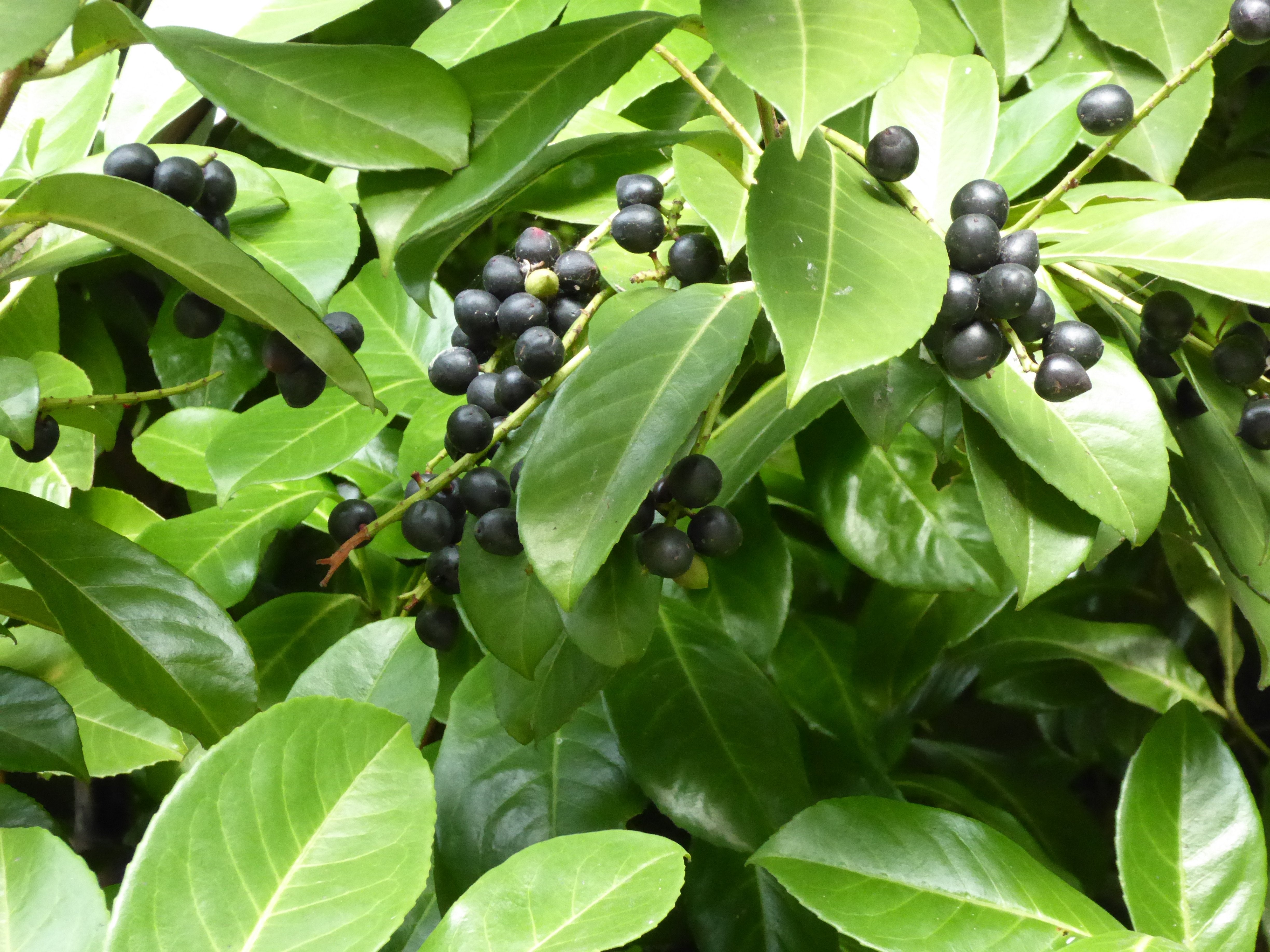
It has glossy, dark green leaves that resemble English laurel but are narrower and more pointed. In spring, it produces small white fragrant flowers in upright clusters. These are followed by small black cherries that attract birds.
Planting, Soil Requirements, and Ideal Growing Conditions
Proper planting determines long-term health. Carolina laurel cherry adapts well across USDA Zones 7 to 10 and tolerates urban stress better than many evergreen hedge trees.
Where is the best place to plant Carolina laurel cherry?
Plant it in full sun to partial shade. Full sun encourages denser growth and better flowering. It performs well along property lines, driveways, and as windbreaks. Avoid planting directly against foundations to allow airflow.
What kind of soil does Carolina laurel cherry need?
It prefers well-drained soil but tolerates clay, sandy, and loamy soils. Once established, it tolerates drought. Poor drainage increases risk of root rot, so amend compacted soil before planting.
How far apart should Carolina laurel cherry be planted for a hedge?
For a dense privacy hedge, space plants 5 to 8 feet apart. Closer spacing produces quicker coverage. Wider spacing allows fuller natural form if using as individual trees.
Is Carolina laurel cherry drought tolerant?
Yes. After establishment, it tolerates drought conditions well. Regular watering during the first growing season helps develop deep roots. Mature plants withstand short dry periods without significant stress.
Roots, Safety, and Toxicity Concerns
Many homeowners research root invasiveness and toxicity before choosing Carolina laurel cherry for residential landscapes.
Are Carolina laurel cherry roots invasive?
The roots are not considered aggressively invasive. They form a moderately spreading root system typical of small ornamental trees. Problems usually occur only if planted too close to foundations or underground utilities.
Is Carolina laurel cherry poisonous to dogs or livestock?
Yes. Leaves and seeds contain cyanogenic compounds that release hydrogen cyanide when ingested. According to extension sources, wilted leaves are particularly toxic to livestock. Dogs rarely consume enough for severe toxicity, but ingestion should be avoided.
Are the berries of Carolina laurel cherry edible?
The small black berries are not considered edible for humans. Birds commonly eat them without harm. The seeds contain toxic compounds and should not be consumed.
Pruning, Maintenance, and Common Problems
Routine care keeps Carolina laurel cherry dense, healthy, and resistant to pests.
When should you prune Carolina laurel cherry?
Prune in late winter or early spring before new growth begins. Light trimming can be done after flowering to maintain hedge shape. Avoid heavy pruning in late fall, which may stimulate tender growth before cold weather.
Why are the leaves of my Carolina laurel cherry turning yellow?
Yellowing leaves often indicate overwatering or poor drainage. Chlorosis can also result from nutrient deficiency in alkaline soil. Checking soil moisture and improving drainage typically resolves the issue.
What pests and diseases affect Carolina laurel cherry?
It is generally resilient but may experience scale insects, aphids, or spider mites. Fungal issues like shot hole disease occasionally occur in humid conditions. Proper spacing and airflow reduce disease risk.
Does Carolina laurel cherry drop leaves year-round?
As an evergreen, it retains foliage year-round but naturally sheds older leaves in spring. Moderate seasonal leaf drop is normal and not a sign of decline.
Comparisons and Landscape Uses
Carolina laurel cherry is frequently compared to other evergreen screening trees and used in formal landscape designs.
Is Carolina laurel cherry good for privacy hedges?
Yes. Its dense branching and evergreen foliage make it one of the best privacy hedge trees for warm climates. With proper spacing and pruning, it forms a thick visual screen within a few years.
What is the difference between Carolina laurel cherry and English laurel?
Carolina laurel cherry has smaller, narrower leaves and better heat tolerance. English laurel, often referring to Prunus laurocerasus, has broader leaves and prefers cooler climates. Carolina laurel cherry handles southern heat and humidity more reliably.
Can Carolina laurel cherry grow in coastal areas?
Yes. It tolerates salt spray and sandy soils, making it suitable for coastal landscapes. It performs well in regions along the southeastern United States where salt exposure is common.