


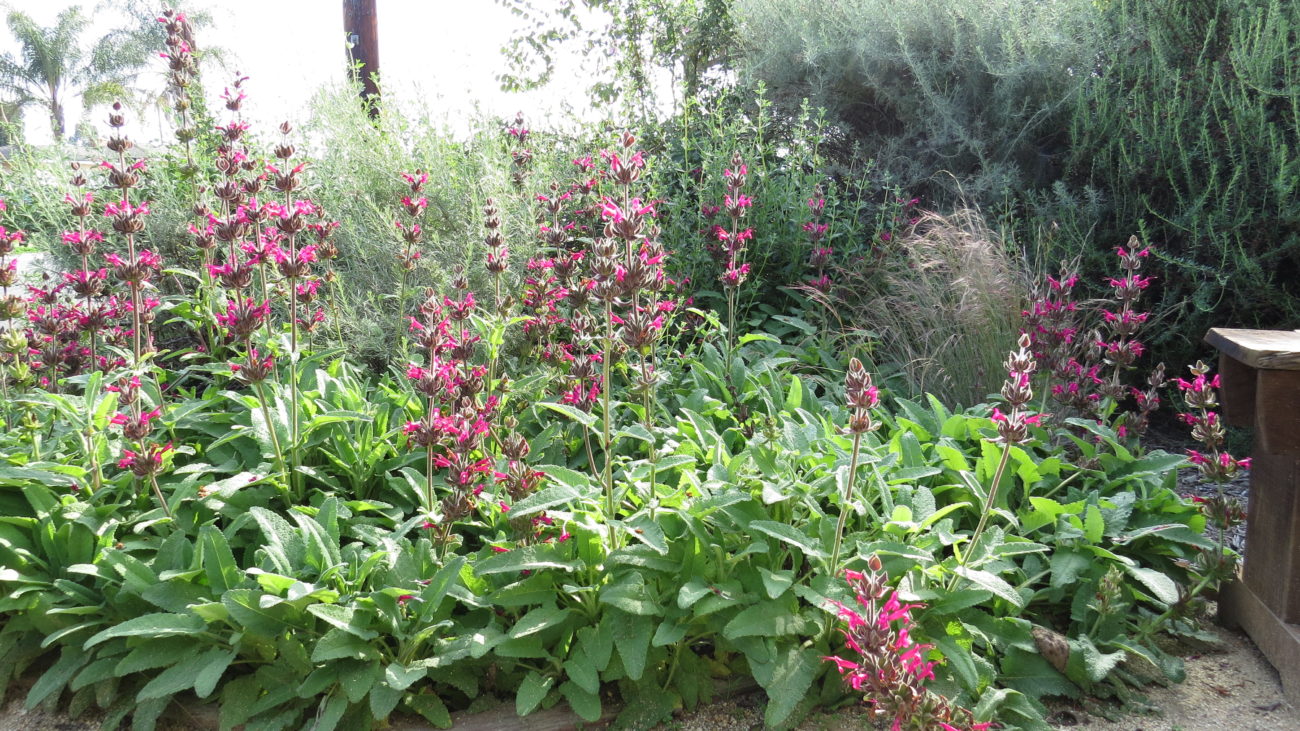
Hummingbird sage (Salvia spathacea) is a rhizomatous perennial native to California that performs best in shaded, dry-summer climates.
It is adapted to Mediterranean conditions, where cool, moist winters are followed by extended dry periods. This seasonal pattern shapes how the plant grows, when it blooms, and how it should be maintained in garden settings.
It is widely used in native landscaping because it combines drought tolerance, shade adaptability, and strong pollinator support, all while forming a dense, weed-suppressing groundcover.
01What Is Hummingbird Sage and Why Is It Popular?
Hummingbird sage belongs to the Lamiaceae (mint) family and exhibits many of its defining traits, including aromatic foliage, square stems, and opposite leaf arrangement. It spreads through underground rhizomes, allowing it to form colonies over time rather than remaining as a single clump.
What is hummingbird sage (Salvia spathacea)?
It is a semi-evergreen perennial that maintains foliage year-round in mild climates. Leaves are ovate, softly pubescent, and can reach up to 6 inches long. The plant typically forms a basal rosette, with flowering stems emerging vertically during its reproductive phase.
Why is hummingbird sage called hummingbird sage?
Its flowers are adapted for ornithophilous pollination, meaning they are specialized for bird pollinators. The tubular corolla, bright magenta coloration, and nectar production align with hummingbird feeding behavior. Blooming occurs from late winter to spring, aligning with seasonal pollinator activity.
Is hummingbird sage a good native plant for landscaping?
It is considered a high-value native species due to its ecological function and adaptability. It reduces irrigation demand, supports native fauna, and performs well in understory conditions where many ornamentals fail.
02Benefits of Hummingbird Sage in the Garden
The value of hummingbird sage extends beyond aesthetics into ecological performance and site efficiency.
Does hummingbird sage attract pollinators?
Yes. It supports hummingbirds as primary pollinators, along with native bees. Its bloom timing provides an early nectar source, which is critical for pollinators emerging from winter dormancy.
Is hummingbird sage good for wildlife gardens?
It contributes to habitat layering by combining groundcover density with seasonal flowering. The foliage offers shelter for insects, while the flowers support nectar feeders, helping maintain biodiversity in planted environments.
Is hummingbird sage drought tolerant?
Once established, it exhibits physiological adaptations to drought, including reduced summer growth and reliance on stored moisture in rhizomes. It performs best with deep, infrequent watering rather than consistent surface moisture.
03Growing Conditions and Planting Requirements
Proper siting is essential to match the plant's native ecology.
Where does hummingbird sage grow best?
It thrives in Mediterranean climates with winter rainfall and dry summers. It is commonly grown in USDA zones 8–10, particularly in coastal and inland valley regions with moderate temperatures.
Does hummingbird sage need full sun or shade?
It is adapted to partial shade and dappled light, often found under oak canopies in its native range. While it can tolerate full shade, reduced light levels may limit flowering. Excessive sun exposure can increase evapotranspiration stress and lead to leaf scorch.
What kind of soil does hummingbird sage prefer?
It prefers well-draining soils with moderate organic content. Sandy loam is ideal, though it can tolerate clay soils if drainage is improved. Soil pH tolerance ranges from slightly acidic to neutral. Poor drainage is the most common cause of decline, particularly in summer.
How do you grow hummingbird sage?
Successful establishment depends on root development during the first growing season. Planting in fall is often recommended in Mediterranean climates to take advantage of winter moisture. Spacing should allow for lateral spread, typically 2–3 feet between plants. Irrigation should be gradually reduced after establishment to encourage drought adaptation.
How do you propagate hummingbird sage?
Division of rhizomes is the most reliable method, ensuring genetic consistency and faster establishment. Seed propagation is possible but may result in variability and slower growth.
04Care Tips for Healthy Hummingbird Sage
Maintenance aligns with its natural growth cycle.
How often should you water hummingbird sage?
During establishment, consistent moisture supports root expansion. Once mature, watering should shift to deep, infrequent intervals, allowing the soil to dry between cycles. Summer overwatering can lead to root rot and reduced vigor.
How do you maintain hummingbird sage plants?
Post-bloom pruning helps redirect energy back to vegetative growth. Removing older foliage can improve air circulation and reduce fungal risk. Division every few years can rejuvenate dense colonies and maintain plant health.
Why is my hummingbird sage not blooming?
Flowering is influenced by light exposure, plant maturity, and environmental stress. Insufficient light reduces floral initiation, while excess nitrogen can promote foliage at the expense of blooms. Improper watering, especially during dormancy-like summer periods, can also affect flowering cycles.
05Size, Growth, and Spreading Habit
Its growth pattern is driven by rhizomatous expansion rather than vertical growth.
How big does hummingbird sage get?
Foliage typically remains under 18 inches tall, while flowering stems can reach up to 3 feet. Spread can extend several feet as rhizomes expand outward annually.
Does hummingbird sage spread or become invasive?
It spreads in a controlled, clonal pattern. While it can form dense colonies, it lacks the aggressive traits associated with invasive species. Physical division or edging can easily manage its spread.
06Garden Uses and Design Ideas
Hummingbird sage is most effective when used in ways that reflect its natural growth habit.
What does hummingbird sage look like in landscape design?
It creates a continuous understory layer, with seasonal vertical accents from flower spikes. Its coarse leaf texture contrasts well with finer foliage plants, adding visual depth in shaded compositions.
When does hummingbird sage bloom?
Blooming occurs from late winter through mid-spring, with timing influenced by temperature and rainfall patterns.
How is hummingbird sage used in gardens?
It is commonly used as a shade groundcover beneath trees, in native plant groupings, and on slopes for erosion control. Its rhizomes help stabilize soil, making it useful in areas prone to runoff.
07Why Hummingbird Sage Is a Smart Garden Choice
Hummingbird sage aligns with current landscape priorities by combining ecological function with practical performance. Its ability to adapt to shade, tolerate drought, and support pollinators makes it a strong candidate for sustainable planting design. With proper siting and minimal maintenance, it establishes a stable, long-term presence in the garden.
Want This in Your Own Garden?
If patience isn't part of the plan, we've got plants ready to plant today — browse the full collection.
Browse Our Bestsellers