


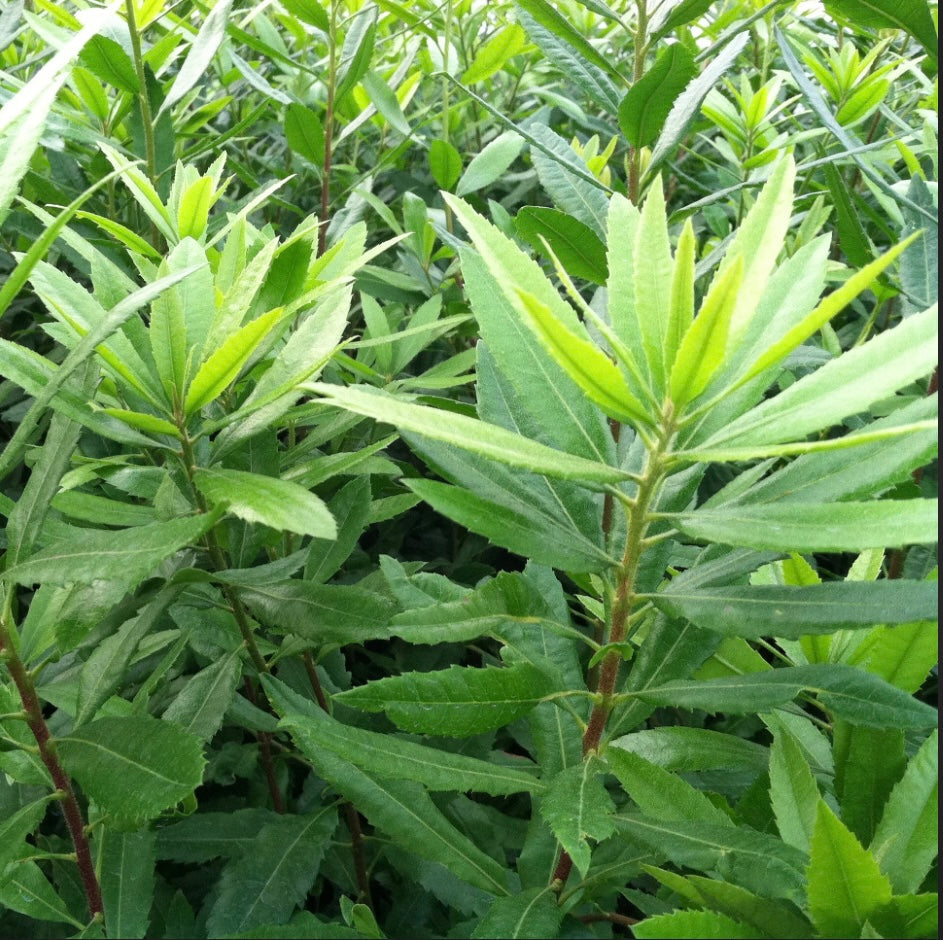
Pacific Wax Myrtle is a native evergreen shrub widely used in coastal and low-maintenance landscapes. This article focuses on clear identification, physical traits, and mature size.
What is Pacific Wax Myrtle (Myrica californica)?
Pacific Wax Myrtle is a broadleaf evergreen shrub or small tree native to the western coast of North America. It belongs to the Myricaceae family and is commonly found in coastal forests, bluffs, and riparian zones from northern California through Washington. The plant is known for aromatic foliage, dense branching, and strong wind tolerance.
What does Pacific Wax Myrtle look like throughout the year?
Pacific Wax Myrtle retains glossy, deep green leaves year-round. Leaves are narrow, lance-shaped, and slightly serrated, with a subtle aromatic scent when crushed. Spring growth appears lighter green before maturing. The plant maintains a full, dense canopy through winter, making it effective for year-round screening.
How large does Pacific Wax Myrtle grow at maturity?
At maturity, Pacific Wax Myrtle typically grows between 10 and 25 feet tall and 10 to 20 feet wide. Growth size depends on exposure, soil moisture, and pruning. In coastal environments with wind exposure, plants often remain smaller and more compact.
Pacific Wax Myrtle Native Habitat and Growing Conditions
Understanding the plant’s native environment explains its adaptability and performance in cultivated landscapes.
Where does Pacific Wax Myrtle grow naturally?
Pacific Wax Myrtle grows naturally along the Pacific coast of North America, including coastal California, Oregon, and Washington. It is commonly found near shorelines, estuaries, forest edges, and streambanks where soils are well-drained but retain some moisture.
What climate is best for Pacific Wax Myrtle?
Pacific Wax Myrtle performs best in Mediterranean and maritime climates with mild winters and cool to moderate summers. It is hardy in USDA Zones 7–10 and tolerates coastal wind, fog, and salt-laden air.
What soil conditions does Pacific Wax Myrtle prefer?
The plant adapts to a wide range of soils, including sandy, loamy, and clay soils, provided drainage is adequate. Pacific Wax Myrtle tolerates acidic to neutral soil pH and improves soil fertility through nitrogen fixation, allowing it to grow in nutrient-poor sites.
Pacific Wax Myrtle Light, Water, and Establishment Needs
Correct location and early care are essential for long-term health and drought tolerance.
How much sunlight does Pacific Wax Myrtle need?
Pacific Wax Myrtle grows well in full sun to partial shade. Full sun promotes denser growth and stronger structure, while partial shade is suitable in warmer inland areas where afternoon sun can be intense.
How often should Pacific Wax Myrtle be watered?
During the first one to two years after planting, regular deep watering is necessary to establish a strong root system. Once established, irrigation needs decrease significantly, especially in coastal climates with fog or higher humidity.
Is Pacific Wax Myrtle drought tolerant once established?
Once established, Pacific Wax Myrtle is drought tolerant and survives extended dry periods with minimal supplemental water. Its waxy leaves and deep roots reduce water loss, making it suitable for low-water and native landscape designs.
Pacific Wax Myrtle Pruning, Maintenance, and Growth Control
This shrub responds well to pruning, allowing flexibility in form and size.
When is the best time to prune Pacific Wax Myrtle?
The best time to prune Pacific Wax Myrtle is late winter to early spring before new growth begins. Structural pruning at this time supports healthy regrowth. Light shaping can be done throughout the year to maintain hedges.
Can Pacific Wax Myrtle be used as a hedge or screen?
Pacific Wax Myrtle is commonly used as a hedge, privacy screen, or windbreak. Its dense evergreen foliage creates an effective visual barrier and reduces wind exposure in coastal and residential landscapes.
How fast does Pacific Wax Myrtle grow?
Pacific Wax Myrtle has a moderate to fast growth rate, typically growing 1 to 2 feet per year under favorable conditions. Growth is faster in moist coastal sites and slower in dry or inland environments.
Pacific Wax Myrtle Wildlife Value and Landscape Uses
Beyond structure and appearance, this shrub provides ecological and functional benefits.
Does Pacific Wax Myrtle support wildlife?
Pacific Wax Myrtle supports wildlife by providing shelter and nesting habitat for birds. Female plants produce small waxy berries that serve as a food source for native bird species, particularly in winter.
Is Pacific Wax Myrtle good for coastal landscaping?
Pacific Wax Myrtle is well suited for coastal landscaping due to its tolerance for salt spray, strong winds, sandy soils, and fog. It is frequently used in shoreline plantings, coastal roadsides, and exposed residential properties.
What are common landscape uses for Pacific Wax Myrtle?
Common uses include hedges, privacy screens, erosion control on slopes, restoration projects, and background plantings. Its adaptability makes it suitable for native gardens, low-water landscapes, and large-scale plantings.