


Rose apple, also known as Malabar plum or plum rose, is a tropical fruit tree widely grown across Southeast Asia, the Caribbean, Central America, and parts of Africa.
Originally native to Southeast Asia, Syzygium jambos belongs to the Myrtaceae family, the same family as guava and clove.
01What Is Rose Apple?
What is rose apple (Syzygium jambos)?
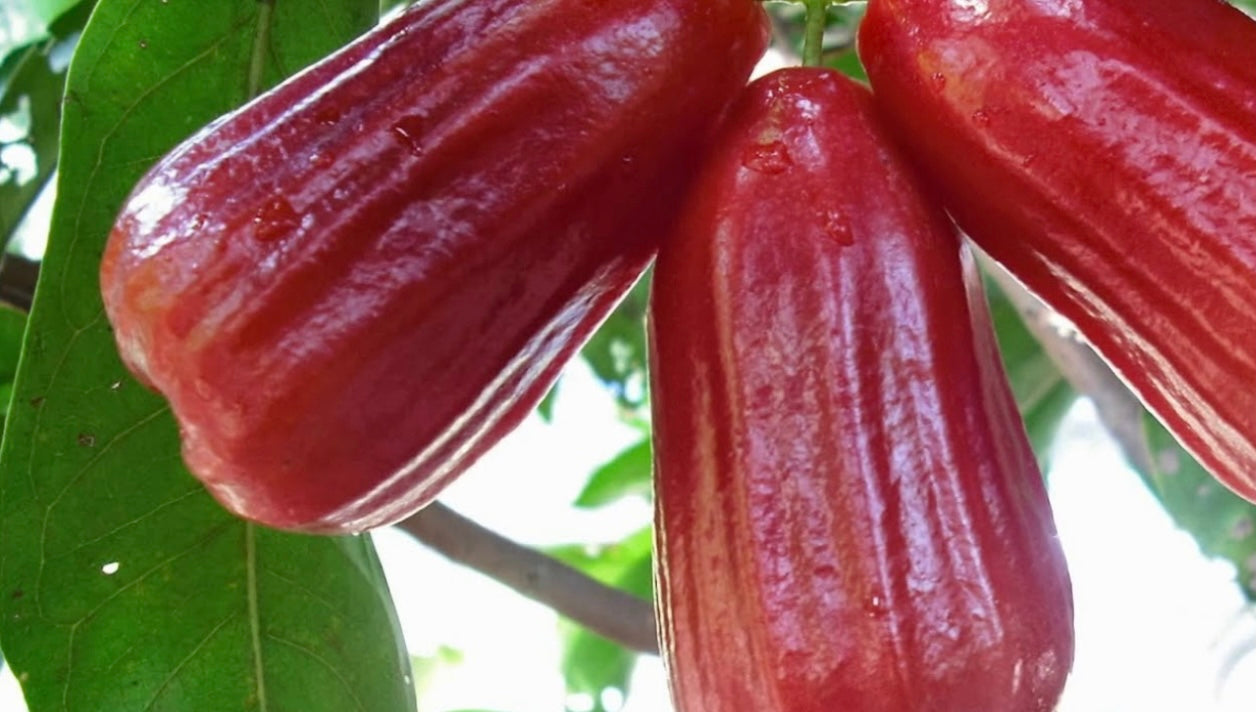
Rose apple is a medium-sized evergreen tropical tree grown for its fragrant fruit and ornamental value. The fruit is round to oval, pale yellow to light pink, with crisp flesh and a distinct rose-like aroma. Despite its name, it is not related to apples but belongs to the same botanical family as guava.
What does rose apple taste like?
Rose apple has a mildly sweet, watery, and crisp texture similar to a pear or watermelon rind. The defining characteristic is its floral rose scent. The flavor is subtle rather than intensely sweet.
What does a rose apple tree look like?
The tree grows between 6 to 15 meters tall. It has glossy, lance-shaped leaves and produces showy white flowers with long, prominent stamens. The fruit develops after flowering and typically matures within 2 to 3 months.
Is rose apple the same as wax apple?
No. Rose apple (Syzygium jambos) differs from wax apple (Syzygium samarangense). Wax apple fruits are bell-shaped and more watery, while rose apples are rounder and have a strong rose fragrance. They are related species within the same genus but are botanically distinct.
02Growing & Caring for Rose Apple Trees
Growing rose apple trees is common in tropical and subtropical climates.
How do you grow rose apple from seed?
Seeds should be planted fresh, as viability decreases quickly once dried. Sow seeds in well-draining soil and keep consistently moist. Germination usually occurs within 2 to 4 weeks in warm conditions.
How long does rose apple take to bear fruit?
Seed-grown trees typically begin fruiting in 3 to 5 years. Grafted trees may produce earlier, sometimes within 2 to 3 years under favorable tropical conditions.
What climate does rose apple grow best in?
Rose apple thrives in tropical and humid subtropical climates. It prefers temperatures between 22°C and 32°C and does not tolerate frost. It performs well in areas with moderate rainfall and good drainage.
How big does a rose apple tree grow?
The tree can reach 6 to 15 meters in height, depending on soil conditions and pruning practices. In home gardens, regular pruning keeps it manageable at around 4 to 6 meters.
03Nutrition, Health Benefits & Medicinal Uses
Rose apple is valued not only as a fresh fruit but also in traditional medicine. In many cultures, various parts of the tree are used in herbal preparations.
What are the health benefits of rose apple?
Rose apple contains vitamin C, dietary fiber, and small amounts of calcium and iron. The fruit is hydrating due to its high water content. Traditional uses include support for digestion and mild cooling effects in hot climates.
Is rose apple good for diabetes?
The fruit has a low to moderate natural sugar content and is mostly water. Some traditional systems use rose apple leaves or bark preparations for blood sugar support. However, clinical research is limited, so individuals with diabetes should monitor intake carefully.
What nutrients are in rose apple?
Rose apple provides vitamin C, fiber, potassium, and trace minerals. Its antioxidant content is linked to polyphenols common in Myrtaceae fruits, similar to guava.
What are the medicinal uses of rose apple leaves?
In traditional herbal practices across Asia and the Caribbean, leaves are boiled into teas for digestive concerns and mild inflammation. The bark and roots have also been used traditionally, though these uses are based on ethnobotanical records rather than large-scale clinical trials.
04Culinary Uses & Practical Applications
Rose apple is commonly eaten fresh, though it is also used in beverages and preserves. Its subtle sweetness makes it suitable for light culinary applications.
How do you eat rose apple?
Rose apple is typically eaten fresh and raw. Wash thoroughly, slice, and remove the seed cavity. It can be chilled before serving to enhance its refreshing quality.
Can you make jam or juice from rose apple?
Yes. Rose apple can be cooked into jams, jellies, or syrups. It is also blended into juice, often combined with citrus or sweeter fruits to enhance flavor. Because of its mild sweetness, added sugar is common in preserves.
What is rose apple used for?
Beyond fresh consumption, rose apple is used in fruit salads, pickled preparations in some cultures, and traditional beverages. The tree is also planted ornamentally for its glossy leaves and showy flowers.
Want This in Your Own Garden?
If patience isn't part of the plan, we've got plants ready to plant today — browse the full collection.
Browse Landscape Plants