


Blue Agave is a striking succulent known for its sculptural form, drought tolerance, and economic importance. Often associated with tequila production, the plant is also widely grown as an ornamental in arid and Mediterranean-style landscapes. This section focuses on how to recognize Blue Agave and understand its physical structure and life cycle.
How is the Blue Agave plant identified?
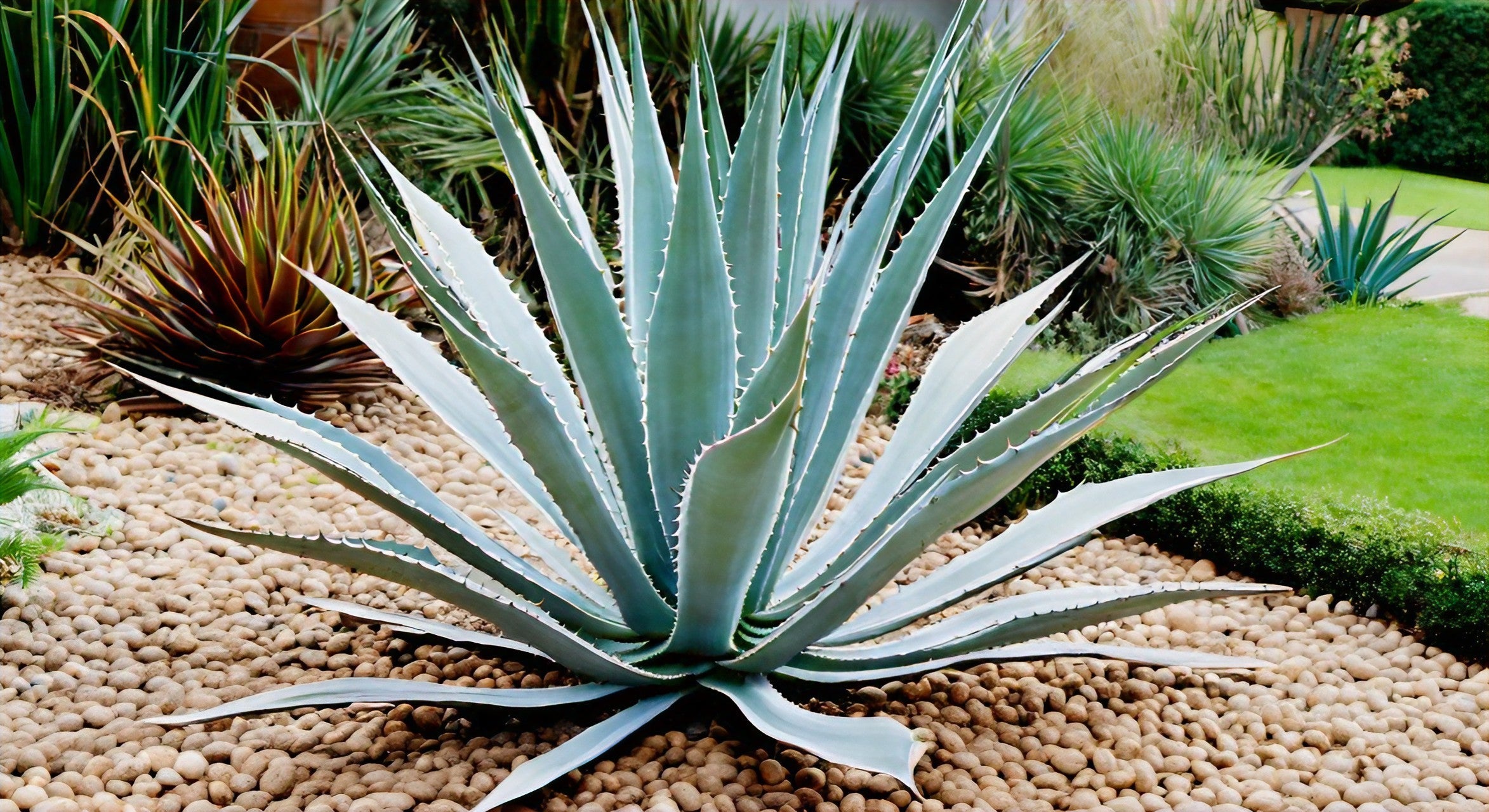
Blue Agave is identified by its rosette of thick, blue-gray to blue-green leaves with sharp terminal spines and serrated margins. The leaves are rigid, fleshy, and coated with a waxy bloom that reduces water loss.
What type of plant is Blue Agave?
Blue Agave is a perennial succulent belonging to the Asparagaceae family. It grows as a basal rosette and stores water in its leaves, allowing it to survive prolonged dry conditions.
How large does a mature Blue Agave plant grow?
A mature Blue Agave plant typically reaches 5 to 7 feet tall and 6 to 8 feet wide. Size varies depending on soil quality, climate, and spacing, with plants growing larger in warm, open environments.
Blue Agave Native Range and Growing Conditions
The natural habitat of Blue Agave explains its preference for heat, sun, and excellent drainage. Understanding these conditions helps growers determine whether the plant is suitable for their landscape or region.
Where does Blue Agave grow naturally?
Blue Agave is native to central Mexico, particularly the highland regions of Jalisco. It evolved in semi-arid environments with seasonal rainfall and well-drained volcanic soils.
What climate is best for growing Blue Agave?
Blue Agave grows best in warm, dry climates with mild winters and hot summers. It performs well in USDA Zones 9–11 and tolerates brief cold spells when planted in dry soil.
What soil conditions does Blue Agave prefer?
Blue Agave prefers sandy or rocky soils with excellent drainage. Slightly acidic to neutral soil pH supports healthy growth. Poor drainage increases the risk of root and crown rot.
Blue Agave Light, Water, and Establishment Needs
Although Blue Agave is drought tolerant, proper care during establishment improves long-term plant health and appearance.
How much sunlight does Blue Agave need?
Blue Agave requires full sun to maintain its compact form and blue leaf coloration. At least six to eight hours of direct sunlight per day supports strong growth and reduces disease issues.
How often should Blue Agave be watered?
During establishment, Blue Agave should be watered deeply but infrequently, allowing soil to dry completely between watering. Once established, watering is minimal and often unnecessary except during extended drought.
Is Blue Agave drought tolerant once established?
Blue Agave is highly drought tolerant once established. Its thick leaves store water efficiently, allowing the plant to survive long periods without irrigation.
Blue Agave Growth Cycle, Flowering, and Maintenance
Blue Agave follows a long life cycle and requires little routine maintenance when grown in suitable conditions.
How long does it take Blue Agave to mature?
Blue Agave typically takes 6 to 10 years to reach maturity. Growth rate depends on climate, soil fertility, and water availability.
When does Blue Agave flower?
Blue Agave flowers once at the end of its life cycle, producing a tall flowering stalk that can reach 15 to 25 feet. After flowering, the main plant dies.
Does Blue Agave produce offsets or pups?
Yes, Blue Agave produces offsets, commonly called pups, around the base of the plant. These pups can be removed and replanted to propagate new plants.
Blue Agave Uses, Benefits, and Landscape Value
Beyond its ornamental appeal, Blue Agave has significant cultural, economic, and ecological value.
What is Blue Agave used for?
Blue Agave is the primary plant used in tequila production. It is also used in ornamental landscaping, xeriscaping, and erosion control in dry environments.
Does Blue Agave have benefits for water-wise landscaping?
Blue Agave is well suited for water-wise and low-maintenance landscapes due to its drought tolerance, minimal care needs, and long lifespan.
Is Blue Agave good for desert and Mediterranean-style gardens?
Blue Agave performs exceptionally well in desert and Mediterranean-style gardens. Its bold form provides structure and contrast when paired with other drought-tolerant plants.