


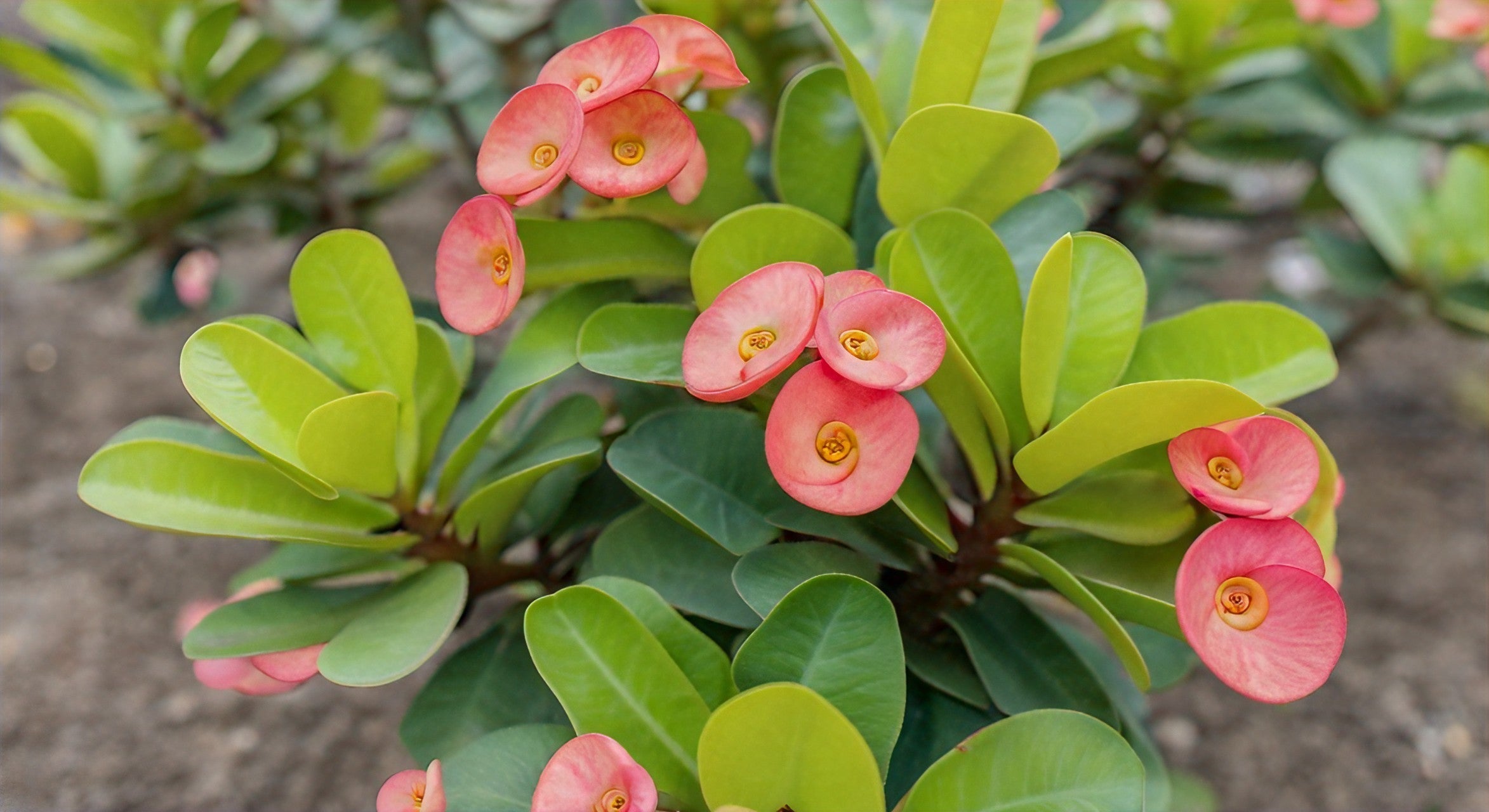
Crown of Thorns (Euphorbia milii) is a resilient succulent shrub with thorny stems and vibrant, long-lasting bracts surrounding small flowers. Its bright red, pink, or yellow bracts add color year-round, making it perfect for pots, patios, or warm outdoor gardens. Beyond its ornamental appeal, this plant is low-maintenance, drought-tolerant, and capable of thriving in diverse climates when properly cared for.
Understanding the Botany & Origins of Crown of Thorns
Crown of Thorns is not just decorative—it has fascinating adaptations that help it survive in arid environments.
What is the native habitat of the Crown of Thorns plant?
Crown of Thorns is native to Madagascar, where it evolved to survive arid, sunny conditions. Its thick, thorny stems protect it from herbivores, while the milky latex sap deters pests.
What growing conditions did Crown of Thorns evolve to tolerate?
It naturally tolerates poor, sandy soils, high temperatures, and prolonged dry spells. Its adaptations make it ideal for drought-prone landscapes or container gardens.
How do the thorns and milky sap help Crown of Thorns survive drought?
Thorns reduce water loss by limiting herbivory, while the succulent stems store water. The latex sap also discourages insects, minimizing stress in arid conditions.
Is Crown of Thorns considered a true succulent?
Yes, it is a true succulent capable of storing water in its stems, which supports survival in hot, dry climates.
How to Grow Crown of Thorns: Soil, Light & Watering Best Practices
Proper soil, light, and watering are essential to keep Crown of Thorns thriving both indoors and outdoors.
How do you care for a Crown of Thorns plant?
Crown of Thorns thrives in full sun, well-draining soil, and moderate watering. Position outdoors in bright sunlight or near a south-facing window indoors. Avoid waterlogged conditions, which can cause root rot.
How do you care for a Crown of Thorns indoors?
Indoor plants need bright indirect sunlight or filtered direct light. Use a cactus or succulent soil mix, and water only when the top inch of soil is dry. Rotate the plant periodically to ensure even light exposure.
How much sun does a Crown of Thorns need for healthy growth?
It requires at least 6–8 hours of direct sunlight daily. Insufficient light results in leggy stems and fewer bracts.
Does Crown of Thorns need direct sunlight to bloom?
Yes. Maximum flowering occurs with full sun exposure. Partial shade reduces bract production and delays blooming.
What is the best soil mix for Crown of Thorns plants?
Use sandy, well-draining soil mixed with perlite or coarse sand. Avoid heavy clay soils to prevent water retention and root disease.
What is the proper watering schedule for Crown of Thorns?
Water when the top 1–2 inches of soil are dry. During summer, this may mean weekly watering, while in winter, water sparingly to maintain drought tolerance.
Can a Crown of Thorns grow in partial shade?
It can survive in partial shade, but blooming will be limited, and foliage may become sparse.
What temperature range can a Crown of Thorns tolerate?
Ideal growth occurs between 65–90°F (18–32°C). Frost below 50°F (10°C) can damage the plant, so protect or move indoors in colder climates.
Propagation Techniques: Cuttings, Layering, and Seed for Crown of Thorns
Multiplying your Crown of Thorns can be done easily with cuttings, layering, or seeds.
How do you propagate Crown of Thorns successfully?
Propagation is usually done via stem cuttings. Allow cuttings to dry for 24 hours to reduce sap irritation, then plant in sandy, well-draining soil.
How do you propagate Crown of Thorns cuttings?
Cut 4–6 inch healthy stems, wear gloves, and let the latex sap dry. Place in a warm, bright location, and roots should develop within 3–4 weeks.
How long does it take a Crown of Thorns cutting to root?
Typically 3–4 weeks in optimal conditions with bright, indirect sunlight and well-drained soil.
Can you grow Crown of Thorns from seed?
Yes, though germination can be slow. Sow seeds in a sandy mix, lightly cover, and maintain moderate moisture until seedlings emerge.
What tools or conditions help Crown of Thorns propagation succeed?
Use sterilized scissors or pruning shears, gloves, well-draining soil, and indirect sunlight. Avoid overwatering during rooting to prevent rot.
Toxicity, Sap, & Safety Tips When Handling Crown of Thorns
Handling Crown of Thorns safely is crucial because its milky sap is irritating to skin and eyes.
Is Crown of Thorns toxic to pets or humans?
Yes. The milky sap contains irritants that can cause skin rash, eye irritation, or gastrointestinal upset if ingested.
Why should you avoid skin contact with Crown of Thorns sap?
Sap contains latex compounds that trigger dermatitis. Gloves are recommended when pruning or handling the plant.
What first aid steps should you take if sap touches your skin or eyes?
Wash immediately with soap and water; rinse eyes with clean water if contact occurs. Seek medical attention for severe irritation.
Do Crown of Thorns thorns cause infections?
Thorns can puncture skin and introduce bacteria; clean cuts thoroughly and monitor for infection.
How should you safely prune or repot a Crown of Thorns plant?
Always wear gloves, remove only dry or damaged stems, and allow sap to dry before handling.
Bloom Timing, Flower Colors & Care for Longer Flowering
Crown of Thorns can bloom year-round when given optimal light, water, and nutrients.
Why is my Crown of Thorns not blooming?
Insufficient sunlight, overwatering, or excessive nitrogen fertilizer can prevent flowering. Bright light and controlled fertilization promote bract production.
How long does it take a Crown of Thorns to bloom?
Mature plants bloom year-round in optimal conditions, with peak flowering in spring and summer.
What fertilizer does a Crown of Thorns need to thrive?
Use a balanced succulent fertilizer with potassium and magnesium to support healthy blooms and foliage.
How do you increase flowering in Crown of Thorns?
Provide full sun, moderate water, and occasional drought stress. Deadhead spent flowers to encourage new bracts.
Why does a Crown of Thorns drop its leaves?
Leaf drop often results from environmental stress, overwatering, or sudden temperature changes.
Pests & Troubleshooting: Leaf Drop, Yellowing & Stress Symptoms
Keeping an eye on pests and plant stress ensures healthy growth and vibrant blooms.
Why are my Crown of Thorns leaves turning yellow?
Overwatering, poor drainage, or nutrient deficiencies (especially magnesium or potassium) are common causes.
What pests commonly affect Crown of Thorns plants?
Scale insects, mealybugs, and spider mites occasionally infest the plant. Wipe leaves and treat with neem oil if necessary.
How do you revive a dying Crown of Thorns plant?
Reduce watering, improve drainage, prune damaged stems, and ensure sufficient sunlight.
What causes leaf drop in Crown of Thorns?
Environmental stress such as temperature shock, water stress, or insufficient light.
How do you prevent fungal issues in Crown of Thorns?
Use well-draining soil, avoid water on leaves, and provide good air circulation.
Cultural Significance & Uses of Crown of Thorns
Crown of Thorns carries cultural, historical, and symbolic significance beyond its ornamental appeal.
Why is Crown of Thorns associated with religious symbolism?
Its thorns resemble the crown described in Christian biblical accounts, giving it ceremonial and symbolic value.
What cultural meanings does Euphorbia milii have in different regions?
In Madagascar and parts of Asia, it is revered as a symbol of endurance and protection.
Does Crown of Thorns have documented traditional medicinal uses?
Traditionally, some cultures have used latex for topical applications, but toxicity limits widespread medicinal use.
How is Crown of Thorns used in cultural ceremonies?
Decorative arrangements or religious symbols during festivals and rituals.
What historical records mention Crown of Thorns?
Historical texts often reference its symbolic use in Christian traditions and ethnobotanical studies in Madagascar.