


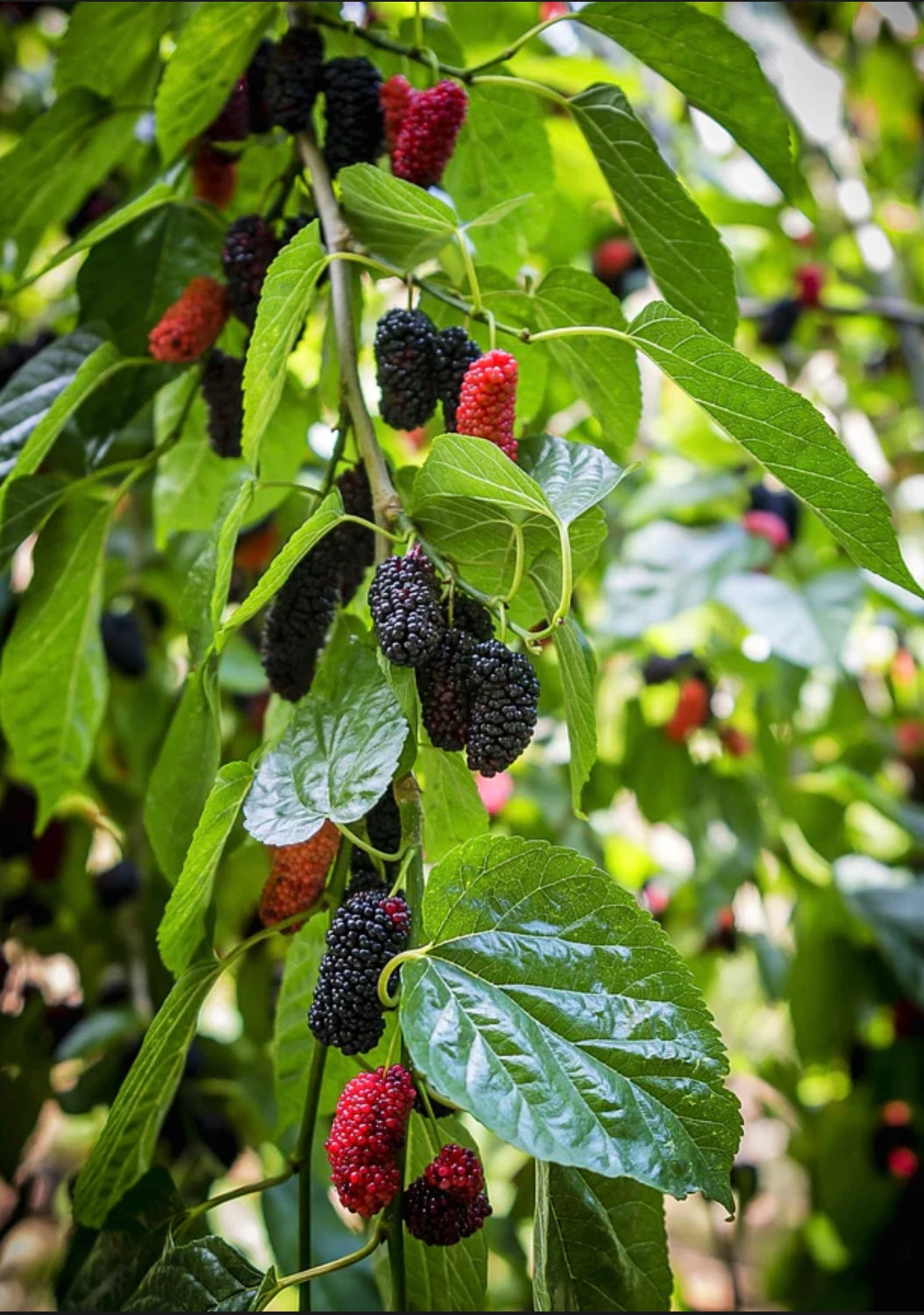
The Dwarf Everbearing Mulberry (Morus nigra) proves that small gardens can still deliver big harvests. Compact, fast-growing, and highly productive, this tree offers home gardeners sweet, dark berries almost year-round. Perfect for balconies, patios, and small yards, the Dwarf Everbearing Mulberry is as ornamental as it is functional.
What is a Dwarf Everbearing Mulberry Tree?
The Dwarf Everbearing Mulberry is a compact fruit tree bred for home gardens. Unlike standard mulberries, which can grow over 30 feet tall, the dwarf variety reaches 6–10 feet, making it manageable for urban and small-space gardens. It produces sweet, dark berries continuously during warm months, offering a steady supply of fruit.
How Big Does a Dwarf Everbearing Mulberry Tree Get?
Typically, these trees reach 6–10 feet tall and 4–8 feet wide, forming a small, rounded canopy. This size makes them ideal for container planting, patios, or narrow garden spaces without overwhelming the area.
How Fast Does a Dwarf Everbearing Mulberry Tree Grow?
Dwarf mulberries are fast-growing, often reaching full size within 3–5 years. Growth rate depends on sunlight, soil quality, and consistent care. Regular watering and fertilization accelerate development and fruiting.
Seasonal Shipping
Ships on February 15, 2027
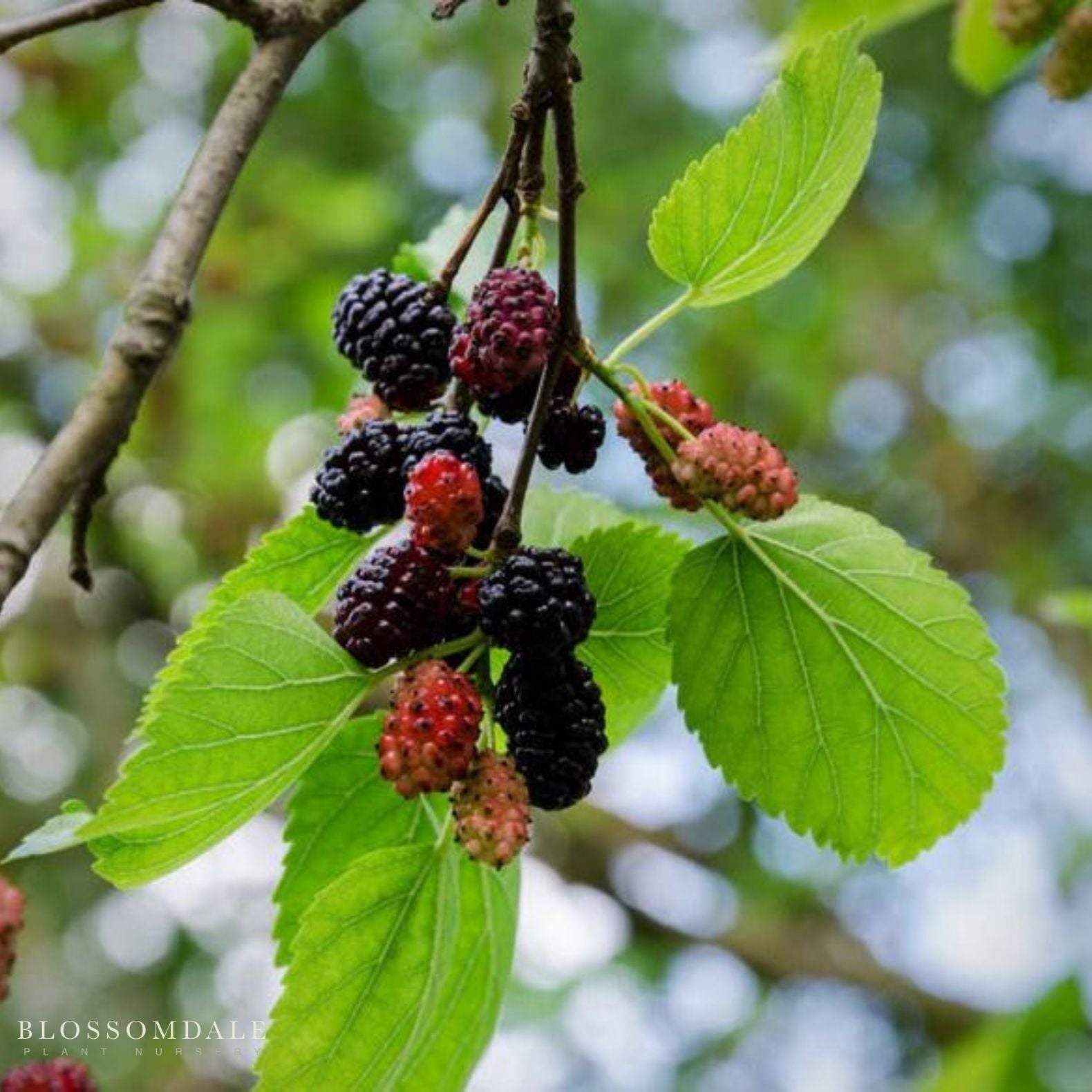
Dwarf Black Mulberry Shrub
What Climate or USDA Zones Are Best for Dwarf Everbearing Mulberry Trees?
These mulberries thrive in USDA zones 5–9, tolerating mild frost but preferring warm, sunny climates. In colder regions, potted trees should be moved indoors or protected during winter.
How Do You Care for a Dwarf Everbearing Mulberry Tree?
Care is straightforward.
- Sunlight: At least 6 hours of direct sunlight daily.
- Soil: Well-draining, fertile soil enriched with compost.
- Watering: Keep soil evenly moist; avoid waterlogging.
- Fertilizer: Use balanced organic fertilizer in spring and midsummer.
- Pruning: Remove dead branches and shape the tree for airflow and yield.
Consistent attention ensures healthy growth and abundant fruiting.
Can You Grow a Dwarf Everbearing Mulberry Tree in a Container or Indoors?
Yes. Choose a 20-gallon or larger container with good drainage. Use rich, well-draining potting mix and place in a sunny spot. Move indoors or to a sheltered location during cold or windy weather. Container trees may require more frequent watering but remain highly productive.
What Type of Soil is Best for a Dwarf Everbearing Mulberry Tree?
Mulberries prefer loamy, well-draining soil with a slightly acidic to neutral pH (6.0–7.0). Incorporate compost or organic matter to boost fertility and water retention without causing soggy roots.
How Often Should You Water a Dwarf Everbearing Mulberry Tree?
Water consistently but moderately. Keep the top inch of soil slightly dry between waterings. Young trees need more frequent moisture to establish roots, while mature trees tolerate short dry spells.
Do Dwarf Everbearing Mulberry Trees Need a Pollinator?
Most Dwarf Everbearing Mulberries are self-pollinating, so you don’t need multiple trees for fruiting. Planting near bees or other pollinators can slightly improve yield. These mulberries also attract pollinators, feed songbirds, and stabilize soil, making them a wildlife-friendly choice.
When Does a Dwarf Everbearing Mulberry Tree Produce Fruit?
Fruit typically begins in late spring and continues through early fall in warm climates. The berries are dark, sweet, and perfect for snacking or cooking.
How Long Does It Take for a Dwarf Everbearing Mulberry to Fruit from Planting?
- Seedlings: May take 3–5 years to bear fruit.
- Nursery-bought dwarf trees: Often produce fruit within 1–2 years.
Patience is key, but once established, these trees offer steady harvests.
How Do You Prune a Dwarf Everbearing Mulberry Tree?
- Late winter/early spring: Remove dead, damaged, or crossing branches.
- During growing season: Pinch back vigorous shoots to encourage bushier growth.
- Shaping: Train as multi-stemmed shrub or single-trunk tree for easy fruit access.
How Do You Propagate a Dwarf Everbearing Mulberry Tree (Cuttings vs. Seeds)?
- Cuttings: Most reliable method; take 6–12 inch hardwood cuttings in late winter, root in moist, well-draining soil.
- Seeds: Can be grown from berries but may take longer to fruit and may not remain true to parent variety.
Are Dwarf Everbearing Mulberry Trees Messy?
Mulberries drop berries and leaves, which can stain patios and clothes. Regular harvesting and pruning reduce litter. The tree is generally considered low-maintenance in this regard.
Are Dwarf Everbearing Mulberry Trees Invasive or Risky to Plant Near Structures?
Dwarf varieties have compact root systems, making them safer near fences, patios, and structures than standard mulberries. Avoid planting too close to foundations or drainage systems.
Are Dwarf Everbearing Mulberry Fruits Safe to Eat?
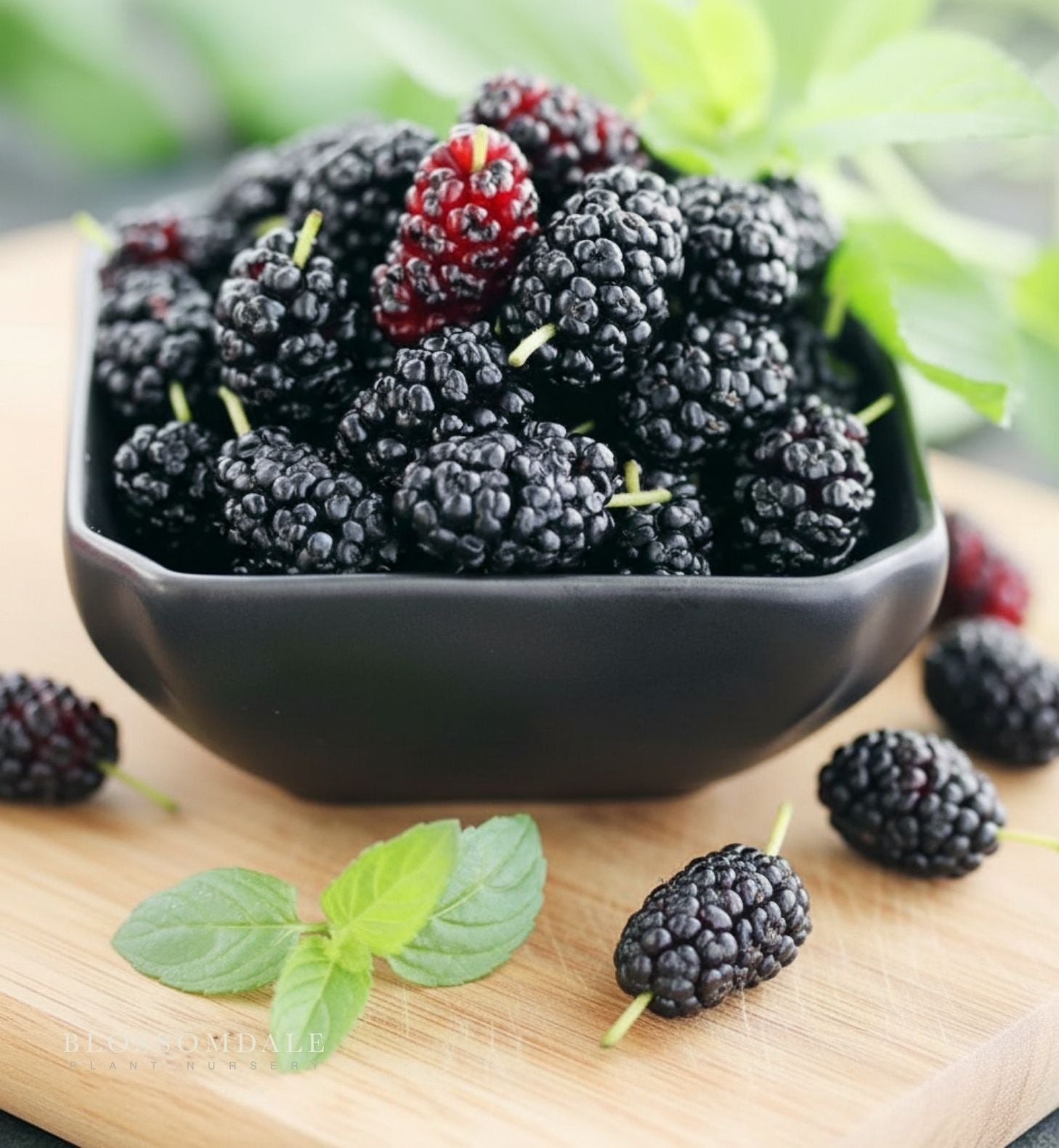
Yes. The berries are edible and highly nutritious, rich in vitamins C and K, iron, potassium, and antioxidants. They can be eaten fresh, dried, or cooked into jams, pies, and syrups.
Are Dwarf Everbearing Mulberry Trees Good for Small Gardens or Urban Yards?
Absolutely. Dwarf fruit trees are easy to manage, beautiful to look at, and surprisingly abundant. The Dwarf Everbearing Mulberry stays modest in size, produces fruit almost year-round, and fits perfectly into balconies, patios, and small urban gardens.