


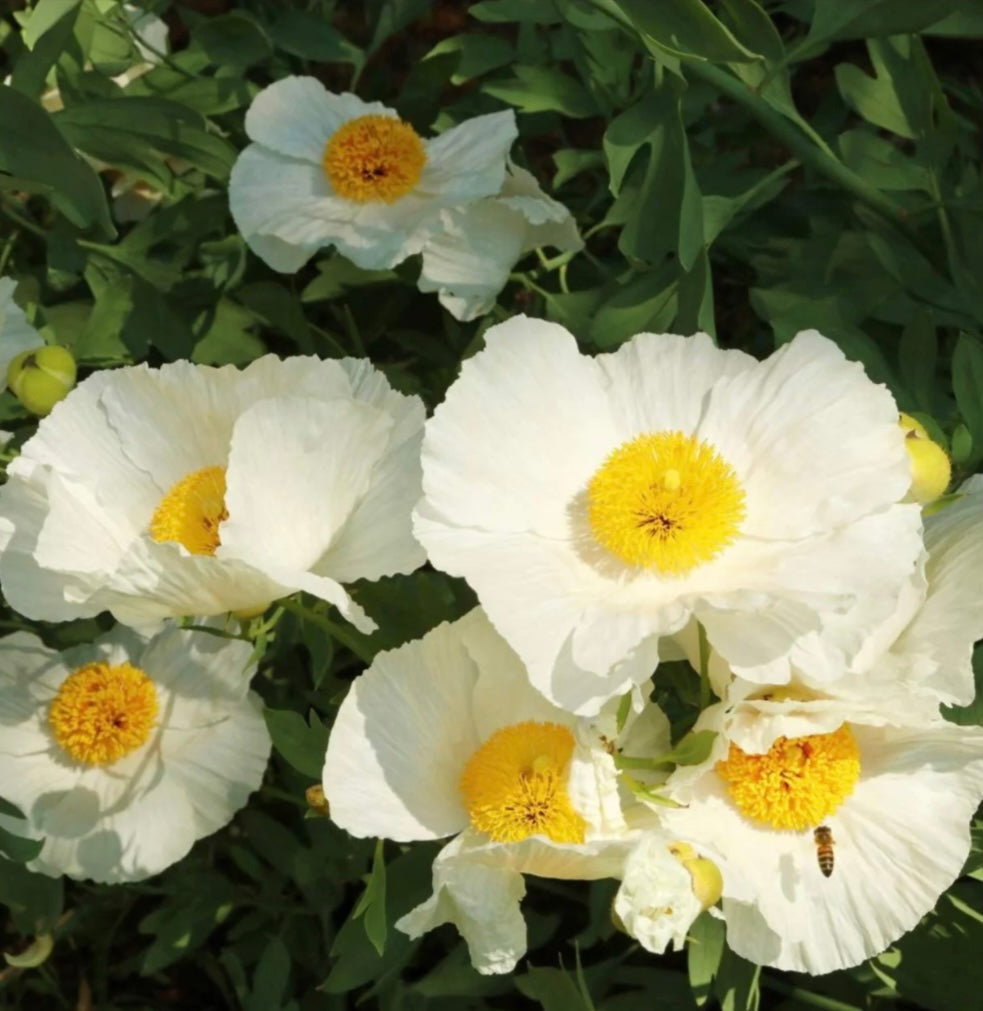
Known for its enormous white flowers and drought tolerance, the Matilija poppy is one of the most recognizable California native plants for xeriscaping and habitat-friendly gardens.
Tree poppy (Romneya coulteri), often called Matilija poppy, is one of the most recognizable California native plants. Known for its large white flowers and drought tolerance, it is widely used in native landscaping, xeriscaping, and habitat-friendly garden design.
01What Is Tree Poppy (Romneya coulteri)?
Tree poppy is a perennial shrub native to California and northern Baja California. It belongs to the poppy family (Papaveraceae) and is valued for its tall growth and large ornamental flowers.
What is Romneya coulteri (tree poppy)?
Romneya coulteri is a fast-growing, rhizomatous perennial shrub that produces large white flowers with yellow centers. It is one of the tallest and most visually striking native poppies.
Is tree poppy native to California?
Tree poppy is native to Southern and Central California. It grows naturally in dry slopes, chaparral, and post-disturbance landscapes, making it well adapted to Mediterranean climates.
Why is Romneya coulteri called the Matilija poppy?
The name comes from Matilija Canyon in Ventura County, where the plant grows in large natural stands. The common name is widely used in native plant gardening.
What does a tree poppy plant look like?
Tree poppy has silvery-blue, deeply lobed leaves and upright stems that can reach 6 to 10 feet tall. Its flowers are large, white, and crinkled, with bright yellow centers.
02Growing Conditions and Planting Requirements
Tree poppy performs best when planted in conditions that closely match its native habitat. Sun exposure, soil drainage, and space are key to long-term success.
How do you grow tree poppy (Romneya coulteri)?
Grow tree poppy in full sun with well-draining soil. Start with nursery plants or rhizome divisions rather than seeds. Avoid frequent watering once the plant is established.
Where is the best place to plant tree poppy?
Plant tree poppy in open areas where it has room to spread. It works well on slopes, along borders, or in naturalized plantings where its growth habit can be accommodated.
What type of soil does Romneya coulteri need?
Tree poppy prefers sandy or loamy soil with excellent drainage. Poor drainage, especially in clay-heavy soil, can lead to root rot and plant decline.
Can tree poppy grow in pots or containers?
Tree poppy is not suitable for containers. Its spreading rhizomes and large size require in-ground planting for healthy growth.
03Tree Poppy Care, Maintenance, and Growth Behavior
Once established, tree poppy requires minimal care. Its growth pattern and seasonal maintenance are important for managing its spread and appearance.
How often should you water tree poppy?
Water regularly during the first growing season. After establishment, reduce watering significantly. Tree poppy thrives in dry conditions and does not perform well with frequent irrigation.
Does tree poppy need pruning?
Prune tree poppy by cutting back old stems in late fall or winter. This encourages new growth in spring and helps maintain a cleaner structure.
Is Romneya coulteri invasive or aggressive?
Tree poppy spreads through underground rhizomes and can be aggressive in garden settings. It is not considered invasive in its native California range.
How fast does tree poppy grow?
Tree poppy grows quickly once established. It can reach its mature height within a single growing season and continues to spread outward over time.
04Tree Poppy Bloom Time, Flowers, and Seasonal Interest
Tree poppy is primarily grown for its dramatic flowers and seasonal display. Bloom timing and flower size are key reasons for its popularity.
When does tree poppy bloom?
Tree poppy blooms from late spring through summer, typically between May and July depending on local conditions.
How big are Matilija poppy flowers?
The flowers are large, usually 6 to 9 inches across. They are among the biggest blooms found in California native plants.
How long do tree poppy flowers last?
Each flower lasts a few days, but the plant produces multiple blooms over several weeks, extending the flowering period.
05Propagation and Long-Term Growth
Propagation is an important consideration for gardeners who want to expand or control their planting.
How do you propagate Romneya coulteri?
The most reliable method is through rhizome division. Dig and separate sections of the underground roots during early spring or fall, then replant them in suitable conditions.
Can you grow tree poppy from seed?
Growing tree poppy from seed is difficult. Seeds often require heat exposure or fire-related cues to germinate, which makes this method less practical for most gardeners.
06Landscaping Uses for Tree Poppy in Drought-Tolerant Gardens
Tree poppy is widely used in California native landscapes due to its resilience and visual impact.
Is tree poppy good for drought-tolerant landscaping?
Tree poppy is highly suited for drought-tolerant gardens. Once established, it requires very little water and performs well in dry climates.
What plants pair well with Romneya coulteri?
Tree poppy pairs well with other drought-tolerant California natives such as salvia, ceanothus, and manzanita, which share similar growing conditions.
07Common Problems, Safety, and Troubleshooting
Understanding potential issues helps ensure healthy growth and better flowering performance.
Is tree poppy toxic to pets or humans?
Tree poppy contains compounds typical of the poppy family and should not be ingested. It is best treated as a plant to keep away from pets and children.
Why is my tree poppy not blooming?
Common causes include insufficient sunlight, overwatering, and poor soil drainage. Full sun and dry conditions are essential for flowering.