


Yellow passion fruit is a vigorous tropical vine grown for its aromatic fruit, ornamental flowers, and commercial value. This article focuses on identification, morphology, and mature growth traits.
What is Yellow Passion Fruit (Passiflora edulis f. flavicarpa)?
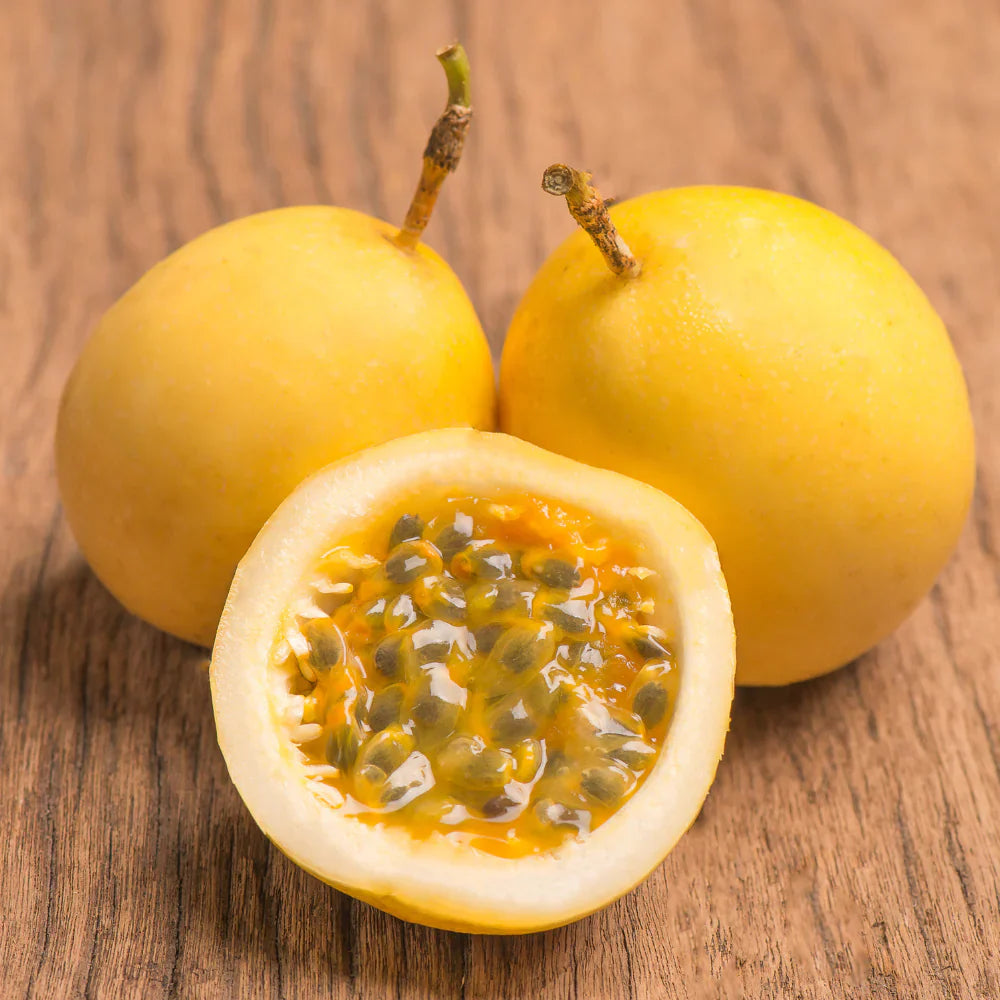
Yellow passion fruit is a tropical climbing vine belonging to the Passifloraceae family. It is a botanical form of Passiflora edulis distinguished by yellow fruit skin, strong vine vigor, and high acidity. It is widely cultivated in tropical and subtropical regions for fresh fruit and juice production.
What does Yellow Passion Fruit look like as it grows?
The plant produces long, fast-growing vines with tendrils that attach to trellises or supports. Leaves are glossy, deep green, and typically three-lobed. Flowers are large, fragrant, and showy, featuring white petals with purple and blue corona filaments. Fruit develops after successful pollination.
How large does a Yellow Passion Fruit vine grow?
A mature yellow passion fruit vine commonly grows 15 to 30 feet long in a single growing season under favorable conditions. With proper support and pruning, vines form dense canopies capable of covering trellises, fences, or arbors.
Yellow Passion Fruit Native Range and Growing Conditions
Understanding the plant’s origin helps explain its heat tolerance, water needs, and growth behavior.
Where does Yellow Passion Fruit originate?
Yellow passion fruit originates from tropical South America, particularly Brazil. It has since been widely distributed throughout tropical regions due to its adaptability, disease resistance, and commercial demand.
What climate is best for growing Yellow Passion Fruit?
Yellow passion fruit grows best in warm, humid tropical climates with consistent temperatures between 68°F and 86°F. It is sensitive to frost and is typically grown in USDA Zones 10 through 12, or as a protected plant in cooler regions.
What soil conditions does Yellow Passion Fruit prefer?
The vine prefers well-drained, fertile soils with a slightly acidic to neutral pH. Sandy loam soils rich in organic matter support strong root development and fruit production. Poor drainage increases the risk of root diseases.
Yellow Passion Fruit Light, Water, and Establishment Needs
Strong vine growth and fruiting depend on correct light exposure and consistent moisture.
How much sunlight does Yellow Passion Fruit need?
Yellow passion fruit requires full sun for optimal flowering and fruit production. A minimum of six to eight hours of direct sunlight per day is recommended to support vine vigor and consistent yields.
How often should Yellow Passion Fruit be watered?
Regular watering is essential, especially during flowering and fruit development. Soil should remain evenly moist but not waterlogged. Extended dry periods can lead to flower drop and reduced fruit set.
Is Yellow Passion Fruit drought tolerant once established?
Yellow passion fruit has low drought tolerance compared to many perennial fruit crops. Even established vines require consistent moisture to maintain fruit quality and prevent stress-related decline.
Yellow Passion Fruit Pruning, Training, and Growth Management
When is the best time to prune Yellow Passion Fruit vines?
Pruning is best done after harvest or at the start of the warm growing season. Removing excess growth improves airflow, encourages productive lateral shoots, and reduces disease pressure.
Does Yellow Passion Fruit need a trellis or support?
Yes, yellow passion fruit vines require a strong trellis, fence, or arbor. The plant climbs using tendrils, and unsupported growth leads to tangled vines and reduced fruiting efficiency.
How fast does Yellow Passion Fruit grow?
Yellow passion fruit grows rapidly, often producing several feet of vine growth per month during warm conditions. This fast growth supports quick canopy establishment but requires regular pruning.
Yellow Passion Fruit Pollination, Fruit Production, and Uses
Fruit development depends on successful pollination and proper vine care.
Does Yellow Passion Fruit need pollinators?
Yellow passion fruit relies on pollinators for fruit set. Large bees, including carpenter bees, are the primary natural pollinators. In areas with limited pollinator activity, hand pollination may be necessary.
How long does it take Yellow Passion Fruit to produce fruit?
Yellow passion fruit typically begins producing fruit within 12 to 18 months from planting. Fruit matures approximately 70 to 80 days after flowering under optimal conditions.
What are common uses for Yellow Passion Fruit?
The fruit is widely used for fresh consumption, juice, desserts, sauces, and flavoring beverages. Yellow passion fruit is preferred for juice production due to its strong aroma, high acidity, and intense flavor.